


Ultherapy Side Effects Long Term: A Clinical Review of Safety and Risks (2026)

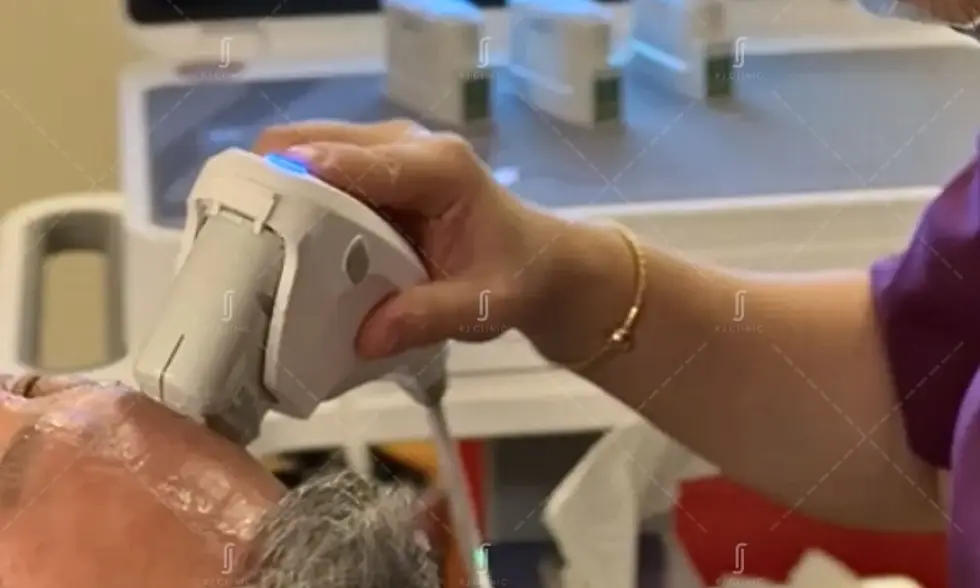
The aesthetic community remains divided by a single, unsettling concern: can a non-invasive lift today lead to irreversible facial hollowing five years down the line? This fear of fat atrophy is the most common reason patients hesitate when considering ultrasound treatments. If you've spent hours researching ultherapy side effects long term, you've likely encountered conflicting stories of both transformative results and cautionary tales of volume loss.
At RJ Clinic, we understand that your facial fat pads are the essential scaffolding of a youthful appearance. Protecting this delicate anatomy is our primary clinical objective. This review provides a transparent look at the safety profile of Ultherapy PRIME from a medical perspective. You'll learn why long-term complications are typically a result of improper energy delivery rather than the technology itself. We'll also explain how Dr Renee and Dr Cheok utilize real-time DeepSEE™ imaging to bypass fat layers entirely, ensuring your treatment focuses strictly on the structural SMAS layer for a lift that improves, rather than degrades, your skin quality over time.
Key Takeaways
Distinguish between expected inflammatory responses like temporary swelling and genuine adverse events to set realistic recovery expectations.
Understand why ultherapy side effects long term, such as facial hollowing, are often the result of improper depth selection rather than the ultrasound technology.
Learn how the "See-Plan-Treat" protocol and LCP certification act as essential safeguards against nerve irritation and suboptimal outcomes.
Discover how the advancements in Ultherapy Prime provide higher resolution imaging and faster delivery for a safer, more precise lifting experience.
Table of Contents
Defining Ultherapy Side Effects: Immediate vs. Long-Term Expectations
Ultherapy relies on Micro-focused Ultrasound with Visualization (MFU-V) to initiate a process called neocollagenesis. Unlike superficial lasers, this technology bypasses the epidermis to deliver precise thermal energy into the SMAS (Supermuscular Aponeurotic System), the same layer targeted during a surgical facelift. It's this depth that allowed the FDA to clear Ultherapy for "lifting" rather than just "tightening." While tightening refers to surface-level contraction, lifting involves a structural shift of the underlying tissue. We define ultherapy side effects long term as any persistent physiological changes that remain after the standard six-month window for collagen maturation has closed.
Distinguishing between an expected inflammatory response and an adverse event is critical for patient peace of mind. Clinical protocols at RJ Clinic prioritize this distinction to ensure that every reaction is a step toward rejuvenation rather than a complication. You can learn more about our specific approach to Ultherapy Prime in Malaysia and how we manage these clinical outcomes.
Expected Temporary Responses (0-4 Weeks)
Immediately following a session, most patients experience erythema, or mild redness. This is a direct result of the thermal energy delivery and typically resolves within a few hours. In the following days, transient edema (swelling) may occur. While it might feel inconvenient, this swelling is a positive clinical indicator that the body's natural repair mechanism has been activated. Many patients also report a specific tenderness to touch along the jawline or brow bone. This sensation often peaks around week two and is a normal byproduct of the inflammatory cascade required to build new collagen.
The Reality of Long-Term Safety Data
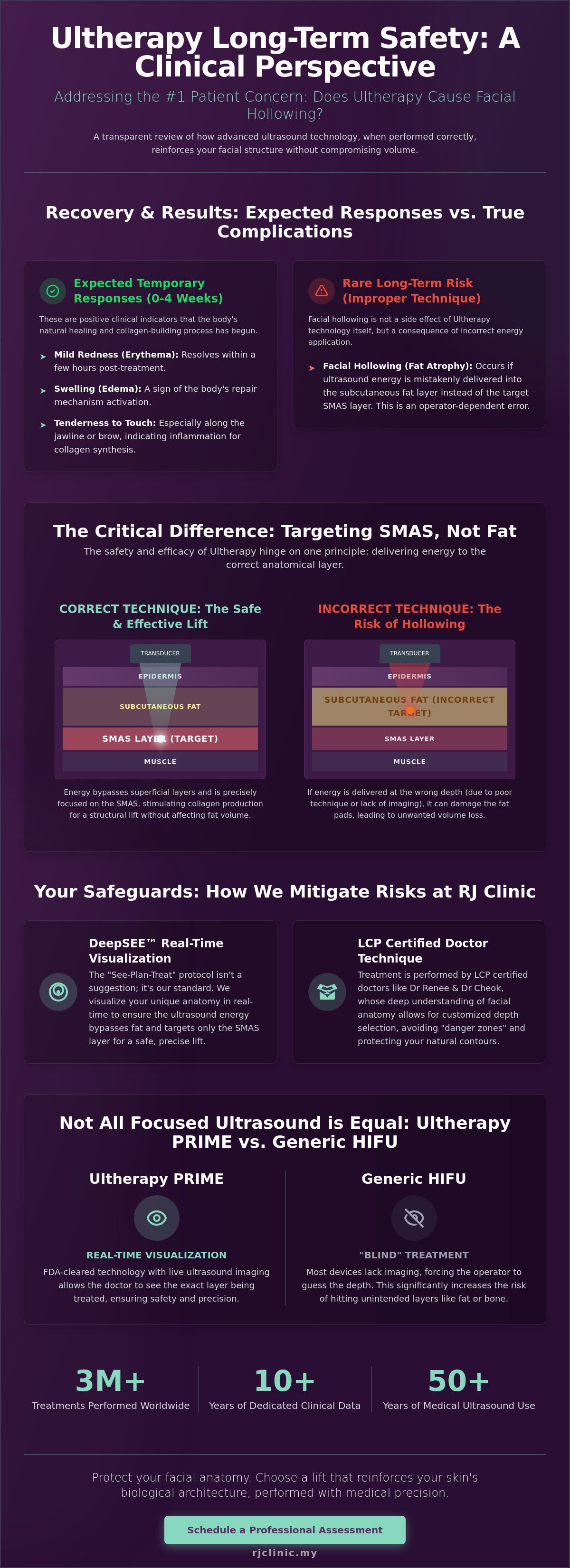
The safety profile of Ultherapy is supported by over a decade of dedicated aesthetic clinical trials and over 3 million treatments performed worldwide. Therapeutic ultrasound technology itself has a track record in diagnostic medicine spanning more than 50 years. This longevity provides a level of security that newer, unproven technologies cannot match. Because the SMAS layer acts as a permanent foundation for the face, the collagen produced there is structurally sound. When performed correctly, the risk of ultherapy side effects long term is remarkably low. The treatment doesn't degrade the skin; it reinforces the biological architecture that prevents sagging as we age.
Addressing the Facial Hollowing Myth: Does Ultherapy Melt Fat?
The most significant anxiety surrounding ultherapy side effects long term is the fear of facial hollowing or fat atrophy. Clinically speaking, Ultherapy isn't designed to melt fat. Its target is the SMAS layer. However, a "gaunt" or "sunken" appearance can occur if the ultrasound energy is misdirected into the subcutaneous fat layer. This isn't a failure of the technology; it's a consequence of improper depth selection. When energy is delivered at 4.5mm in a patient with a very thin facial profile, it can inadvertently reach fat pads that should be preserved for a youthful look. This highlights why a "more is better" approach with high line counts can actually be counterproductive for certain face shapes.
It's also essential to distinguish between treatment-induced fat loss and the natural, age-related depletion of facial volume. As we age, fat pads naturally migrate and shrink. A practitioner must evaluate whether a patient's concerns are a result of a previous procedure or simply the continuing biological aging process. If you're concerned about maintaining your natural volume, a professional assessment can help determine if you're an ideal candidate for structural lifting.
Depth Selection and Patient Anatomy
Every face is an individual map. Dr Renee and Dr Cheok emphasize that identifying "danger zones," such as the temples or the hollows of the cheeks, is the first step in any safe protocol. In these areas, the fat layer is often more superficial. Using a one-size-fits-all setting is where many long-term aesthetic issues begin. By utilizing real-time ultrasound imaging, we can see exactly where the fat ends and the SMAS begins, adjusting the depth of delivery to protect your natural contours. We prioritize the integrity of your facial structure over aggressive, standardized energy protocols.
HIFU vs. Ultherapy: A Critical Safety Distinction
Confusion between Ultherapy and generic HIFU (High-Intensity Focused Ultrasound) is a major source of patient misinformation. Most generic HIFU devices lack real-time visualization. This means the operator is essentially "firing blind" into your tissue, unable to see if they're hitting fat, bone, or nerve. Many reports of ultherapy side effects long term found online actually stem from these unbranded, non-FDA-cleared devices. For a deeper understanding of these differences, read about Ultherapy in Kuala Lumpur: The Clinical Logic Behind Non-Surgical Skin Lifting (2026). True Ultherapy provides a level of precision that "blind" alternatives simply cannot match.
Mitigating Risks: The Importance of LCP Certification and Technique
In Malaysia, the Letter of Credentialing and Privileging (LCP) isn't just a formality; it's a critical safety benchmark. It ensures that your doctor has undergone rigorous training to handle medical-grade ultrasound devices safely. When discussing ultherapy side effects long term, the conversation often circles back to technique. At RJ Clinic, Dr Renee and Dr Cheok adhere to the 'See-Plan-Treat' protocol. By using real-time visualization, we identify the specific depth of your SMAS and bone structure before any energy is released. This prevents "bone hits" or firing into areas where the skin is too thin, which are the primary causes of chronic discomfort or poor results.
Nerve irritation is usually temporary and caused by energy proximity to the marginal mandibular nerve. While it can feel like a slight tingling or numbness, it typically resolves on its own as the inflammation subsides. This is why mapping the face is a non-negotiable part of our process. If you have concerns about your suitability or want to understand the clinical safeguards in place, you should consult with our LCP-certified doctors to ensure a customized treatment plan.
Clinical Protocols for Nerve Safety
Avoiding major nerve branches requires an intimate knowledge of facial anatomy. We map out the "no-go" zones where nerves are most superficial to minimize any risk of irritation. Symptoms of transient nerve inflammation, such as temporary muscle weakness, are rare but manageable through standard medical protocols. An experienced practitioner will always prioritize safety over aggressive lifting. We'd rather perform a precise, conservative treatment than risk your long-term comfort for the sake of a more dramatic immediate result.
Patient Selection: Minimizing the Risk of Dissatisfaction
Not every patient is a candidate for ultrasound lifting. For those with a very thin face or significant volume loss, structural lifting may accentuate a gaunt look. In these cases, we often recommend biostimulators like Ellanse to restore volume while improving skin quality. Understanding skin laxity grades is also vital for ethical practice. If the sagging is severe, we'll be honest if surgery is a more effective recommendation. For patients seeking a more contoured look without significant sagging, our Face Slimming in KL options might provide a better clinical fit than structural lifting.
The Future of Safety: Ultherapy Prime at RJ Clinic
The evolution of ultrasound lifting reached a turning point with the 2024 launch of Ultherapy PRIME. This upgraded system addresses the primary concerns regarding ultherapy side effects long term by significantly enhancing the practitioner's ability to see and target tissue. With a dual-core processor and a larger, higher-definition screen, the system delivers energy faster and with much greater precision. This efficiency doesn't just reduce the total treatment time; it also minimizes the cumulative "heat" sensation that many patients found uncomfortable in legacy systems. At RJ Clinic, our commitment to safety means using only authentic, FDA-approved technology from Merz Aesthetics to ensure your results are both predictable and natural.
Why Visualization Matters More Than Energy
In the world of medical aesthetics, sight is synonymous with safety. The enhanced DeepSEE™ imaging on the Prime system offers a level of clarity that previous generations couldn't match. This allows Dr Renee and Dr Cheok to visualize the tissue layers in real-time with surgical-grade resolution. By identifying the exact location of the SMAS layer, we can avoid the fat pads and bone structures discussed in earlier sections. This precise targeting is the most effective way to prevent unwanted ultherapy side effects long term. For those seeking the gold standard in non-surgical lifting, choosing the Best Ultherapy Malaysia has to offer means prioritizing this advanced visualization technology.
Your Long-Term Aesthetic Journey
A single treatment is rarely the end of the story. Sustainable rejuvenation is a marathon, not a sprint. We typically recommend a maintenance cycle every 12 to 24 months to keep pace with the natural aging process. To further enhance skin quality and texture, we often combine ultrasound lifting with biostimulating treatments like Deusaderm. This multi-modal approach ensures that while the deeper structures are lifted, the surface remains radiant and healthy. The key to a successful outcome is a personalized consultation. We invite you to speak with Dr Renee or Dr Cheok to assess your suitability and design a plan that honors your unique facial anatomy.
Securing Your Aesthetic Future with Precision
Choosing a non-surgical lift is a decision that impacts your appearance for years to come. Understanding the clinical reality behind ultherapy side effects long term allows you to move forward with confidence, knowing that complications like fat loss or nerve irritation are almost always preventable through expert technique and proper depth selection. By prioritizing real-time visualization over standardized energy protocols, you ensure that your facial volume is preserved while your structural foundation is reinforced.
At RJ Clinic, Dr Renee and Dr Cheok utilize the latest FDA-approved Ultherapy Prime technology to provide a safer, more comfortable experience. Our customized 'See-Plan-Treat' protocols are designed to respect your unique anatomy, ensuring that every pulse of energy is delivered exactly where it's needed. When you choose a practitioner who values artistry as much as medical integrity, you can enjoy the benefits of a subtle, organic-looking lift without the anxiety of long-term risks. We invite you to schedule a clinical assessment for Ultherapy with our LCP-certified doctors to determine the best approach for your skin. Your journey toward a more refined, youthful profile begins with a foundation of safety and trust.
Common Clinical Questions Regarding Ultherapy Safety
Is facial fat loss from Ultherapy permanent?
Yes, if thermal energy is misdirected into the subcutaneous fat layer and causes cell death, that volume loss is typically permanent. This outcome isn't a standard part of the treatment but rather a result of improper depth selection. At RJ Clinic, we use real-time imaging to ensure energy is deposited into the SMAS and deep dermis, preserving the fat pads that are essential for a youthful facial structure.
Can Ultherapy cause nerve damage in the long term?
Permanent nerve damage is exceptionally rare in the clinical literature, which covers over 3 million treatments worldwide. Most nerve-related ultherapy side effects long term reported are actually transient inflammation, known as neuropraxia, which usually resolves within two to six weeks. By mapping the face and avoiding known nerve exit points, Dr Renee and Dr Cheok minimize the risk of even temporary nerve irritation.
How do I know if I am getting real Ultherapy or a generic HIFU?
Authentic Ultherapy systems always feature a live ultrasound feed on the monitor, allowing the doctor to see the skin layers during delivery. Generic HIFU devices lack this visualization technology, meaning the operator is working without a clear view of your internal anatomy. You can also verify a clinic's authenticity through the official Merz Aesthetics provider portal to ensure you aren't being treated with an uncertified device.
What happens if Ultherapy is performed on a face that is already thin?
Performing aggressive ultrasound lifting on a face with very little subcutaneous fat can lead to an overly gaunt or "skeletonized" appearance. In these cases, we often adjust the protocol to use shallower transducers or recommend alternative treatments that focus on volume restoration. It's vital to have a practitioner who prioritizes your overall facial harmony over simply following a standard treatment map.
Does Ultherapy cause skin sagging once the results wear off?
No, the treatment doesn't cause your skin to sag more once the effects diminish. Ultherapy builds a "collagen bank" that slows the visible signs of aging; when the results eventually fade, you simply return to your natural aging trajectory. Most patients find they're starting from a much firmer baseline than if they had never undergone the procedure.
Is there a risk of scarring or internal burns with Ultherapy?
Visible scarring or surface burns only occur if the transducer isn't kept perfectly flush against the skin, causing energy to "stack" in the epidermis. While the treatment creates microscopic thermal coagulation points internally to trigger lifting, these are controlled and don't result in visible scarring. Ensuring your doctor is LCP-certified is the best way to guarantee the technical precision required to avoid these surface-level complications.


Comments