


Skinbooster Aftercare: What to Expect After Treatment


What if the most critical phase of your skinbooster treatment doesn't actually happen in the doctor's chair? While the precision of the injection is paramount, the ultimate success of the procedure depends on how your skin manages the integration phase in the hours and days that follow. Many patients leave the clinic feeling revitalized, only to experience a surge of anxiety when they notice small, mosquito-bite-like bumps or a localized bruise. It's a common concern that these temporary reactions might mean the treatment has failed or that a specific skincare product has compromised the result.
Effective skinbooster aftercare is a biological partnership between your clinical treatment and your skin's natural healing response. Understanding the medical logic behind these protocols ensures that products like Rejuran or Belotero Revive settle perfectly into the dermal layers for that desired translucent glow. This guide provides a professional perspective on what to expect during your recovery, which active ingredients to pause, and how to distinguish normal healing from a situation that requires a follow-up with Dr Renee or Dr Cheok at our Mont Kiara or Bangsar clinics.
Table of Contents
The First 48 Hours: Managing Biological Integration and Papules
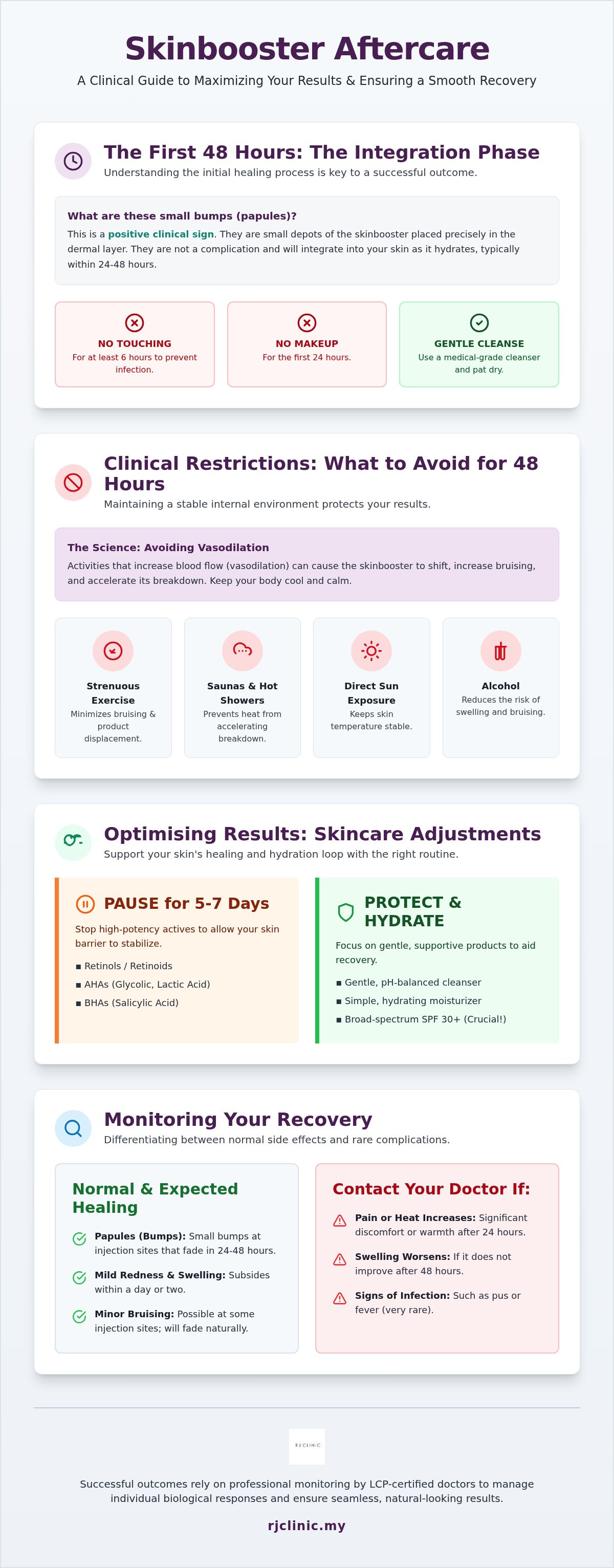
The appearance of small, uniform bumps across the treatment area is often the first concern patients raise during their initial skinbooster aftercare phase. In clinical terms, we refer to these as papules. Far from being a complication, these bumps represent the precise intradermal placement of the product. Because skinboosters are injected into the superficial dermis rather than the deeper subcutaneous tissue, they remain visible until the skin absorbs the active ingredients.
The integration timeline varies significantly based on the material used. For instance, Belotero Revive utilizes Hyaluronic acid, a naturally occurring molecule that is highly hydrophilic. It immediately begins drawing water into the site, which can make papules look slightly more pronounced for the first 12 hours. Conversely, Rejuran involves polynucleotides that focus on cellular repair. These typically dissipate within 24 to 48 hours as the DNA fragments integrate with your biological tissue.
Why Papules Form and How They Dissipate
Papules act as concentrated depots of nutrients. Their visibility is largely determined by the dermal thickness of the treated area. You'll likely notice that papules around the tear troughs or neck remain visible longer than those on the cheeks, where the skin is thicker and more vascular. Most patients see a transition from a "quilted" texture to a smooth, hydrated glow within two days. We advise against aggressive icing during this window. While cold compresses can manage minor swelling, excessive cold can cause vasoconstriction, potentially slowing the natural diffusion of the booster.
Immediate Post-Procedure Cleansing
Maintaining a sterile environment is the cornerstone of effective skinbooster aftercare. We enforce a strict six-hour "no-touch" rule. Each injection point is a microscopic channel that remains open for several hours. Applying makeup or non-medical skincare too early risks "tattooing" pigments or preservatives into the dermis, which may lead to prolonged irritation or infection. For your first evening cleanse, use a gentle, medical-grade cleanser. Avoid scrubbing the face; instead, use a light patting motion to ensure you don't disturb the fresh depots of product.
Clinical Restrictions: The Science Behind Avoiding Heat and Exercise
The success of your treatment doesn't solely rely on the doctor's technique; it also depends on maintaining a stable internal environment during the first 48 hours. Many patients ask why we insist on pausing their fitness routines. The answer lies in vasodilation. When you perform strenuous exercise, your heart rate rises and your blood vessels dilate to manage the increased metabolic demand. This surge in blood flow can cause the precisely placed micro-injections to shift before they've fully integrated into the dermal matrix. It also increases the risk of bruising at the injection sites, as the higher blood pressure can force more fluid into the surrounding tissue.
Vasodilation and Product Displacement
Dr Renee and Dr Cheok typically advise a 24 to 48 hour window of relative facial rest to ensure the product settles exactly where intended. High-intensity interval training or heavy lifting creates significant internal pressure. If this occurs too soon after your procedure, it can exacerbate swelling and lead to a more pronounced inflammatory response. While skinboosters are minimally invasive, clinical insights from institutions like Memorial Sloan Kettering on injection side effects highlight that managing the initial healing phase is essential for preventing unnecessary downtime.
Metabolic Rate and Booster Longevity
A common myth is that high temperatures will "melt" your skinbooster. In reality, the concern is enzymatic activity. Excessive heat from saunas, steam rooms, or even very hot showers can accelerate the breakdown of hyaluronic acid by stimulating the body's natural enzymes. In the tropical humidity of Kuala Lumpur, staying cool is a vital part of skinbooster aftercare. We recommend staying in air-conditioned environments and avoiding direct sun exposure during the peak of the day for the first 48 hours to keep your skin temperature stable and your results intact.
Alcohol consumption should also be limited for at least 24 hours post-treatment. Alcohol acts as a vasodilator and an anticoagulant, meaning it thins the blood and widens the vessels. This combination is a primary driver for post-injection bruising. If you're planning your treatment around a social event, it's best to schedule your session at our Mont Kiara or Bangsar clinic a few days in advance. This allows the initial integration phase to complete without the interference of substances that compromise your vascular stability. For those seeking a truly customized rejuvenation plan, we often suggest coordinating these lifestyle adjustments with your treatment schedule to maximize the "glow" factor.
Optimising Results: Skincare Adjustments and Environmental Protection
The glow you seek after a treatment is not just a result of the injection; it is a biological reaction that requires specific environmental conditions to thrive. One of the most overlooked aspects of skinbooster aftercare is the "Hydration Loop." Hyaluronic acid molecules are humectants, meaning they function by binding to water. If you are internally dehydrated, the booster has no moisture to draw from, which can lead to underwhelming results. We recommend increasing your daily water intake to at least two litres for the first week to support the plumping effect from within.
Internal and External Hydration
While internal hydration is vital, your topical routine must also shift to support the skin barrier. For the first three to five days, we advise suspending high-potency actives such as Retinol, Vitamin C, and AHAs. These ingredients are designed to increase cell turnover or exfoliate, which can be too aggressive for skin that is currently healing from micro-injections. Instead, focus on soothing ingredients like Ceramides and Centella Asiatica. These help seal the injection points and prevent transepidermal water loss. You should also avoid oil-based makeup for 24 hours, as heavy oils can trap bacteria in the fresh entry points.
The Role of Sun Protection in Healing
In the high-UV environment of Kuala Lumpur, protecting your skin post-treatment is a clinical necessity rather than a suggestion. UV radiation can trigger post-inflammatory hyperpigmentation (PIH) at the site of each injection, especially if you have a darker skin tone. Whether you have received Belotero Revive for hydration or Rejuran for repair, your skin is temporarily more sensitized to the sun. We recommend a physical (mineral) sunscreen containing Zinc Oxide or Titanium Dioxide, as these sit on top of the skin and reflect heat, unlike chemical filters which can sometimes cause a stinging sensation on sensitized tissue.
Managing sweat is the final piece of the puzzle. If you are frequenting the cafes or shops in Mont Kiara or Bangsar, be mindful of humidity. Sweat can carry bacteria into the injection sites during the first 48 hours. If you do find yourself perspiring, gently pat your skin dry with a clean tissue rather than wiping. To ensure your skin receives the exact nutrients it needs during this phase, you can speak with our team about a custom-designed rejuvenation plan tailored to your specific recovery timeline.
Monitoring Recovery: Normal Side Effects vs. Rare Complications
A successful skinbooster aftercare protocol requires a clear understanding of the difference between biological integration and clinical complications. Most patients experience a predictable inflammatory response that includes mild redness, tenderness, and the presence of papules. These are signs that the skin's regenerative processes have been activated. However, the ability to differentiate between a standard bruise and a rare vascular event is what ensures patient safety and peace of mind during the first week of recovery.
The Normal Healing Trajectory
During the first 72 hours, visible marks are at their peak. It is normal for the injection sites to feel slightly firm or "tight" as the product begins to draw moisture. By day four, the settling phase begins; the papules flatten, and the initial swelling subsides. By day 14, the product has fully integrated into the dermal matrix. This is the point where we perform a final assessment at our Mont Kiara or Bangsar clinics to ensure the subtle, organic-looking outcome has been achieved. If the hydration hasn't surfaced by this stage, it may indicate that your skin requires a secondary session or a different molecular weight of booster.
Identifying Red Flags
While complications are rare when treated by LCP-certified doctors like Dr Renee and Dr Cheok, you must remain vigilant for "red flags." A standard bruise will change color from purple to green or yellow. In contrast, vascular compromise often presents as blanching (the skin turning white or greyish) or a mottled, lace-like pattern known as livedo reticularis. Increasing pain that worsens after the first 24 hours is also a significant clinical signal that requires immediate attention.
Use this checklist to monitor your progress. If you observe any of the following, contact the clinic immediately:
Skin that feels unusually cold to the touch or looks pale/white in the treated area.
Pain that is not managed by simple over-the-counter analgesics or that radiates away from the injection site.
The appearance of small pustules or blisters within 48 hours.
Rapidly spreading redness that feels hot to the touch.
Monitoring your recovery is also an ideal time to discuss how skinboosters fit into your long-term aesthetic goals. For many patients, these treatments act as a foundation for further refinement. Once the skin is hydrated and the barrier is strong, we can look at incorporating Dermal Fillers for structural support or Exosomes to further accelerate cellular repair. This comprehensive approach ensures that your results are not just temporary, but part of a sustained, medical-grade rejuvenation plan.
Achieving Lasting Radiance Through Clinical Partnership
The period following your treatment is just as significant as the procedure itself. By prioritizing professional skinbooster aftercare, you ensure that the active molecules settle precisely where they can perform most effectively. Remember that initial papules are a sign of clinical accuracy, not a cause for concern; they'll soon give way to the smooth, hydrated texture you desire. By managing your internal hydration and observing the 48-hour window of rest, you protect the longevity of your results and prevent unnecessary inflammatory responses.
At RJ Clinic, we believe in a custom-designed approach to rejuvenation that extends beyond the treatment room. Our LCP-certified doctors, Dr Renee and Dr Cheok, utilize advanced clinical protocols to ensure every session delivers a subtle, natural-looking enhancement. If you're ready to move beyond generic skincare and invest in a personalized methodology for your skin health, we invite you to take the next step towards a refreshed, organic glow.
Schedule a consultation with our LCP-certified doctors to design your bespoke skinbooster plan and experience the difference of meticulous, expert care.
Frequently Asked Questions
How soon can I apply makeup after a skinbooster treatment?
You should wait at least 6 to 12 hours before applying any makeup. The injection points are microscopic open channels that require time to seal naturally. Applying cosmetics too early can trap pigments or bacteria within the dermis, which may lead to localized irritation or infection. Once this initial window has passed, ensure you use clean brushes and non-comedogenic products to maintain a sterile environment during your recovery.
Is it normal to have small bumps on my face for three days?
Yes, it is entirely normal for small papules to remain visible for up to three days post-injection. These bumps are intentional depots of the product, such as Rejuran or Belotero Revive, placed in the superficial dermis. Their persistence depends on individual skin thickness and the specific molecular weight of the booster. Most papules dissipate as the product integrates with your biological tissue, eventually transitioning into a smooth, hydrated surface.
Can I go to the gym on the same day as my skinbooster injection?
We advise against strenuous exercise for at least 24 to 48 hours after your session. Elevated heart rates and increased blood pressure cause vasodilation, which can displace the product before it has fully settled. In the humid climate of Kuala Lumpur, perspiration can also introduce bacteria into the fresh entry points. Resting allows the treatment to integrate undisturbed, ensuring the subtle, refined results that Dr Renee and Dr Cheok prioritize.
Why do I need to drink more water after getting a skinbooster?
Increasing your water intake is vital because many skinboosters rely on hyaluronic acid, a molecule that functions by binding to moisture. If your body is internally dehydrated, the booster has no water to draw from, which can lead to underwhelming results. Proper hydration supports the "Hydration Loop" necessary for that translucent glow. This internal support is a cornerstone of effective skinbooster aftercare, helping the product maximize its plumping potential from within.
When will I see the full results of my skinbooster treatment?
The full results typically manifest around 14 days after your procedure. While you might notice an immediate improvement in skin suppleness, the biological integration of polynucleotides or hyaluronic acid requires time to stimulate cellular repair. This two-week window allows any minor swelling or bruising to resolve completely, revealing the final, organic-looking outcome. We usually schedule a follow-up at our Mont Kiara or Bangsar clinics around this time to assess the integration.
What should I do if I notice bruising at the injection sites?
If bruising occurs, you can apply a cold compress gently for 10 minutes at a time during the first 24 hours to reduce swelling. Avoid blood-thinning substances like alcohol or high-dose Vitamin E, as these can prolong the healing process. Minor bruising is a standard part of the skinbooster aftercare phase and usually fades within five to seven days. If you experience severe pain or unusual skin discoloration, contact the clinic immediately for a professional assessment.



Comments