


RF Microneedling for Acne Scars: Why Scar Type Matters Before Treatment

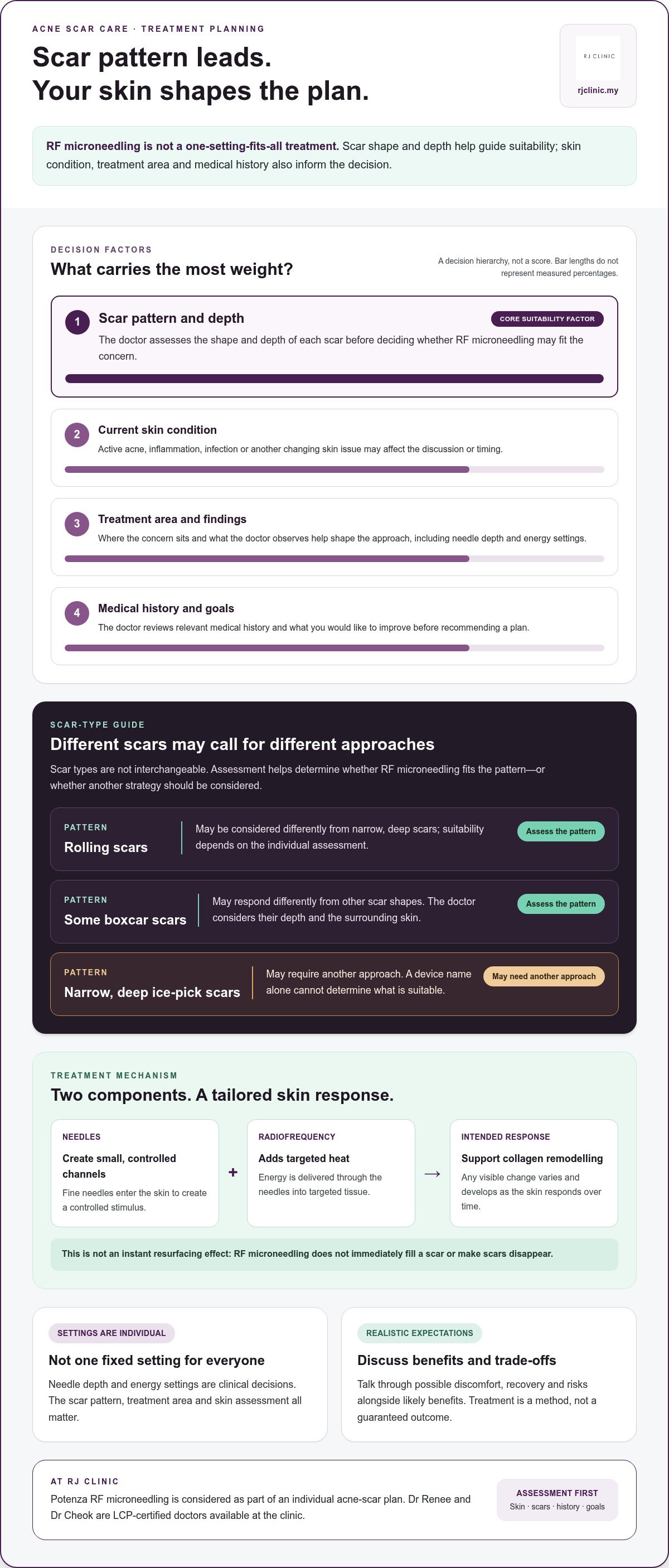
Two people can both have acne scars and still need different treatment plans. With RF microneedling, the shape and depth of each scar help determine whether the treatment may be suitable. Rolling scars and some boxcar scars may respond differently from narrow, deep ice-pick scars, which can require another approach. The aim is to match the treatment to the skin, not simply to choose the strongest setting or a particular device.
It is reasonable to ask how radiofrequency changes the treatment, whether it will hurt and how much improvement is realistic. RF microneedling delivers heat through fine needles into targeted skin layers, with the aim of encouraging collagen remodelling. It does not make scars disappear, and the device name alone cannot predict the result. Scar type, skin condition and treatment settings all matter.
A doctor’s assessment helps identify the scar pattern, review your skin and medical history, and discuss recovery and potential risks. At RJ Clinic, Potenza RF microneedling is considered as part of an individual acne-scar plan. Dr Renee and Dr Cheok are LCP-certified doctors available at the clinic. The sections below explain how the treatment works, which concerns it may address and what to weigh before deciding.
Table of Contents
What Is RF Microneedling, and Which Skin Concerns May It Address?
RF microneedling combines fine needles with radiofrequency energy. The needles enter the skin, and the energy creates heat in targeted tissue. Together, these actions are intended to prompt a controlled repair response, including collagen remodelling. The treatment is a method, not a guaranteed outcome. Any change in texture or scarring depends on the concern being treated and how your skin responds.
Conventional microneedling relies on the physical action of the needles. RF microneedling adds radiofrequency energy through those needles, but that does not make it the better option for everyone. The doctor considers your skin concern and examination findings before deciding whether this approach is appropriate and how it should be tailored.
How RF microneedling differs from conventional microneedling
Microneedles create small, controlled channels in the skin. In conventional microneedling, this physical action is the central treatment mechanism. RF microneedling also delivers radiofrequency energy through the needles, creating heat in the targeted tissue. The intended response is to support the skin’s repair process. It is not an instant resurfacing effect.
Needle depth and energy settings are clinical decisions, not fixed values for everyone. The treatment area, scar pattern and skin assessment all matter. A device name alone cannot tell you whether the method or its settings suit your skin.
Skin concerns that may prompt a consultation
People may explore treatment for uneven texture or depressions left by acne. Acne scars vary in shape and depth: rolling scars, boxcar scars and narrow ice-pick scars are not interchangeable. A method that may be considered for one pattern may be less suitable for another. Assessment helps the doctor distinguish the scar types and consider what each area may need, rather than assuming one technique will address every mark.
Active acne and the overall condition of your skin also affect the discussion. An assessment can distinguish ongoing breakouts from established textural scars and help set priorities for treatment. RJ Clinic’s acne and scar care starts with evaluating the concern before recommending an approach. This keeps the plan focused on your skin findings rather than device claims alone.
How RF Microneedling Works: Needles, Radiofrequency and Skin Response
RF microneedling has two components. Fine needles enter the skin to create controlled micro-injuries, while radiofrequency energy delivered through them produces heat in targeted tissue. The treatment is intended to prompt a repair response. The amount of visible change varies from person to person and depends on the concern and treatment plan.
In simple terms, the needles create a controlled stimulus and radiofrequency adds targeted heat. The resulting skin response may support gradual remodelling. This explains the mechanism; it does not promise that every scar or skin type will respond in the same way.
What the needles and radiofrequency each contribute
The needle component creates small channels in the skin. The radiofrequency component adds thermal energy at the treatment site. That heat may stimulate processes involved in collagen remodelling, but it does not immediately “fill” a scar or restore skin to an earlier state. If changes occur, they develop as the skin responds over time, and individual results differ.
The treating doctor selects needle depth and energy settings based on the assessment. These are not universal values to copy from one patient to another, and they cannot be judged by a device name alone.
Why treatment settings depend on the person and concern
A treatment plan takes account of what you want to address, where it is on the face or body, and what the doctor observes during the skin assessment. For acne scars, their pattern and depth can influence whether RF microneedling is considered and how the area is approached. A broader texture concern may call for a different plan from a distinct, deeper scar.
Tailoring the approach is part of assessing suitability and managing risk, not a guarantee of a particular outcome. The doctor also considers relevant medical history and the condition of your skin. If the assessment points to another strategy, the device itself should not dictate the decision.
At RJ Clinic, Potenza is the RF microneedling treatment used for acne-scar care. A consultation can clarify how the treatment’s mechanism relates to your concern and whether it fits the assessment. You can read about Potenza RF microneedling as part of that discussion.
Who May Be Suitable for RF Microneedling, and What Are the Trade-Offs?
Suitability depends on your skin and the concern you want to address. A doctor examines the area, considers your current skin condition and relevant medical history, and weighs whether the potential benefits make sense for you. The assessment may support proceeding, suggest a different plan or indicate that treatment should wait.
At RJ Clinic, Potenza RF microneedling is considered as part of that decision. Use the consultation to discuss your priorities, likely limitations and possible trade-offs before choosing how to proceed.
What a doctor assesses before recommending treatment
The doctor will ask what you would like to improve, examine the area and review relevant medical history. Current inflammation, infection or another changing skin issue may affect timing. Tell the doctor about recent changes in your skin, relevant health conditions and medicines you take. These details help the clinician judge whether treatment is appropriate and what precautions may be needed.
The recommendation follows from those findings. A consultation does not mean treatment must go ahead. It may show that a different approach or a delay is more suitable.
Potential side effects, limitations and reasons to defer
Temporary redness, swelling, sensitivity or pinpoint bleeding can occur after treatment. Less commonly, infection, pigmentation changes or scarring may occur. The doctor can explain which risks are relevant to your skin and what to watch for during recovery.
Improvement is not guaranteed, and the amount of change varies. Some concerns may not respond as hoped, so weigh possible improvement against discomfort, recovery and the chance of complications. Discuss these factors with a doctor as part of an assessment for Potenza RF microneedling.
What to Expect from RF Microneedling at RJ Clinic in Kuala Lumpur
A useful consultation should clarify why a treatment is being considered, what it may and may not address, and what the next step involves. At RJ Clinic, the discussion comes before a recommendation for RF microneedling. The decision is based on your acne-scar concern and skin assessment, not an assumption that every consultation should lead to treatment.
From consultation to an individualized treatment plan
Dr Renee and Dr Cheok are LCP-certified doctors available at RJ Clinic. During a consultation, the doctor discusses your concerns and goals, examines your skin and reviews relevant medical history. This helps determine whether Potenza is appropriate for your concern or whether another approach, a change in timing or no treatment for now makes more sense.
If treatment is recommended, the plan is tailored to the assessment. Before deciding, discuss the intended approach, potential benefits and limitations, possible side effects and what to expect afterwards. No specific result should be assumed in advance. Your response depends on you and the concern being treated.
Aftercare, follow-up and next steps
Preparation and aftercare guidance should come from the treating clinician and reflect your skin and treatment plan. Follow those instructions rather than relying on a general routine intended for someone else. If you have questions or notice a reaction that concerns you after treatment, contact the clinic for advice from the treating team.
At follow-up, the doctor can review how your skin has responded and discuss what, if anything, should happen next. The review is not a promise of improvement; it helps guide the next decision based on your response. Your doctor can also explain how the plan relates to your goals and whether further treatment is appropriate.
If you are considering RF microneedling in Kuala Lumpur, you can explore Potenza treatment at RJ Clinic. The clinic serves patients across Kuala Lumpur, including Mont Kiara, Bangsar, Damansara Heights, Sri Hartamas, TTDI, Segambut, Kepong, Desa ParkCity, Solaris Dutamas, Publika, Bandar Sri Damansara, Mutiara Damansara and Bandar Utama. Discuss the recommendation, trade-offs and care involved before deciding whether to proceed.
Choose Your Next Step with Clear Priorities
A consultation does not require an immediate decision. Take time to consider the information, note any questions that remain and decide whether the proposed approach fits your priorities. Exploring a treatment does not commit you to having it.
If you are considering RF microneedling, ask the doctor to explain the reasoning behind the recommendation, what the plan is intended to address and what you would be agreeing to. That clarity can help you decide whether to proceed or pause.
To discuss your acne-scar concerns and whether Potenza may suit your skin, explore Potenza RF microneedling at RJ Clinic.
Frequently Asked Questions
Does RF microneedling hurt?
Some discomfort is possible, and the sensation varies between people and treatment areas. You may feel pressure, prickling or warmth during the procedure, but your experience cannot be predicted precisely in advance. Tell the doctor if you are particularly sensitive or anxious about discomfort so this can be discussed before treatment. Do not take pain medication beforehand unless the treating clinician advises you to, as suitability depends on your health and medicines.
How many RF microneedling sessions might someone need?
A course may involve three to six sessions, often spaced four to six weeks apart, but this is a general range, not a prescription. The number depends on the scar pattern, your skin’s response and the treatment plan. Your doctor may reassess progress before recommending another session. Ask what the plan is intended to address and how progress will be reviewed, rather than assuming a package or set number suits everyone.
How long does it take to see results from RF microneedling?
There is no universal date for judging results. Your treating doctor can advise when to review your skin based on the treatment plan. For a useful comparison, take photos before treatment and at the review point using the same lighting, angle and distance, without makeup. Keep brief notes on changes you notice and any concerns, then bring them to follow-up rather than relying on memory.
Can I wear makeup after RF microneedling?
Wait until your treating clinician says makeup is appropriate for your skin. Applying cosmetics while the skin is still sensitive or recovering may irritate it, and products or applicators can introduce unwanted contamination. Ask for a clear aftercare plan, including when to resume makeup and how to keep brushes or sponges clean. If your skin remains unusually uncomfortable or irritated, seek advice before covering the area.
Can RF microneedling be combined with other skin treatments?
Sometimes, but combination treatment needs a doctor’s plan. The decision depends on the other procedure, your skin’s condition and the order and timing considered appropriate. Combining treatments does not automatically improve results and may affect irritation or recovery. Mention any recent or planned peels, lasers, injectables or prescribed skin medicines during consultation. Your doctor can decide whether to stage treatments or keep the plan focused on one approach.


Comments