


Medical Facials in Kuala Lumpur: A Clinical Perspective on Skin Maintenance

Why does your skin often remain stubbornly congested or dull despite a consistent schedule of monthly spa treatments? It's a clinical reality that surface-level extractions and generic masks simply cannot reach the deeper dermal layers where true skin health is regulated. Many patients come to us after years of wasted investment on generic routines, feeling confused by the array of clinical technologies like HydraFacial or SilkPeel without understanding which one actually addresses their unique pathology.
We understand the frustration of seeing minimal returns on your skincare investments. In this article, you'll learn the clinical logic behind medical facials and how LCP-certified doctors like Dr Renee and Dr Cheok tailor these treatments for results that transcend basic pampering. We'll break down how these bespoke protocols correct skin texture at a cellular level, prepare your skin for advanced treatments like Ultherapy Prime, and ensure your maintenance routine is backed by scientific integrity rather than marketing trends.
Key Takeaways
Understand why medical facials target the deeper dermal layers to resolve persistent congestion and dullness that standard spa treatments cannot reach.
Discover how pharmaceutical-grade actives and advanced devices like the Hollywood Spectra Laser create a more profound, lasting impact on skin texture and clarity.
Learn why a bespoke consultation with LCP-certified doctors like Dr Renee or Dr Cheok is essential to tailoring a protocol that evolves as your skin health improves.
Explore the strategic synergy between clinical skin maintenance and higher-tier treatments, such as Ultherapy Prime, to ensure the skin is primed for optimal lifting results.
Table of Contents
Beyond Relaxation: Why a Medical Facial is a Clinical Necessity, Not a Luxury
The Anatomy of a Medical-Grade Treatment: Actives, Devices, and Depth
Choosing Your Protocol: Matching Clinical Facials to Your Skin's Current State
Maximising the RJ Clinic Experience: Post-Treatment Care and Procedural Synergy
Beyond Relaxation: Why a Medical Facial is a Clinical Necessity, Not a Luxury
Many patients view facial treatments as a ritual of relaxation, a sensory experience involving soft music and aromatic oils. While these have their place in stress management, medical facials serve a fundamentally different purpose. These are physician-prescribed interventions designed to correct specific dermatological conditions rather than just providing temporary hydration. At RJ Clinic, Dr Renee and Dr Cheok oversee these protocols to ensure they utilize FDA-approved technologies and pharmaceutical-grade actives that target the skin's deeper architecture. The goal isn't just a glow that lasts an evening; it's a measurable improvement in skin health.
There's a persistent belief that for a clinical treatment to work, it must be uncomfortable or involve significant downtime. This is a common misunderstanding. Modern clinical protocols prioritize efficacy without unnecessary trauma. We focus on controlled delivery systems that respect the skin barrier while achieving physiological change. A well-executed medical facial should feel like a sophisticated upgrade to your skincare, not an ordeal to be endured. By moving past the "no pain, no gain" myth, we can focus on the science of cellular rejuvenation.
The KKM and LCP Advantage in Malaysia
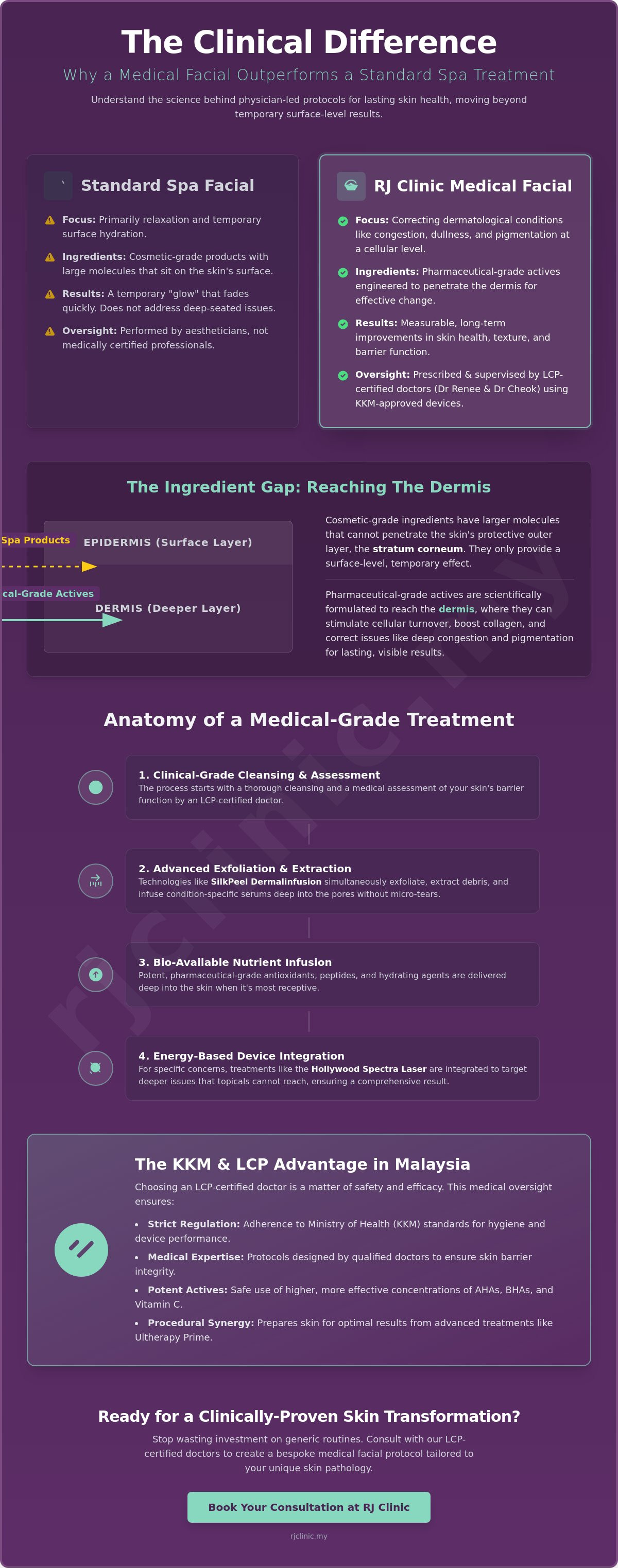
In Malaysia, the distinction between a beauty salon and a medical clinic is strictly regulated by the Ministry of Health (KKM). Choosing an LCP-certified doctor for your skin maintenance is about more than just expertise; it's about safety. Before any high-strength chemical skin peel or energy-based treatment, Dr Renee or Dr Cheok will assess your skin’s barrier function. This medical oversight allows us to safely use much higher concentrations of AHAs, BHAs, and Vitamin C than what is permitted in a non-clinical setting. KKM registration also ensures that every device meets rigorous hygiene and performance standards, protecting you from the risks associated with unregulated equipment.
Spa vs. Medical Grade: The Ingredient Gap
The primary difference between spa products and medical-grade skincare lies in molecular size and delivery systems. Cosmetic-grade ingredients are often formulated with larger molecules that sit on the skin's surface, providing a fleeting glow but failing to penetrate the stratum corneum. In contrast, pharmaceutical-grade actives are engineered to reach the dermis. This dermal-deep focus is necessary to treat deep-seated congestion or pigmentation issues that over-the-counter products simply cannot reach. Medical facials leverage these advanced delivery systems to ensure that potent antioxidants and exfoliating agents are delivered exactly where they can stimulate cellular turnover and collagen production effectively.
The Anatomy of a Medical-Grade Treatment: Actives, Devices, and Depth
A medical-grade protocol follows a specific physiological sequence that respects the skin's natural healing cycle. It begins with clinical-grade cleansing, followed by mechanical or chemical exfoliation to remove the stratum corneum. Unlike standard Dermatologic Surgery Treatments that might involve deeper ablation, medical facials focus on controlled resurfacing. This systematic approach prepares the skin for targeted extractions and the infusion of bio-available nutrients. While many patients seek an immediate "glow," our primary objective is long-term cellular health. A temporary radiance is a pleasant byproduct, but the real clinical value lies in improving the skin's barrier function and metabolic rate over time.
Advanced Exfoliation: Dermalinfusion and SilkPeel
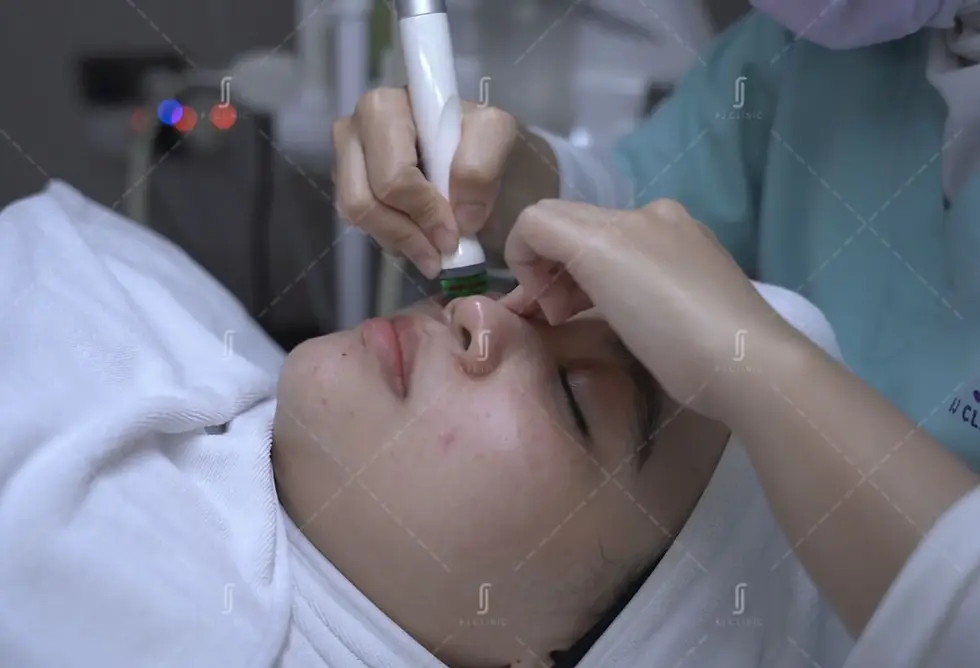
Traditional microdermabrasion often relies on abrasive crystals that can cause micro-tears or uneven results on sensitive skin. SilkPeel technology replaces this outdated method with a diamond-tip vacuum system. This vacuum-assisted dermalinfusion performs three tasks simultaneously: it exfoliates dead skin cells, extracts debris from deep within the pores, and infuses condition-specific serums. Because the infusion happens at the exact moment the skin is most receptive, the bio-actives penetrate much deeper than any topical cream could. This is particularly effective for managing acne and scars or persistent dehydration.
Light and Laser Integration
We often integrate energy-based devices to address concerns that topical actives alone cannot reach. The Hollywood Spectra Laser is a prime example of this clinical synergy. As a "carbon peel" variant, it utilizes a specialized carbon lotion to attract laser energy. When the laser passes over the skin, it vaporizes the carbon, clearing pores and stimulating collagen production. In the Malaysian climate, where high humidity often leads to excess sebum, this is invaluable for refining texture and reducing oiliness. We also utilize LED phototherapy to calm inflammation and stimulate ATP production in skin cells. It's vital to adjust these energy levels based on Fitzpatrick skin types to prevent post-inflammatory hyperpigmentation. If you're noticing persistent dullness, you can speak with Dr Renee or Dr Cheok to see if a laser-integrated protocol is suitable for your skin type.
Choosing Your Protocol: Matching Clinical Facials to Your Skin's Current State
Patients often come to our clinic requesting a specific "branded" treatment they've seen on social media. However, the most effective medical facials are those that evolve alongside your skin's health. A protocol that works for you during a period of heavy congestion may not be the same one you need for maintenance six months later. At RJ Clinic, Dr Renee and Dr Cheok begin every journey with a bespoke consultation to determine the most effective path forward. We don't just look at the surface; we identify the root cause of distress, whether it's hormonal, environmental, or a compromised barrier.
For those seeking a more intensive resurfacing than a standard maintenance session, a chemical skin peel may be the appropriate clinical choice. While many fear the word "peel," these physician-led treatments are precisely calibrated to your skin's tolerance. They offer a level of controlled exfoliation that addresses deeper texture issues which a purely mechanical facial might miss. We view these treatments as a partnership between our clinical expertise and your skin's natural regenerative capacity.
The Acne and Congestion Protocol
Treating active acne requires a delicate balance between effective extraction and inflammatory control. Our congestion-focused protocols prioritize salicylic acid to dissolve sebum and professional extractions to clear the path for healing. It's critical to manage the skin's inflammatory response during the session to prevent post-inflammatory hyperpigmentation. If you're currently struggling with persistent breakouts, our targeted approach for acne and scars focuses on sanitizing the skin while calming the underlying irritation to prevent future damage.
Pigmentation and Brightening Focus
In Kuala Lumpur, UV exposure is a constant challenge for those prone to melasma or sun damage. Our brightening protocols often utilize high-concentration Vitamin C and Tranexamic acid infusions. These actives work synergistically with the Hollywood Spectra Laser to break down stubborn pigment at the source. Because the skin is more sensitive to light immediately after clinical exfoliation, strict adherence to medical-grade sun protection is non-negotiable. We ensure our patients leave not just with brighter skin, but with a clear plan to protect those results from the tropical sun.
To determine which clinical protocol matches your current skin state, schedule a consultation with our doctors today to begin your personalized treatment plan.
Maximising the RJ Clinic Experience: Post-Treatment Care and Procedural Synergy
A common clinical oversight in aesthetic medicine is treating skin maintenance as an isolated event. In reality, medical facials serve as a foundational "skin prep" that significantly enhances the efficacy of more advanced lifting and contouring procedures. When the skin is professionally exfoliated and deeply hydrated, its impedance changes, allowing energy-based devices to perform more predictably. While you may notice an immediate refinement in texture after one session, the most significant clinical shifts occur cumulatively. We typically observe the best results after a series of 3 to 4 sessions, as this allows us to systematically address deeper structural concerns.
Maintaining a consistent schedule every 4 to 6 weeks is not a matter of convenience; it is rooted in biological necessity. The human skin typically undergoes a natural turnover cycle every 28 days. As we age or deal with environmental stressors in Kuala Lumpur, this process slows down, leading to a buildup of dead cells and a dull complexion. By aligning your treatments with this cycle, Dr Renee and Dr Cheok can ensure that your skin remains in a perpetual state of regeneration, preventing the "plateau effect" often seen with irregular care.
Synergy with Ultherapy and Injectables
For patients considering non-surgical lifting, a medical facial improves the skin's acoustic window for Ultherapy. By removing the barrier of dry, dead skin cells, the ultrasound energy can penetrate more efficiently to the SMAS layer. This ensures that the heat-based stimulation is uniform and effective. Regarding injectables, we generally recommend scheduling your facial at least one week before or two weeks after dermal fillers or Botox. This window prevents any unnecessary pressure on the injection sites while ensuring the surrounding tissue is healthy and vibrant, which ultimately complements the natural-looking results of your Ultherapy Prime treatment.
The Post-Facial Recovery Window
Understanding what happens after you leave the clinic is just as important as the treatment itself. You might experience mild erythema, which usually subsides within a few hours. In some cases, particularly for acne-prone skin, a brief "purging" phase may occur as deep-seated impurities are drawn to the surface. This is a sign of a successful clinical extraction and should not cause alarm. To extend the life of your results, we provide a curated selection of medical-grade home care products that maintain the skin's pH and moisture levels. To begin your journey toward a more refined complexion, book a consultation with Dr Renee or Dr Cheok to design your bespoke skin protocol.
Elevating Your Skin Health Through Clinical Precision
Transitioning from standard spa visits to medical facials is a shift toward viewing skin maintenance as a precise biological intervention. We've explored how these physician-led protocols use FDA-approved technology and pharmaceutical-grade actives to reach the dermis, providing the necessary foundation for more intensive treatments like Ultherapy. By aligning your care with the natural 28-day turnover cycle, you ensure that your skin remains resilient against the environmental stressors of Kuala Lumpur.
At RJ Clinic, Dr Renee and Dr Cheok utilize their clinical expertise to design bespoke protocols that evolve as your skin improves. This medical oversight ensures that every extraction, exfoliation, and infusion is safe and effective for your specific Fitzpatrick skin type. To move beyond temporary surface-level results and invest in lasting cellular health, schedule your bespoke skin assessment with our LCP-certified doctors at RJ Clinic. We look forward to partnering with you on your journey toward a naturally refined and radiant complexion.
Common Questions Regarding Clinical Skin Maintenance
Is there any downtime associated with a medical facial?
Most patients experience zero downtime and can return to their daily activities immediately after their session. You might notice a slight pinkish hue or mild erythema for two to three hours, which is a normal physiological response to clinical stimulation. Unlike aggressive resurfacing, these treatments are designed to be non-disruptive while still achieving significant dermal penetration and cellular turnover.
How often should I get a medical facial for the best results?
For optimal maintenance, we recommend a session every four to six weeks. This timeline aligns with your skin's natural 28-day regenerative cycle, ensuring that dead cell buildup is managed before it leads to congestion or dullness. While one session provides an immediate refinement, a series of four treatments is usually necessary to see cumulative, structural improvements in skin clarity and texture.
Can I do a medical facial if I have sensitive skin or eczema?
Sensitive skin or eczema-prone conditions aren't a contraindication for medical facials, provided the protocol is adjusted by a physician. Dr Renee or Dr Cheok will assess your barrier function first to ensure we avoid high-strength acids that might cause irritation. Instead, we utilize calming infusions and lower-pressure vacuum settings to hydrate and strengthen the skin without triggering an inflammatory flare-up.
What is the difference between a HydraFacial and a medical-grade SilkPeel?
The primary difference lies in the exfoliation mechanism and the precision of serum delivery. While HydraFacial uses a vortex-suction tip for a more generalized cleanse, the medical-grade SilkPeel employs a diamond-tip handpiece for more precise mechanical resurfacing. This allows for more controlled exfoliation of the stratum corneum while simultaneously delivering condition-specific serums into the pores while they are most receptive.
Can I apply makeup immediately after my treatment at RJ Clinic?
It's best to wait at least 12 to 24 hours before applying heavy foundation or powders. Your pores are highly receptive and functionally "open" immediately after a clinical extraction and nutrient infusion. Applying cosmetic-grade makeup too soon can lead to unnecessary congestion, potentially undoing the deep-cleansing benefits of your professional treatment and irritating the newly resurfaced skin.
Will a medical facial help with deep acne scars or just active breakouts?
Medical facials are exceptionally effective for managing active breakouts and refining surface texture, but they aren't a standalone solution for deep, atrophic acne scars. While they help prevent new scarring by controlling inflammation and clearing congestion, correcting deep "pitted" scars usually requires more intensive interventions like subcision or Potenza RF microneedling to physically break down scar tissue and stimulate new collagen.


Comments