


Melasma Treatment in Malaysia: A Clinical Guide to Managing Jeragat in 2026

Updated: May 4

The aggressive whitening cream you've been applying every night might be the very reason your dark patches are returning darker and more stubborn than before. At RJ Clinic, we frequently consult with patients who've invested significantly in over-the-counter solutions only to face rebound hyperpigmentation that feels impossible to correct. It's a taxing cycle where the pursuit of clear skin leads to deeper social anxiety and a 'dirty' facial appearance that makeup can't quite mask. Finding an effective melasma treatment malaysia requires moving past the surface; it involves addressing the underlying vascular and hormonal triggers that standard retail products simply cannot reach.
You've likely realized by now that jeragat isn't just a simple consequence of too much sun. This guide will help you understand the clinical complexities of your skin and why a multi-modal, doctor-led approach is the only way to achieve lasting results in Malaysia’s intense UV climate. We'll explore how Dr Renee and Dr Cheok utilize bespoke protocols to ensure significant fading of dark patches while establishing a sustainable long-term maintenance plan. You'll learn exactly why previous attempts might have failed and how modern, FDA-approved technologies can finally restore your natural complexion without the risk of over-treatment or irritation.
Key Takeaways
Identify why distinguishing between epidermal and dermal pigment is the essential first step in crafting a clinical strategy that avoids surface-level treatment failure.
Explore the "laser paradox" and understand why aggressive heat settings often backfire, leading to rebound pigmentation in the unique Malaysian climate.
Discover why a multi-modal protocol is the clinical gold standard for effective melasma treatment in Malaysia, moving beyond single-modality solutions for more stable results.
Learn how to shield your skin from Kuala Lumpur’s specific environmental stressors, including the nuanced role that heat and humidity play in melanocyte hyperactivity.
Gain insight into the bespoke approach used by Dr Renee and Dr Cheok to achieve subtle, natural-looking refinement while prioritizing long-term skin integrity.
Table of Contents
The Clinical Complexity of Melasma in the Malaysian Climate
The Laser Paradox: Why Aggressive Treatments Often Backfire
The Multi-Modal Protocol: RJ Clinic’s Bespoke Approach
Long-Term Maintenance and Prevention in Kuala Lumpur
The Clinical Complexity of Melasma in the Malaysian Climate
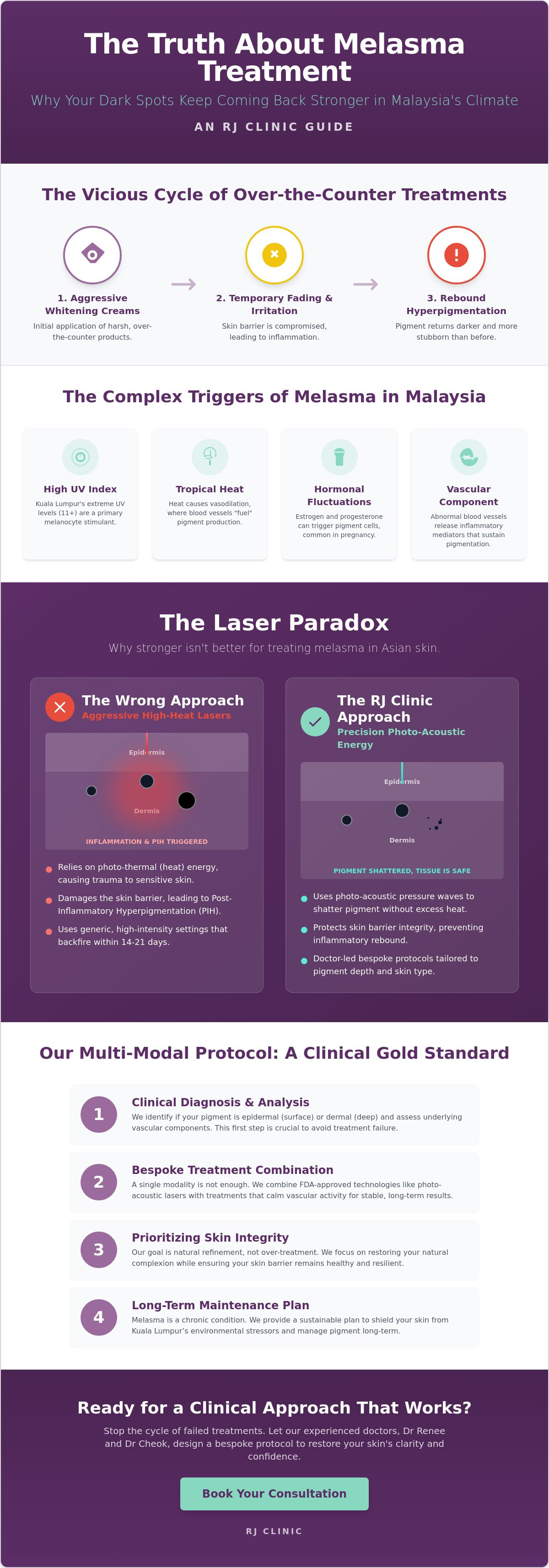
Many patients visit Dr Renee and Dr Cheok describing "jeragat" as a stubborn stain that refuses to fade despite expensive serums. In a clinical setting, we define melasma as a chronic pigmentary disorder driven by melanocyte hyperactivity. This isn't a simple surface blemish; it's a deep-seated biological response where pigment-producing cells become over-sensitized. It's vital to recognize that the condition involves the entire skin structure, including the basement membrane and underlying blood vessels. In Malaysia, our environment presents unique challenges. The UV index in Kuala Lumpur frequently reaches extreme levels of 11 or higher, but UV radiation isn't the only culprit. Tropical heat itself acts as a potent trigger through vasodilation. We've observed that abnormal blood vessels often "fuel" pigment production by releasing inflammatory mediators into the surrounding skin. This vascular component explains why many standard whitening creams fail. They don't address the underlying redness and vessel activity that keeps the pigment active.
Why Jeragat is More Than Just Sun Damage
We often see patients who are diligent with sunscreen but still struggle with darkening patches. This happens because melasma is deeply influenced by hormonal fluctuations. Estrogen and progesterone receptors in the skin can trigger pigment cells even without heavy sun exposure, a common occurrence during pregnancy or while using oral contraceptives. In Asian skin types, there's a strong genetic predisposition that makes the melanocytes more reactive than those in Caucasian skin. We typically observe these patches appearing symmetrically on the malar cheeks, forehead, or upper lip. This symmetry is a key clinical indicator that differentiates melasma from random sunspots.
The Laser Paradox: Why Aggressive Treatments Often Backfire
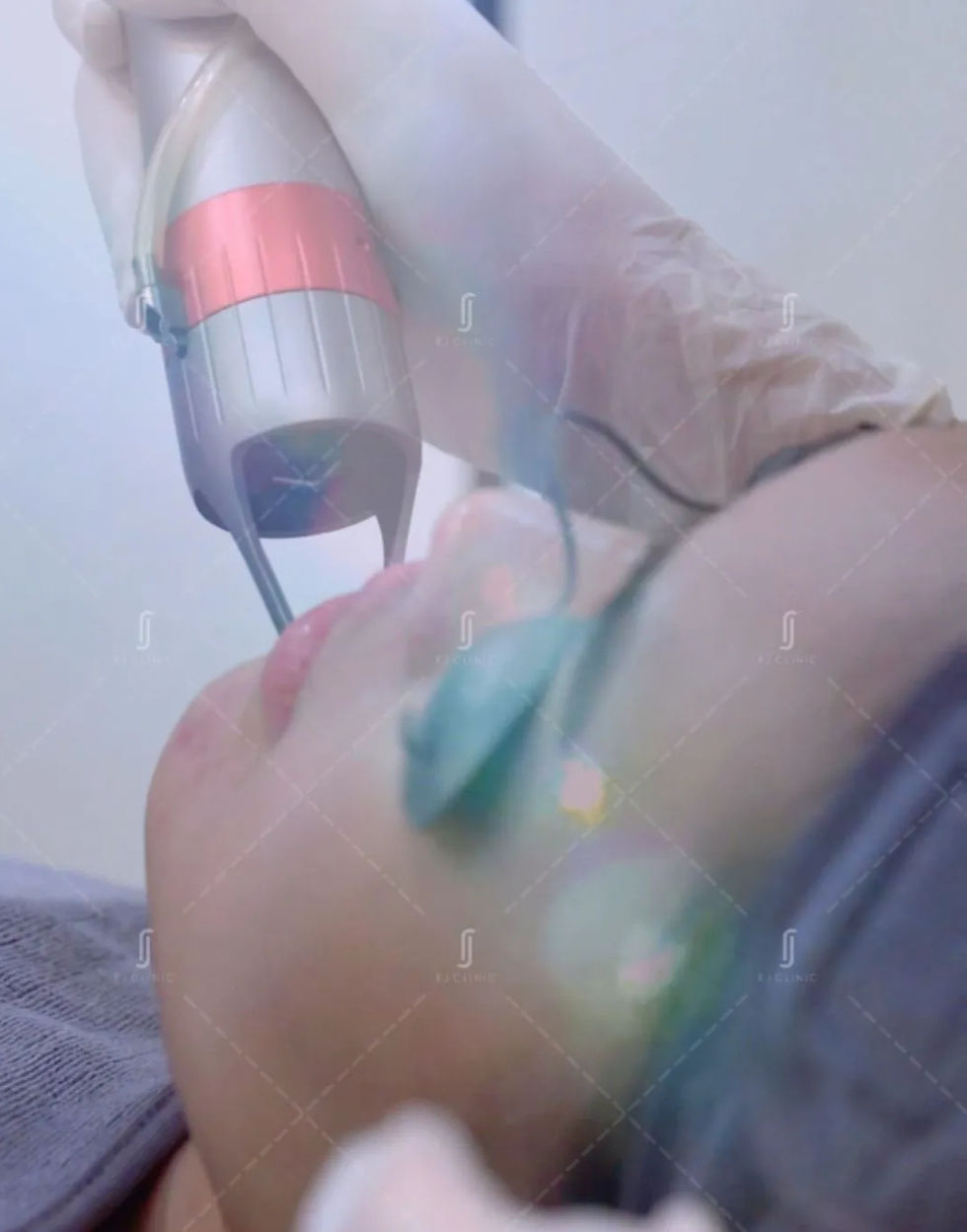
Patients often walk into our consultation rooms requesting the most powerful laser setting available, operating under the misconception that higher intensity leads to a faster resolution of stubborn jeragat. This approach is fundamentally flawed for melasma treatment Malaysia. In our local climate, most patients possess Fitzpatrick skin types III through V, which are genetically predisposed to hyper-reactivity. When you subject these skin types to high-heat energy, the melanocytes (pigment-producing cells) perceive it as a trauma. The result isn't just the removal of existing pigment, but the triggering of Post-Inflammatory Hyperpigmentation (PIH). This biological backlash can leave you with patches that are darker and more resistant than the original melasma.
Cheap aesthetic deals often lack the precision needed for complex pigmentation because they utilize generic settings that don't account for the 0.1mm depth variations in dermal pigment. Without a bespoke approach, these "strong" treatments act as a blunt instrument, causing unnecessary inflammation. This inflammation acts as a signal that wakes up dormant melanocytes, leading to a visible rebound effect within 14 to 21 days of the procedure.
The Danger of High-Heat Energy Devices
Traditional CO2 lasers or older high-energy Q-switched devices rely heavily on photo-thermal energy. They generate significant heat to break down pigment, but this heat often compromises the skin barrier. Dr Renee and Dr Cheok prioritize skin barrier integrity because a healthy barrier is the first line of defense against pigment recurrence. We prefer technologies that utilize photo-acoustic energy. These devices shatter pigment using rapid pressure waves rather than heat, ensuring the surrounding tissue remains cool. Research into the best treatments for melasma confirms that protecting the dermal environment is just as vital as clearing the surface spots. By avoiding thermal damage, we prevent the inflammatory cascade that typically leads to melasma rebound.
Managing Patient Expectations for Melasma
It's vital to understand that melasma is a chronic condition that requires long-term management rather than a permanent cure. We view the process as a clinical partnership where the goal is to keep the pigment in a "dormant" state. Clinical improvement usually follows a steady trajectory over 12 to 24 weeks. Attempting to rush this timeline with aggressive peeling usually backfires. When deciding on a Laser vs. Chemical Peel in Malaysia, we assess your skin's baseline sensitivity to ensure the chosen modality won't trigger a protective melanin response. For those ready to begin a structured journey, you can consult our specialists for a bespoke pigmentation plan tailored to your skin's unique threshold.
The Multi-Modal Protocol: RJ Clinic’s Bespoke Approach
Patients often ask why a single "strong" laser treatment isn't the standard for melasma treatment malaysia. In clinical practice, aggressive heat often triggers post-inflammatory hyperpigmentation (PIH), making the jeragat significantly worse. We've found that a multi-modal approach is the only way to achieve stable results. This involves combining low-fluence laser toning with oral stabilizers like Tranexamic Acid to suppress melanocyte activity from within. Dr Renee and Dr Cheok emphasize that because melasma is a chronic condition, the goal is control rather than a one-time cure. This requires precise adjustments of laser parameters mid-treatment based on how the skin reacts to each session.
Advanced Laser Systems for Pigmentation
The Hollywood Spectra Laser is a cornerstone of our protocol because it delivers energy in a flat-top beam profile, ensuring even pigment clearance without creating localized hot spots. Unlike older Q-switched systems, picosecond technology utilizes photo-acoustic shockwaves to shatter dermal pigment into tiny particles, which significantly minimizes downtime. Specific laser wavelengths are also employed to target the vascular feeders of melasma, effectively cutting off the blood supply that often fuels pigment recurrence. This dual-action approach is vital for long-term melasma management and preventing the rebound effect common with overly aggressive treatments.
Chemical Peels and Skin Rejuvenation
While lasers target deep pigment, Chemical Skin Peels serve to accelerate epidermal turnover, lifting surface stains safely. We often integrate Deusaderm or specialized skinboosters to repair the basement membrane; this acts as a barrier preventing pigment from leaking into the deeper dermis. When choosing between a Medical Facial vs Laser for maintenance, we generally recommend clinical facials to sustain skin health between more intensive laser cycles. This structured layering ensures the skin remains resilient rather than sensitized, providing a more predictable path toward a clearer complexion.

Long-Term Maintenance and Prevention in Kuala Lumpur
Many patients mistakenly view the end of a laser cycle as the finish line. In clinical practice, Dr Renee and Dr Cheok often emphasize that melasma is a chronic condition requiring a shift from "correction" to "stabilization." Once the intensive phase of your melasma treatment malaysia is complete, the focus must pivot toward preventing the melanocytes from reacting to the harsh tropical environment of Kuala Lumpur. This transition usually occurs after the initial 12 to 16 weeks of active therapy, moving away from high-concentration hydroquinone or aggressive lasers toward pigment-stabilizing topicals and biostimulators that maintain skin integrity.
The Correct Way to Protect Your Results
Standard SPF ratings only tell half the story for a melasma patient. While a chemical sunscreen might prevent a sunburn, physical blockers containing Zinc Oxide or Titanium Dioxide are superior because they reflect heat and light away from the skin surface rather than absorbing it. Since heat is a known trigger for jeragat, these mineral shields provide a cooler environment for the dermis. Dr Renee recommends a clinical-grade antioxidant, such as a 15% Vitamin C serum, applied every morning to neutralize UV-induced free radicals that sunscreen alone might miss. In the Malaysian humidity, sunscreen efficacy drops significantly due to sweat, making reapplication every 120 to 180 minutes a non-negotiable requirement for maintaining clear skin.
Lifestyle Adjustments for Pigment Control
Environmental triggers in Kuala Lumpur extend beyond direct sunlight. High ambient temperatures from cooking, frequent sauna use, or even intense hot yoga sessions can cause vasodilation, which often leads to a melasma flare-up. Recent clinical observations also suggest that High Energy Visible (HEV) light, or blue light from smartphones and computer monitors, can stimulate pigment production in darker skin tones. To counter this, we recommend using tinted physical sunscreens that contain iron oxides, as these provide the specific barrier needed against HEV light. For the best long-term outcome, it's vital to schedule a clinical assessment every 3 to 4 months. These follow-ups allow us to adjust your skincare potency before a full relapse occurs.
You can consult with our LCP-certified doctors to develop a bespoke melasma plan that evolves with your skin's changing needs.
Prioritize physical blockers over purely chemical filters to minimize heat absorption.
Incorporate oral supplements like Polypodium leucotomos to increase your internal "SPF" threshold.
Maintain a consistent 4-month review cycle to catch micro-pigmentation before it reaches the surface.
Advancing Your Journey Toward Clearer, Resilient Skin
Effectively managing jeragat in the intense Malaysian sun isn't about chasing a single miracle laser. It's about a long-term commitment to skin health that balances clinical intervention with diligent daily protection. We've observed that aggressive, high-heat treatments often backfire by triggering post-inflammatory hyperpigmentation, which makes the original melasma even more stubborn. A successful melasma treatment malaysia strategy requires a bespoke, multi-modal protocol that addresses pigment at different depths while respecting your skin's natural barrier.
Dr Renee and Dr Cheok apply their LCP certification and clinical expertise to design these individualized pathways at RJ Clinic. By utilizing FDA-approved laser technologies alongside medical-grade topicals, we focus on achieving natural-looking results that don't compromise skin integrity. With multiple convenient locations across Kuala Lumpur and Selangor, accessing this level of specialized care is simple. Your path to more even-toned skin starts with a precise diagnosis and a realistic, science-backed plan for improvement.
Common Questions Regarding Melasma Management
Can melasma be permanently cured with laser treatment in Malaysia?
Melasma cannot be permanently cured by any laser technology because it is a chronic condition driven by internal factors like hormones and genetics. While advanced melasma treatment in Malaysia can clear visible pigmentation by 70% to 90%, the underlying melanocytes remain sensitive to triggers. Dr Renee focuses on achieving long term remission through a combination of clinical intervention and strict maintenance rather than promising a one time permanent fix.
Is it safe to do laser for melasma if I have darker skin?
Laser therapy is safe for darker skin tones provided the practitioner uses photo acoustic technology like Picosecond lasers instead of heat heavy devices. Heat can trigger post inflammatory hyperpigmentation, which often makes jeragat appear darker. Dr Cheok utilizes specific wavelengths that target pigment without overheating the surrounding tissue. This clinical precision ensures the skin remains healthy while the melanin is shattered into microscopic particles.
How many sessions of laser treatment will I need for my jeragat?
Most patients require between 5 and 10 sessions to achieve visible clearance, with each session spaced roughly 4 weeks apart. The exact number depends on whether the pigment is located in the epidermal or deeper dermal layers. You will usually notice a gradual brightening after the third session. We monitor progress at every visit to adjust the laser settings, ensuring the treatment remains effective as the pigment depth changes over time.
What is the average cost of melasma treatment in Kuala Lumpur?
In the Kuala Lumpur market, a single session of medical grade laser treatment typically ranges from RM450 to RM1,200 depending on the specific technology and clinic expertise. Comprehensive packages that include bespoke topical medications and sun protection often provide a more holistic approach to management. While budget options exist, they frequently lack the FDA approved technologies required to treat stubborn dermal melasma safely.
Will my melasma come back after I stop the clinical treatment?
Recurrence is highly likely if maintenance protocols and sun protection are neglected after your initial sessions. Melasma is a dynamic condition; even 15 minutes of unprotected UV exposure or significant hormonal shifts can reactivate pigment production. To prevent a rebound, we transition patients into a maintenance phase involving medical grade topicals and periodic toning sessions. Your commitment to a daily sunblock regimen is the most critical factor in preserving your results.
Can I use whitening creams while undergoing professional laser therapy?
You may use prescribed lightening agents, but you must avoid aggressive over the counter whitening creams containing mercury or high strength acids during your laser cycle. These substances can sensitize the skin and increase the risk of clinical burns or irritation. Dr Renee recommends a tailor made skincare routine that works synergistically with the laser to inhibit melanin production safely. Always disclose your current skincare products during your consultation to prevent adverse reactions.


Comments