


Hair Loss Consultation in KL: What a Doctor Checks Before Recommending Treatment

A useful hair-loss consultation starts with identifying the cause, not choosing a treatment. Before recommending hair loss treatment in Malaysia, a doctor assesses your scalp and pattern of thinning, then reviews your medical and family history and possible contributing factors. This helps distinguish gradual male pattern baldness from shedding or patchy loss that may need a different approach.
It’s understandable to seek treatment quickly, especially when changes in your hair affect your confidence. But the right option depends on what’s causing the loss. This article explains how male pattern baldness develops, what else can cause hair loss, and how minoxidil and topical corticosteroids work in different situations. You’ll also learn what a doctor may examine during a consultation and how to assess clinic options in Malaysia, so you can approach treatment with clearer expectations and more informed questions.
Table of Contents
Male Pattern Baldness - What is it?
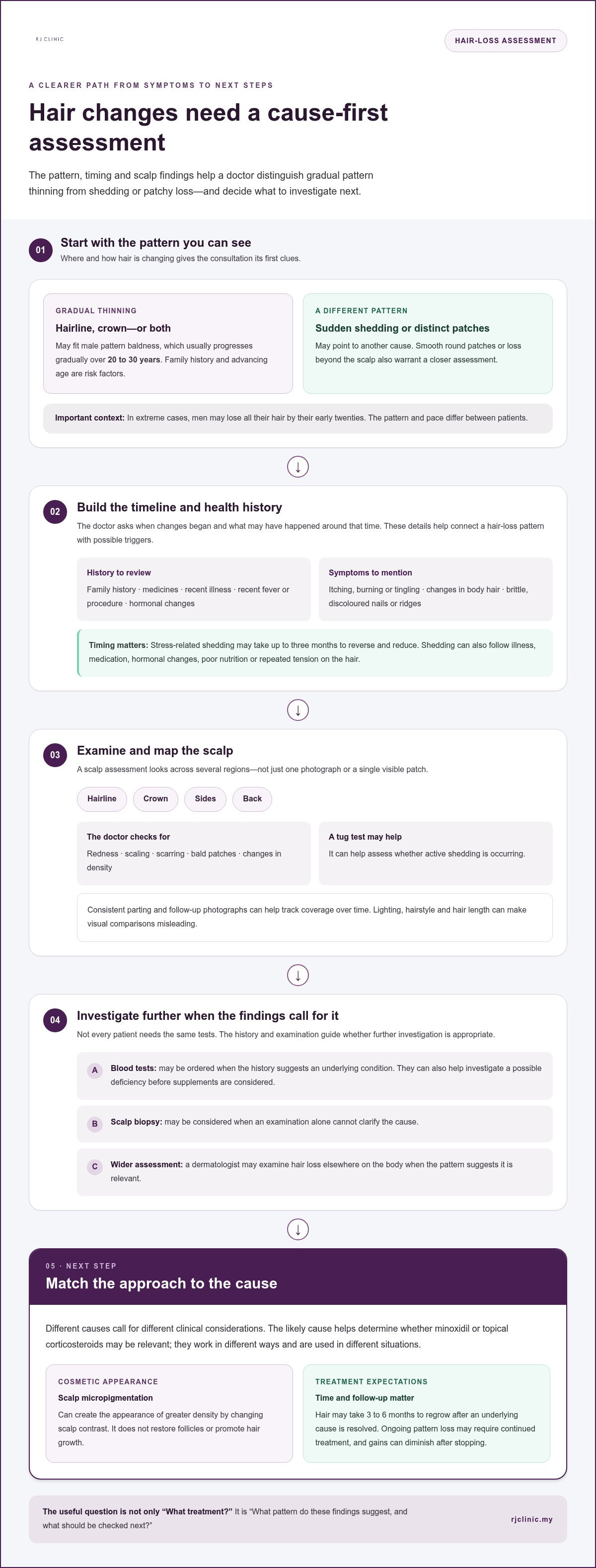
Male pattern baldness, or androgenetic alopecia, usually progresses gradually over 20 to 30 years. It can begin with a receding hairline, thinning at the crown, or both. Family history and advancing age are risk factors, although the pattern and pace differ between patients. In extreme cases, men may lose all their hair by their early twenties.
A scalp assessment starts by mapping where density has changed. A doctor examines the hairline, crown, sides, and back, then checks for redness, scaling, scarring, or bald patches. A tug test may help assess active shedding. The doctor also asks about the timeline, family history, medicines, recent illness, and symptoms such as itching or burning.
That diagnosis matters because not all thinning is male pattern baldness. Sudden shedding, smooth round patches, or hair loss beyond the scalp can point to another cause. A dermatologist may examine hair loss elsewhere on the body and order blood tests when your history suggests an underlying condition. A scalp biopsy may be considered when an examination alone cannot clarify the cause.
Hair density is assessed across different regions, rather than judged from one photograph or a single visible patch. Parting the hair in consistent areas helps compare coverage over time. The doctor records scalp findings and the distribution of thinning, then uses follow-up photographs to track changes. Lighting, hairstyle, and hair length can make visual comparisons misleading.
Nutrient delivery is not a diagnosis. If diet, illness, or another concern raises the possibility of a deficiency, blood tests can help investigate underlying causes before supplements are considered. Applying products to the scalp is also different from correcting a nutritional problem. An examination helps distinguish these issues rather than treating every shed hair as a sign of nutrient shortage.
Scalp micropigmentation can create the appearance of greater density by placing pigment in the scalp. It changes visual contrast, but does not restore hair follicles or promote hair growth. Before considering this cosmetic option, understand whether hair loss is stable and whether active shedding or a scalp condition needs attention.
Alopecia areata is a separate immune-related condition that can cause bald patches. In a study of baricitinib for alopecia areata, treatment effects appeared as early as week 12; by week 36, significantly more patients reached SALT ≤ 20 than with placebo, according to Európai Unió.
How long treatment takes depends on its purpose and the cause of hair loss. Hair may take 3 to 6 months to regrow after an underlying cause is resolved; ongoing pattern loss may require continued treatment, and gains can diminish after stopping.
What Causes Hair Loss?
Hair shedding can follow illness, medication, hormonal changes, or repeated tension on the hair. Its timing and distribution can help distinguish these triggers.
Hair-Loss Causes and Patterns
Telogen effluvium occurs when many follicles enter the resting phase of the hair cycle, leading to increased shedding. It can follow a physical stressor such as prolonged fever, surgery, or illness. Traction alopecia has a different cause: repeated pulling puts tension on the hair and may damage follicles. Recognising these patterns helps connect changes in density with a possible trigger.
Hormonal changes can also contribute. Hair loss may occur with hyperthyroidism or hypothyroidism, while pregnancy and poor nutrition are other factors to consider. Emotional stress may affect the hair cycle as well. After a stressful event, shedding may take up to three months to reverse and reduce, making the timeline an important part of assessment.
Common and Potential Causes
Medication is another possible trigger, so a doctor may review recent starts, stops, or changes alongside the onset of shedding. Infections can also affect hair or scalp health. Examples include fungal infections, syphilis, HIV, and herpes simplex. Autoimmune disorders such as systemic or discoid lupus erythematosus may be associated with hair loss. These possibilities call for different clinical considerations.
Hair loss can also occur beyond the scalp. Alopecia areata may affect the beard, eyebrows, eyelashes, or other body hair, and some people experience tingling, itching, or burning before changes appear. Hair can regrow and then fall out again. Brittle, discoloured fingernails or toenails with ridges may accompany the condition, so mention nail changes during a consultation.
For women, female pattern hair loss affects one in four and is distinct from temporary shedding. The visible distribution and duration help clarify whether the change follows a persistent pattern or a response to a recent event. A doctor may consider these details alongside hormonal health, nutrition, medicines, and recent illness, rather than attributing every change to one cause.
Keeping a brief record can make your history more precise. Note when shedding began, any recent fever or procedure, and medication changes. Include scalp sensations and changes in nails or body hair. These details help a clinician assess possible triggers and decide whether further investigation is appropriate.
Possible causes include genetics, stress, hormonal imbalances, ageing, and certain medical conditions. Radiation therapy may also cause hair loss. These factors add to illness and medication as possibilities when considering what may contribute to shedding.
Alopecia areata is a condition in which the immune system targets hair follicles and causes hair loss. It most commonly affects the scalp and face, although hair loss can occur on any part of the body. It commonly causes small, circular patches of hair loss about the size of a coin, though hair loss can be more widespread. The patch description applies to alopecia areata, while female pattern hair loss is another distinct concern. Female pattern hair loss affects 1 in 4 women.
Topical corticosteroids and minoxidil
Minoxidil and corticosteroids work differently, so treatment depends on the diagnosis. Minoxidil may stimulate hair growth when applied to the scalp, alone or alongside other treatments. Topical corticosteroids instead reduce inflammation and help control the immune response. They are not interchangeable, and neither is a universal solution for thinning.
Topical minoxidil needs consistent use before its effect can be assessed. If rigorous topical use over six months brings no visible improvement, oral minoxidil may be considered. This changes the route of administration; it is not simply a stronger version of the same routine. A medical assessment helps weigh the hair-loss pattern, treatment history, and whether another approach is more appropriate.
Topical corticosteroids may be prescribed as ointments, lotions, creams, or foams for affected areas. Their role is to address inflammation or immune activity, rather than directly stimulate hair growth. The chosen form and treatment area depend on the condition. Using a corticosteroid for another cause of hair loss may not address the underlying problem.
Topical immunotherapy is a separate option for alopecia areata. It involves applying a substance to areas of hair loss to trigger an allergy intended to promote hair growth. It differs from minoxidil and corticosteroids, so the diagnosis and extent of affected areas guide whether it is relevant.
Approval or regulation in Malaysia is specific to each product. An ingredient name alone does not identify the exact formulation or establish its regulatory status, so a reliable answer requires the product details. Minoxidil and finasteride are not interchangeable: the treatment evidence discussed here concerns minoxidil, not finasteride.
There is no single price for minoxidil or finasteride across Malaysia. Product, formulation, brand, and supply route affect cost, and availability varies by product. Avoid choosing a medicine based only on price or another person’s routine. The cause of hair loss and the product’s suitability matter more than comparing labels.
Risks depend on the medicine and route. For alopecia areata, corticosteroid injections into bald patches may be painful and can cause skin atrophy; Európai Unió notes that they may require monthly administration. These risks concern injections, not topical corticosteroids. Discuss the intended treatment area and possible trade-offs with the prescribing clinician.
Most topical routines do not involve procedural downtime, but they do require regular application. Keep track of the product used and any scalp changes so follow-up can assess the response. A cosmetic goal, such as a denser appearance, differs from treating inflammation or immune activity. The treatment plan should match your goal.
Hair-loss clinic listings across Malaysia
A Malaysia-wide directory listing covers 55 clinics providing hair-loss treatments. Use that figure as a starting point for comparing the kinds of services listed, not as a measure of clinical suitability or outcomes.
Comparing Hair-Loss Treatment Options
PRP, laser therapy, and hair transplant are different treatment categories. Comparing them helps you focus on the approach relevant to your concern. PRP involves injections, laser therapy uses a device-based approach, and transplant is a surgical route to hair restoration. They are not interchangeable; their purposes and trade-offs differ.
Look closely at what each listing describes. A clinic may list a treatment category without explaining its role, while another may distinguish medical treatment from a transplant procedure. The label alone does not tell you whether an option is intended to address ongoing loss, improve appearance, or restore coverage in a selected area.
For readers comparing services in Kuala Lumpur, a clinic’s description of hair-loss treatment options can clarify whether it covers treatment and FUE hair transplant. That detail makes directory entries easier to compare by service scope rather than by name alone.
Choosing a Hair-Loss Clinic
A clear clinic listing explains the service and consultation pathway, helping you judge whether its focus matches your concern. Consider whether the clinic describes doctor-led assessment, available treatment categories, and how recommendations relate to your goals. These details are more informative than a broad claim of offering hair restoration.
Compare listings by location, services, and the kind of care described. In Kuala Lumpur, a nearby clinic may be convenient, but proximity alone does not show which treatment fits your case. Look for a clear distinction between medical treatment and procedural options, so you can identify what to discuss before arranging an appointment.
The directory’s figure of 55 clinics describes providers of hair-loss treatments; it doesn’t identify which entries are public clinics or establish whether subsidies apply. Treat the listing as a guide to service availability, not as a source of information about public funding.
After narrowing your options, focus the next conversation on the treatment’s purpose, practical commitments, and how progress will be reviewed. This keeps the decision centred on your priorities rather than the number of procedures or clinic names in a directory.
RJ Clinic in Kuala Lumpur says exosome hair therapy may support treatment for selected hair-loss patients after medical assessment, but it is not a substitute for diagnosing the cause of hair loss and results cannot be guaranteed. This makes discussion of the treatment’s limits important when weighing any option.
RJ Clinic: Face Slimming Treatments
RJ Clinic offers hair-loss treatment and FUE hair transplant for people seeking a medically guided next step. A consultation considers your scalp, thinning pattern, medical and family history, and possible contributing factors before treatment is recommended. Ongoing hair loss and established areas of reduced density may call for different approaches.
RJ Clinic’s hair restoration options include non-surgical treatment and FUE hair transplant. The treating doctor determines eligibility, graft numbers, and procedural recommendations individually after assessment, using approved methods recognized by health authorities like the European Medicines Agency. Dr Renee and Dr Cheok are available LCP-certified doctors.
If you’re considering an effective hair loss treatment Malaysia residents trust, visit RJ Clinic’s hair-loss treatment page to explore the next step.
Choose Your Next Step With Clarity
Make your next conversation focused: note what has changed, what you hope to improve, and which trade-offs matter to you. This gives a consultation a clear purpose, whether you are exploring ongoing care or a procedural option. For hair loss treatment in Malaysia, RJ Clinic offers hair-loss treatment and FUE hair transplant.
RJ Clinic also offers Face Slimming Treatments, Ultherapy Prime for skin tightening, and Eyebag Treatment by laser or surgery. These address separate aesthetic concerns, and each benefits from a considered discussion of your goals and suitable options.
When you’re ready to discuss hair loss, contact RJ Clinic about your treatment options. You can take the next step at your own pace, with a clearer sense of what you want to address.
Frequently Asked Questions
How it works?
Hair-loss care matches a diagnosis to a treatment and monitors changes over time. To prepare for an appointment, note when shedding began and bring a list of medicines and supplements. Mention recent illness, surgery, or major stress. Dated photographs taken in similar lighting can help show whether the change has been gradual or sudden, giving the doctor more context to decide what assessment comes next.
What are the most effective hair loss treatments available in Malaysia?
The right hair loss treatment in Malaysia depends on the cause and your goal; no single option suits every pattern. Minoxidil may be used for pattern thinning, while topical corticosteroids address selected inflammatory or immune-related conditions. PRP and laser procedures are options some patients explore, while FUE transplant can restore coverage in suitable cases. The decision also considers scalp condition, extent of loss, and willingness to maintain treatment.
How can you identify the cause of hair loss and which doctor should you see in Malaysia?
See a dermatologist for sudden or patchy loss, scalp discomfort, or hair loss affecting eyebrows or body hair; they can assess medical causes and arrange further investigations when needed. For gradual pattern thinning, a doctor experienced in hair restoration can discuss treatment after reviewing your health and scalp. In Kuala Lumpur, choose a consultation that explains the likely cause and connects its recommendation to your individual findings.


Comments