


Q-Switch Laser for Pigmentation: What It Can Treat and What It Cannot

Updated: 4 days ago

A laser can target pigment without identifying why it appeared. That distinction matters: a q switch laser may help with certain freckles or sun spots, but a dark mark isn’t automatically suitable for laser treatment. Melasma, in particular, can be challenging to manage because the visible colour is only part of the picture.
Q-switched lasers deliver brief pulses of energy that target selected pigment. The response depends on the type and depth of the pigmentation, your skin characteristics and the treatment approach. The same settings aren’t right for everyone, and a doctor assessment is required before proceeding.
This article explains which concerns may be assessed for Q-switched laser, where the treatment has limits and why identifying the cause comes first. It also covers factors a doctor considers, including the possibility of temporary darkening or other changes in the skin. At RJ Clinic in Kuala Lumpur, an LCP-certified aesthetic doctor can assess your concern and discuss suitable options rather than assuming every dark spot should be treated with a laser.
Table of Contents
What Is Q-Switch Laser and What Skin Concerns Does It Treat?
A laser is a treatment tool, not a diagnosis. Before considering a q switch laser, a doctor needs to identify what a dark mark may be and where its pigment sits in the skin. Similar-looking spots can have different causes, and that difference can change whether laser treatment is appropriate.
A Q-switched laser delivers brief energy pulses intended to target selected pigment. “Q-switching” describes how the laser releases energy in short, controlled bursts. The pulse is designed to interact with pigment while limiting the energy delivered to surrounding skin, but the effect depends on the laser’s parameters and the concern being treated. The principle of Q-switching technology is also used in applications such as tattoo removal.
How does Q-switched laser interact with pigment?
Pigment absorbs light selectively: certain colours absorb particular wavelengths more readily than others. A clinician selects treatment parameters with the target pigment in mind. The energy is intended to disrupt some pigment particles, after which the body’s natural processes help clear them. This doesn’t mean every mark will disappear, or that each person will have the same response.
Depth matters too. Pigment closer to the surface may behave differently from pigment located deeper in the skin. This explains how the treatment can act, but it cannot establish whether a specific spot is suitable. Diagnosis and assessment of your skin remain essential.
Which concerns may prompt a Q-switched laser assessment?
A doctor may assess certain freckles, sun spots and other localised areas of excess pigment for laser treatment. Melasma needs more careful judgement. It can have contributing factors beyond pigment in one spot, so treating the visible colour alone may not address the broader pattern. RJ Clinic’s melasma and pigmentation care starts with understanding the concern rather than assuming every mark calls for laser treatment.
Q-switched lasers are also used in some clinical settings for tattoo removal and selected benign pigmented lesions. These are general applications, not a reason to treat a mark without first identifying it. If a spot is changing, has an irregular appearance or is otherwise unusual, medical assessment should come before cosmetic treatment. A doctor can consider its appearance, location, likely cause and your skin’s characteristics when discussing the next step.
How Q-Switch Laser Treatment Works: From Pigment Targeting to Skin Response
Once a clinician has assessed the concern and selected suitable settings, brief laser pulses interact with the targeted pigment. The intended response is to disrupt some pigment so the body can gradually process it. The skin’s appearance immediately after treatment is only an early observation, not a reliable prediction of the eventual change.
A laser response varies with diagnosis, skin characteristics and treatment plan. Pigment depth, the area being treated and your skin’s tendency to develop uneven colour can all affect the response. The same q switch laser approach shouldn’t be assumed to produce the same result for different people, or even for different marks on one person.
Why can the treated pigment look different after a session?
Some treated spots may look darker for a time after a session. This can be part of the skin’s response, but a change in colour alone doesn’t show whether treatment has worked or what the final appearance will be. Pigment may change gradually, and the timing and degree of change can’t be predicted from the immediate post-treatment appearance.
Follow the individual aftercare guidance from your treating doctor. If a change concerns you, or the treated area develops an unexpected reaction, seek advice from that doctor rather than trying to interpret the appearance yourself or applying an unadvised treatment.
Why does the same laser approach not suit every pigmentation concern?
A visible brown patch describes what you can see; it doesn’t explain why the pigment formed or how it is distributed. A doctor considers the underlying diagnosis before deciding whether laser treatment is appropriate. Melasma, for example, can be persistent and influenced by factors beyond an isolated spot. Treating visible pigment without considering the wider pattern may not address the concern as intended.
Assessment also helps distinguish a pigmentation concern from another kind of mark that needs a different evaluation. The decision may be to adjust the plan, consider another form of care or not proceed with laser treatment. At RJ Clinic, assessment by an LCP-certified aesthetic doctor is required before treatment selection. For related information about the clinic’s laser care, see its Hollywood Spectra laser information. This does not mean every laser uses the same technology or suits the same concern.
If you’re considering treatment for pigmentation, a doctor-led assessment at RJ Clinic can help clarify what may be driving the colour change and which next step is appropriate.
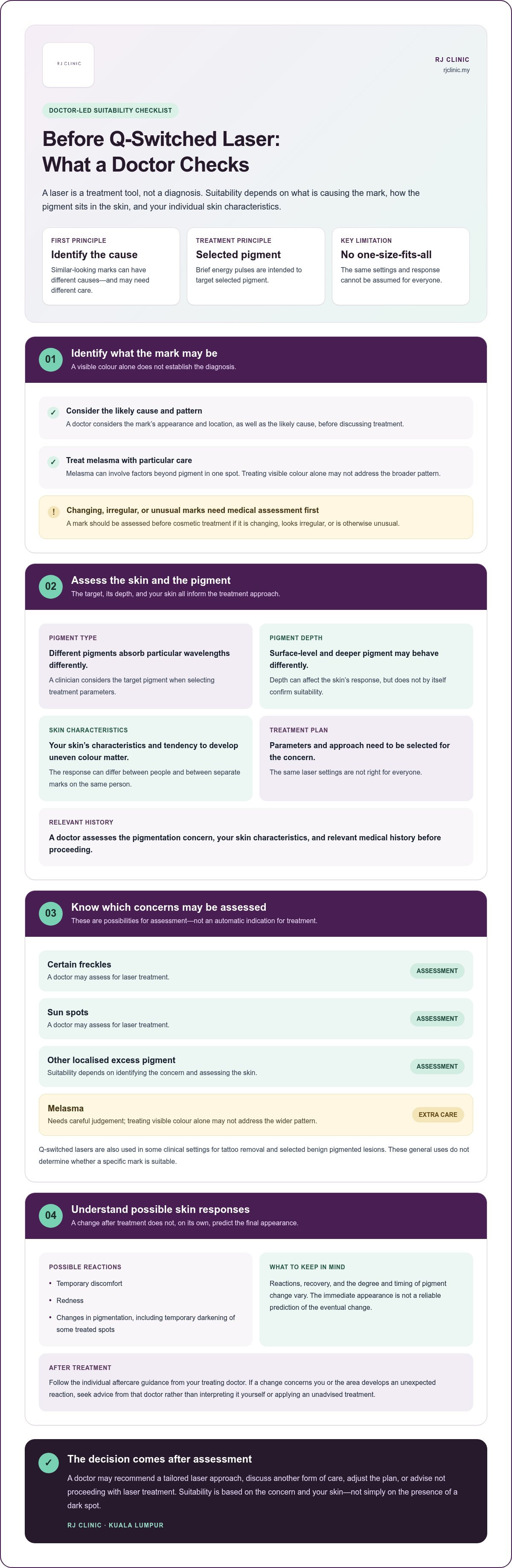
Q-Switch Laser Suitability, Possible Reactions, and Common Misunderstandings
A general description of laser technology can’t tell you whether treatment is suitable for your skin. Before proceeding, a doctor needs to assess the pigmentation concern, your skin characteristics and relevant medical history. The same treatment approach may not be appropriate for every mark or every person.
Possible reactions can include temporary discomfort, redness or a change in pigmentation. Their likelihood and duration vary, so claims of “zero downtime” or universal recovery aren’t a sound basis for making a decision. Ask what is expected for your specific plan and what to do if your skin’s response differs from the advice you received.
Who should have a doctor assessment before considering laser treatment?
Doctor assessment is required before proceeding. Describe when the mark appeared, whether it has changed and what you understand about its cause. Share relevant skin history, previous laser or other treatments, and any current concerns. These details help the doctor interpret the pigmentation and consider whether treatment is appropriate, needs to be modified or should be deferred. General examples of who may be eligible can’t provide personal clearance.
What should you ask about risks and expected changes?
Discuss the intended effect, possible reactions and follow-up guidance for your individual plan. Ask which changes may be expected, which would need clinical review, and how to seek advice if you’re uncertain. Results and treatment choices depend on the assessed concern, so the consultation should address your situation rather than promise a standard outcome.
Clear answers help you weigh potential benefits against uncertainty before deciding. For a personalized review of pigmentation and treatment suitability, book a doctor assessment at RJ Clinic.
Considering Q-Switch Laser in Kuala Lumpur? How RJ Clinic Guides Your Next Step
Choosing a treatment starts with understanding the concern, not committing to a particular laser. At RJ Clinic, a doctor assessment is required before a q switch laser or another pigmentation approach is considered. The aim is to clarify what may be causing the mark, whether laser care is appropriate and what alternatives may better fit your skin and priorities.
What happens during a doctor-led assessment?
An LCP-certified aesthetic doctor evaluates the area and discusses your skin history, previous treatments and current concerns. This helps guide a recommendation based on the diagnosis rather than appearance alone. RJ Clinic’s care is led by LCP-certified aesthetic doctors, and the clinic also has experienced plastic surgeons. Assessment doesn’t mean laser treatment is automatically recommended; the next step may be another option or no treatment at that time.
If laser care is considered, the discussion can cover the intended approach, possible responses and practical aftercare. RJ Clinic uses the latest machines and FDA-approved treatments, but the right choice depends on your assessment. No particular Q-switched device specification should be assumed from this general information.
How can Kuala Lumpur and overseas patients take the next step?
RJ Clinic serves patients across Kuala Lumpur and the wider Klang Valley, including Mont Kiara, Bangsar, Damansara Heights, Sri Hartamas, TTDI, Segambut, Kepong, Desa ParkCity, Solaris Dutamas, Publika, Bandar Sri Damansara, Mutiara Damansara and Bandar Utama. Overseas clients can also book, with multilingual support available. Before deciding, discuss the proposed plan and transparent pricing so you understand the expected costs and what they relate to, without relying on a generic price estimate.
A clear pathway keeps the decision personal and informed:
Describe the concern. Explain where the pigmentation is, when you noticed it and whether it has changed.
Receive a doctor assessment. The doctor considers the appearance, relevant skin history and possible diagnosis.
Discuss suitable options. Review the reasoning, expected changes, possible reactions and practical considerations for the proposed care.
Decide how to proceed. Take time to weigh the information before choosing a treatment plan or deciding that laser isn’t right for you.
For individualized guidance on pigmentation care, explore RJ Clinic’s doctor-led aesthetic care and arrange a personalized consultation.
Make Your Next Step an Informed One
Choosing a q switch laser is not simply a decision about a device. It’s a decision about whether the diagnosis, your skin and the treatment approach align. A thoughtful assessment can help you understand the reasoning behind a recommendation, including when a different option may be more appropriate.
RJ Clinic has operated since 2013 and has served over 10,000 clients across Malaysia. The clinic’s doctor-led approach is to discuss your concern, explain the options and help you make a considered decision with clear expectations.
If pigmentation is affecting your confidence, discuss what you’ve noticed and what you hope to address. Arrange a personalized consultation with RJ Clinic for guidance tailored to your skin and concerns.
A considered decision is a positive first step toward care that feels right for you.
Frequently Asked Questions
Can Q-switched laser treat melasma?
It may be considered in some cases, but the decision depends on a doctor’s assessment rather than the name of the concern alone. Note when the patches first appeared, whether they fluctuate and what treatments you’ve already tried. These details help the doctor understand the pattern and set realistic priorities. If the diagnosis or likely benefit remains uncertain, ask what other approaches could be considered.
Can pigmentation look darker after Q-switched laser?
Temporary darkening has been reported, though it isn’t a standard sequence for every patient. If you notice a change, note when it began and whether it is accompanied by other symptoms. Photos taken in similar lighting can help you describe what you’re seeing, but they can’t establish the outcome. Follow your treating doctor’s instructions and seek their advice if the change is unexpected.
Is Q-switched laser suitable for every skin type or pigmentation concern?
No. There isn’t a blanket rule that can determine suitability for an individual. At assessment, the doctor needs to examine the area and understand what you want to change, rather than relying on a general description of skin type. A photograph may help explain your concern, but it can’t replace clinical evaluation. Ask the doctor to explain the reasons for the recommendation and any alternatives before you decide.
Does Q-switched laser treatment hurt?
The experience can vary, so another person’s description may not predict yours. Before deciding, tell the doctor if you’re concerned about discomfort and ask what sensation may be expected for the specific area and proposed treatment. You can also ask how to communicate during the procedure if you need to pause or raise a concern. This helps you make a considered decision without assuming everyone experiences treatment in the same way.
How many Q-switched laser sessions are needed?
The number depends on the assessed concern and can’t be responsibly set without an individual plan. Rather than relying on a generic session estimate, ask what the doctor will use to judge progress and when the plan may be reconsidered. Clarify whether the aim is partial improvement or another defined change, and discuss what would happen if your response differs from expectations. Neither a session count nor a schedule guarantees a particular result.
Can overseas patients book an aesthetic consultation at RJ Clinic?
Yes. RJ Clinic welcomes overseas clients and provides multilingual support. If you’re planning a visit from abroad, prepare a concise summary of your concern, its history and any previous treatment so the consultation can focus on relevant details. Booking does not confirm that a particular procedure is suitable. The doctor’s assessment remains the basis for treatment recommendations, and you can use the appointment to discuss options and decide whether you wish to proceed.


Comments