


Density RF vs Ultherapy: Best Skin Tightening in KL

Updated: Jul 21
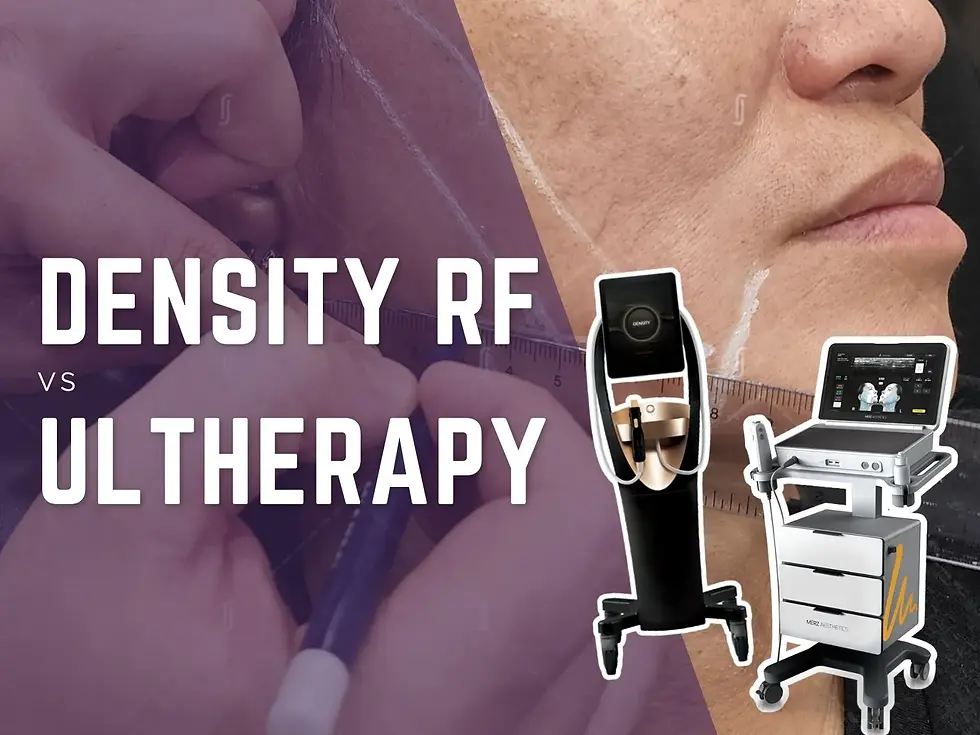
Choosing the most powerful lifting device isn't always the best strategy for your face; in fact, the wrong depth of treatment can sometimes lead to results that look hollow rather than rejuvenated. When patients visit us at the clinic, they're often caught in a tug-of-war between Density RF vs Ultherapy, unsure if they need to target the deep structural foundation or the skin's surface envelope. It's a valid concern, especially when you're trying to balance the desire for a defined jawline with the fear of losing precious facial volume to heat-based technologies.
I understand the confusion that stems from hearing conflicting claims about which machine reaches the SMAS layer or which provides a better tightening effect. My promise is to provide a clear, clinical breakdown of how these energy sources interact with your unique tissue density, allowing you to choose the right procedure for your specific anatomy. We'll explore the structural differences between ultrasound and radiofrequency to determine which approach will naturally refine your nasolabial folds and restore elasticity while maintaining your organic facial contours.
Table of Contents
The Science of Depth: How Ultherapy and Density RF Differ
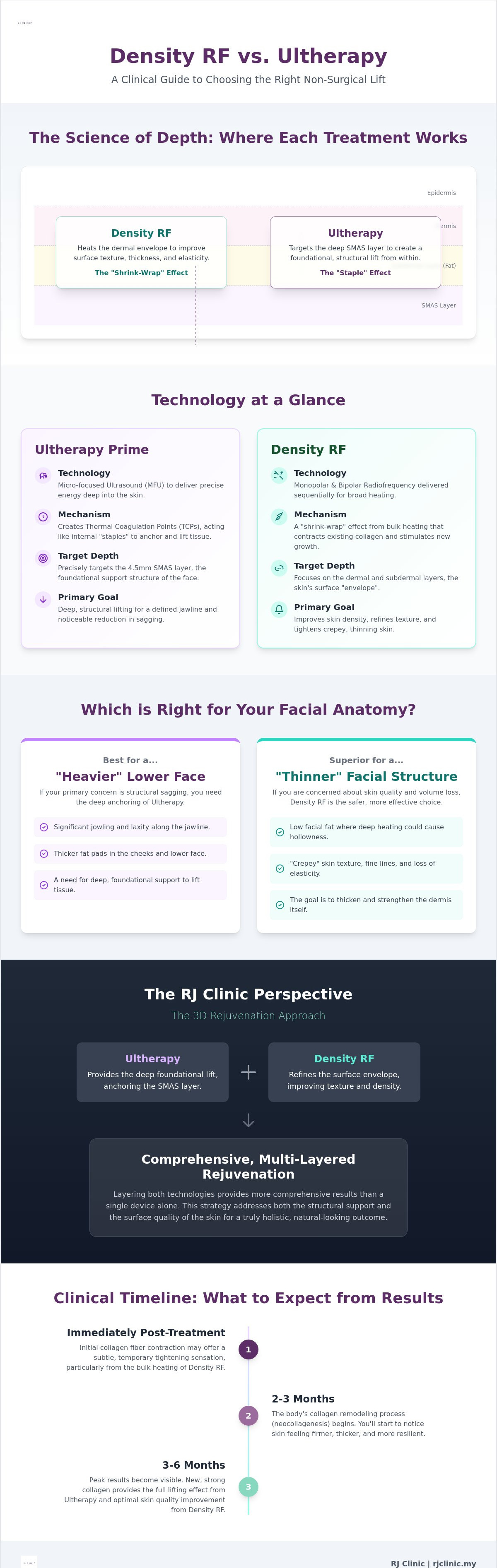
Understanding the structural differences in Density RF vs Ultherapy begins with a look at the skin's architectural layers. While both treatments aim to reverse laxity, they operate at distinct depths to achieve different aesthetic goals. The Superficial Musculoaponeurotic System (SMAS) is the critical foundation for non-surgical lifting, serving as the structural scaffolding that supports the entire face. Reaching this deep layer requires a specific type of energy that behaves differently than surface-level treatments.
Ultherapy and the SMAS Layer
Ultherapy utilizes Micro-focused Ultrasound (MFU) to bypass the surface and create Thermal Coagulation Points (TCPs) at depths of up to 4.5mm. This is the exact depth where the SMAS layer resides. Think of Ultherapy as providing a "staple" effect; it creates precise points of heat that anchor the tissue back to its original position. What sets Ultherapy Prime apart in a clinical setting is real-time visualization. This imaging allows Dr. Renee or Dr. Cheok to see exactly where the energy is being delivered, ensuring we avoid bone or blood vessels while hitting the collagen-rich targets with medical precision. It's a treatment designed for structural lifting, focusing on the foundation rather than just surface-level smoothing.
Density RF: Monopolar vs. Bipolar Energy
In contrast, Density RF works by heating the dermal and subdermal layers using high-frequency radiofrequency. This technology utilizes a patented Alpha Tip that delivers monopolar and bipolar energy sequentially in a single pulse. This dual-action approach creates a "shrink-wrap" effect, where the heat causes existing collagen fibers to contract immediately while stimulating new growth over several months. You can explore the fundamental science behind how Density RF works through controlled thermal stimulation of the dermis.
By using the Alpha Tip's integrated cooling system, we can safely deliver high energy to the deep tissues without damaging the skin’s surface. This makes Density RF particularly effective for improving skin "density" and texture. It treats the skin's envelope, making it feel thicker and more resilient. While Ultherapy anchors the face, Density RF tightens the skin itself, addressing the thinning and fine lines that often accompany the aging process.
Suitability: Choosing Based on Your Facial Anatomy
A patient's facial fat distribution is often the deciding factor that we, as doctors, prioritize over the sheer power of a device. During a consultation, Dr. Renee and Dr. Cheok evaluate more than just surface wrinkles; we look at the underlying bone structure and the "weight" of the soft tissue. As we age, bone resorption naturally occurs, meaning the skeletal support for our skin diminishes. When comparing Density RF vs Ultherapy, the goal is to determine whether we need to lift heavy, sagging tissue or tighten a thinning dermal envelope that has lost its bounce.
The Best Candidate for Ultherapy Prime
Ultherapy is generally the preferred modality for individuals with a "heavy" lower face or significant jowling. If you have a thicker fat pad in the cheek or jaw area, you require the deep, structural anchoring that only micro-focused ultrasound can provide. This is why Ultherapy in Kuala Lumpur remains a top choice for brow and neck lifts. It acts like a non-surgical internal suture, pulling the SMAS layer upward. It's an ideal "one and done" annual treatment for those who want a visible lift without the need for frequent clinic visits.
When Density RF is the Superior Choice
For patients with a "thin" face or those who already have low facial fat, the "staple" effect of ultrasound might not be the primary need. The concern here is often volume loss; a deep ultrasound treatment could potentially make a thin face look more hollow if the depth isn't managed with extreme care. This is where Density RF becomes the superior choice. It targets "crepey" skin texture and fine lines by thickening the dermis itself.
There is significant clinical evidence for RF skin rejuvenation showing its ability to contract collagen fibers and improve skin density without affecting deeper fat pads. It's the perfect tool for patients seeking a refined "V-shape" and surface elasticity without the intensity of deep ultrasound energy. If your goal is to restore a youthful, plump skin quality while subtly contouring the jawline, a personalized assessment of your skin thickness and laxity will help us determine if radiofrequency or ultrasound is the safer, more aesthetic path for your anatomy.
Clinical Expectations: Results, Pain, and Longevity
Choosing between Density RF vs Ultherapy often comes down to your personal tolerance for maintenance and your desired timeline for results. While both procedures offer an immediate, subtle contraction of existing collagen, the most significant changes occur much later. Collagen synthesis is a biological process that cannot be rushed. You'll typically see the peak lifting effect at the three to six-month mark as your body builds a denser, more resilient dermal structure.
The Reality of the Procedure Experience
What you feel during the session depends entirely on the energy source being used. Ultherapy Prime uses micro-focused ultrasound pulses that many patients describe as a prickly or tingling sensation deep within the tissue. Density RF delivers a steady flow of deep heat. The integrated Alpha Tip cooling system in Density RF works continuously to protect the epidermis, which helps manage comfort even as we reach therapeutic temperatures in the dermis. Downtime is negligible. Both are considered 'lunchtime' procedures in Kuala Lumpur, meaning you can return to your daily routine immediately. We do advise avoiding anti-inflammatory medications for a few days post-treatment, as we want the natural inflammatory response to flourish and trigger collagen production.
Longevity and Maintenance Protocols
A clinical study comparing RF and HIFU confirms that while both technologies are effective for facial rejuvenation, their longevity profiles differ. Because Ultherapy anchors the deep SMAS layer, its lifting effects typically last between 12 to 18 months. It's a robust annual investment for structural support. Density RF focuses on the skin's dermal envelope and may require maintenance sessions every six to eight months to sustain that firm, high-density texture.
In our tropical climate, lifestyle factors play a significant role in result duration. High UV exposure can accelerate the breakdown of newly formed collagen, so consistent sun protection is vital. There's a cumulative benefit to these treatments; consistent stimulation over several years ensures your skin remains structurally more resilient than its chronological age. If you're ready to see which technology aligns with your goals, discuss your options with our LCP-certified doctors to ensure a plan tailored to your skin's unique needs.
The RJ Clinic Perspective: The 3D Rejuvenation Approach
In our clinical experience, the most natural-looking results rarely come from a single device. Aging is a multi-dimensional process that involves bone resorption, fat depletion, and the weakening of structural ligaments. While the debate of Density RF vs Ultherapy often frames them as competing choices, we frequently view them as complementary tools in a "sandwich" therapy protocol. By layering these technologies, we can address the deep SMAS foundation and the dermal envelope in a single, comprehensive strategy.
Our approach involves using Ultherapy Prime to provide the initial structural lift, followed by Density RF to refine the skin's surface density and elasticity. This combination ensures that the face is not just pulled upward, but that the skin itself looks healthy and vibrant. We carefully customize energy settings for every patient, balancing the need for therapeutic heat with your specific pain threshold and skin sensitivity.
Beyond a Single Machine
A common pitfall in aesthetic medicine is over-relying on lifting devices when the primary issue is volume loss. If a patient has a "sunken" or hollow appearance, lifting the skin alone can sometimes emphasize those shadows. In these cases, Dr. Renee and Dr. Cheok integrate biostimulators like Ellansé to restore lost volume while simultaneously triggering long-term collagen growth. For those seeking a more contoured look, we may also incorporate Face Slimming Treatments to refine the masseter area, ensuring the final result is a balanced, "un-done" aesthetic that looks organic rather than artificial.
Consultation and Safety Standards
The success of high-energy treatments depends heavily on the practitioner's clinical judgment. At our clinics in Kuala Lumpur and Selangor, we prioritize safety by ensuring all procedures are performed by LCP-certified doctors who understand the nuances of facial anatomy. The most advanced machine cannot compensate for poor technique; the depth of delivery and the vector of the lift are what ultimately define your outcome. During your consultation, we assess your skin's unique behavior to determine if Density RF vs Ultherapy, or a combination of both, is the safest path toward your rejuvenation goals. Precision, safety, and a deep understanding of tissue biology remain our guiding principles for every patient we treat.
Designing Your Custom Lifting Protocol
Determining whether you require the deep structural anchoring of ultrasound or the surface-level contraction of radiofrequency depends entirely on your unique facial architecture. While the choice of Density RF vs Ultherapy is a frequent starting point for many patients, the most successful outcomes are rooted in clinical judgment rather than the machine itself. To see how these clinical standards are applied in specialized wellness settings, you can check out AgeRefine Clinic. We focus on preserving your natural volume while strategically tightening the dermal envelope or lifting the SMAS layer to restore a youthful, refined contour.
Our LCP-certified aesthetic physicians utilize FDA-approved lifting technologies and personalized 3D facial mapping to ensure every treatment plan is as unique as your anatomy. Whether we recommend a single modality or a sophisticated combination of therapies, our goal is to achieve subtle, organic results that enhance your confidence. To move beyond technical specifications and discover what works for your specific skin density, schedule a clinical assessment with Dr. Renee or Dr. Cheok to find your ideal treatment. We look forward to partnering with you on your journey toward refined, lasting rejuvenation.
Frequently Asked Questions
Is Density RF more painful than Ultherapy?
Density RF is typically perceived as more comfortable because its patented Alpha Tip utilizes an advanced cooling system to protect the skin's surface throughout the pulse. While the modern Ultherapy Prime is faster and more refined than legacy versions, it delivers micro-focused ultrasound pulses that reach the deep SMAS layer, which some patients describe as a prickly or tingling sensation. Both are manageable, but those with a lower pain threshold often find radiofrequency more tolerable for their first session.
Can I do Density RF and Ultherapy in the same session?
Yes, performing both in a single session is a common clinical practice we refer to as a "sandwich" therapy. By combining Density RF vs Ultherapy, we address different anatomical depths simultaneously to achieve a 3D rejuvenation effect. This approach uses ultrasound to provide a deep structural lift while radiofrequency refines the skin's texture and elasticity at the dermal level, offering a more comprehensive result than either device could achieve alone.
Will Ultherapy cause fat loss in my cheeks?
Fat loss is not a standard outcome of Ultherapy when it's performed by an experienced physician using real-time visualization. The imaging allows us to target the SMAS layer precisely while avoiding the fat pads that provide youthful volume. However, if you have a very thin face, we may prioritize radiofrequency or adjust our treatment depths to ensure we maintain your natural facial contours without risk of hollowing.
How soon can I see results from a Density RF treatment?
You'll likely notice a subtle, immediate tightening effect due to the heat-induced contraction of existing collagen fibers. However, the most significant improvements in skin density and firmness develop gradually over the next three to six months. This timeline reflects the biological reality of collagen remodeling, which is a slow but steady restorative process that continues long after you leave the clinic.
Which treatment is better for a double chin?
Ultherapy is generally the superior choice for a double chin because it specifically targets the foundational tissue that causes sagging in the submental area. If the concern is primarily skin laxity, ultrasound provides the necessary lift to redefine the jawline. However, if there's a significant volume of submental fat, we may recommend combining it with a Double Chin Reduction treatment or laser lipolysis for a more contoured profile.
How do I know if I need a surgical facelift instead of these treatments?
Non-surgical treatments are ideal for mild to moderate laxity, but they can't replace the results of a surgical facelift if there's extreme skin excess. If you can manually pull back several centimeters of skin or if your jowling is severe, energy-based devices may not provide the level of support you desire. A clinical assessment with Dr. Renee or Dr. Cheok helps us determine if your anatomy will respond well to medical devices or if surgery—similar to the specialized medical care provided by the Brisbane Hernia Clinic—is the more realistic path for your needs.



Comments