


Can Dermomine Improve Hair After Hair Transplant?


A hair transplant is often viewed as a final destination, yet surgery alone cannot stop the biological clock of androgenetic alopecia in the surrounding native follicles. Many patients mistakenly believe that a successful procedure marks the end of their hair loss journey, only to find that the continued thinning of non-transplanted hair eventually creates a visible disconnect between the new grafts and the old. Dr. Renee and Dr. Cheok frequently observe that the most successful, natural-looking outcomes aren't just about moving hair from one site to another; they're about optimizing the scalp's regenerative capacity to support that growth.
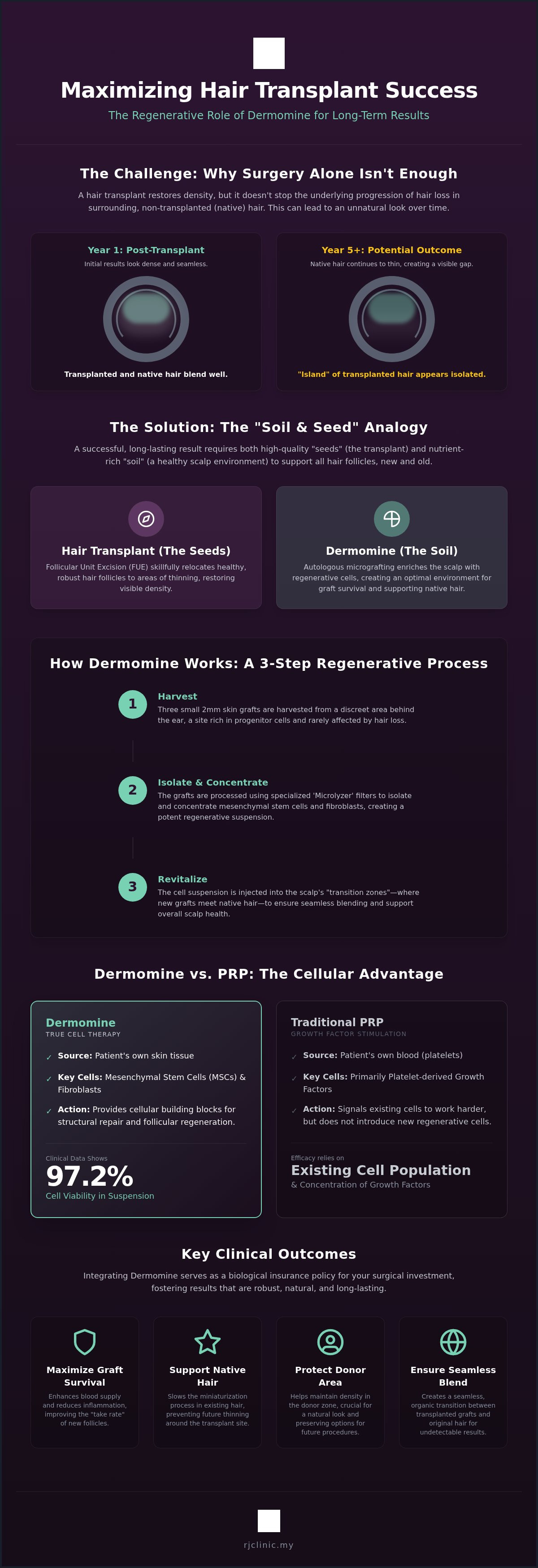
Integrating dermomine after hair transplant functions as a sophisticated biological insurance policy for your surgical investment. By utilizing autologous micrografting, we harvest your own skin cells to achieve a 97.2% cell viability rate, creating a suspension rich in fibroblasts and mesenchymal stem cells that "recharges" the scalp environment. This clinical approach doesn't just encourage faster graft survival. It actively revitalizes the tissue surrounding the new follicles. You'll discover how this protocol ensures a seamless blend between native and transplanted hair, maintains density in the donor area, and fosters a healthier scalp environment for results that remain lush and organic for years to address the root causes of future thinning.
Table of Contents
The Clinical Synergy: Why Surgery Alone May Not Be Enough
Clinical observations at RJ Clinic suggest that many patients view a hair transplant as a definitive cure for hair loss. While Follicular Unit Excision (FUE) is an exceptional tool for redistributing robust follicles to thinning areas, it doesn't halt the progressive nature of androgenetic alopecia in the surrounding native hair. Dermomine is an autologous micrografting procedure that utilizes the patient’s own progenitor cells to stimulate a regenerative response within the scalp tissue. Without this cellular support, the biological "gap" between transplanted grafts and receding native hair can become increasingly visible over time.
Dr. Renee and Dr. Cheok often use the "Soil and Seed" analogy to explain this relationship. FUE provides the high-quality seeds, but the scalp environment acts as the soil. If the soil is biologically depleted, even the most skillfully placed grafts may struggle to reach their full potential. Integrating dermomine after hair transplant prepares this biological soil, ensuring the scalp can support both the new grafts and the existing hair. This approach is vital because donor hair is a finite resource; preservation of existing follicles is far more critical than aggressive relocation, which can lead to donor area depletion.
Restoration vs. Regeneration: A Necessary Partnership
FUE addresses visible baldness through the physical redistribution of follicles, effectively filling in gaps. However, it cannot stop microscopic follicle miniaturisation in the hair you haven't lost yet. If a patient relies solely on surgery, they risk developing an unnatural "island" of transplanted hair as their native hairline continues to recede around the surgical site. Dermomine bridges this gap by treating the entire scalp, slowing down the miniaturisation process in native follicles to ensure the transition between old and new hair remains seamless and organic.
The Role of Progenitor Cells in Graft Survival
The process of harvesting and re-implanting follicles involves significant biological stress and local trauma. The success of the procedure depends heavily on how quickly the grafts can establish a blood supply. Mesenchymal stem cells (MSCs) harvested during the Dermomine process are instrumental in reducing post-surgical inflammation and enhancing local vascularisation. By improving the "take rate" of newly transplanted grafts, we can achieve higher survival rates and more robust hair density. Using dermomine after hair transplant provides the cellular signals necessary to transition the scalp from a state of surgical trauma to one of active regeneration.
How Dermomine Works After a Hair Transplant
While Platelet-Rich Plasma (PRP) has long been a staple in recovery, it relies primarily on growth factors found in the blood. Dermomine represents a shift toward true cell therapy. This autologous micrografting process utilizes a patient's own skin tissue, which is significantly richer in mesenchymal stem cells (MSCs) and fibroblasts than blood alone. By introducing these cells through dermomine after hair transplant, we provide the scalp with the specific building blocks necessary for structural repair and follicular signaling.
Clinical data supports the efficacy of this approach. The mechanical disintegration process used in our clinic yields an end product with a 97.2% cell viability, providing a total nucleated cell count of approximately 13.4 x 10^6 in an 8ml suspension. This high concentration of viable cells is precisely why many patients find it more effective than traditional biostimulators for protecting their surgical investment. It's a focused way to "re-seed" the area with the body's most potent regenerative agents.
The Micrografting Process in a Clinical Setting
The procedure is streamlined and minimally invasive. We begin by harvesting three small 2mm skin grafts from the hair-bearing area behind the ear. This site is chosen because it's discreet and rarely affected by thinning. These grafts are then processed through specialized "Microlyzer" filters to isolate the progenitor cells. Once the regenerative suspension is ready, we perform targeted injections into the "transition zones." These are the critical areas where your new grafts meet your original hair, ensuring the two populations blend seamlessly as they grow. By targeting the exact depth where the follicle bulb resides, we ensure the regenerative signals are received where they're most effective.
Protecting the Donor Area
A common patient concern is the "over-harvested" look that can occur after an extensive FUE session. Every follicle removed from the donor site slightly reduces its overall density. By applying Autologous Micrografting Technology to the extraction zone, we can improve the scalp's healing response. This cellular support helps maintain a healthier scalp environment in the back of the head, minimizing the visible impact of harvesting and preserving the aesthetic integrity of your donor area. If you're concerned about maintaining your natural density, exploring a comprehensive hair loss treatment plan that includes micrografting can offer significant peace of mind.
Strategic Timing: When to Schedule Your Dermomine Session
Timing a dermomine after hair transplant session requires a nuanced understanding of the scalp's inflammatory phases. We don't simply inject cells at random; instead, we align the treatment with your body's natural healing cycle to ensure the regenerative signals are received when the follicles are most receptive. Dr. Renee and Dr. Cheok typically categorize this timing into two distinct strategies: priming the scalp before surgery or enhancing the growth phase several months after the procedure.
The "Pre-hab" approach involves a session approximately four weeks before your FUE transplant. This strategy is designed to improve the vascular network of the recipient site, creating a nutrient-rich environment for the incoming grafts. Conversely, the "Post-hab" approach is often scheduled 4 to 6 months after surgery. This is a critical window where surgical inflammation has subsided, and the transplanted follicles are beginning to transition into the anagen (growth) phase. This timing is supported by a clinical evaluation of autologous micrografts, which demonstrated significant increases in hair count and density when the scalp's biological soil is properly managed.
The Optimal Recovery Timeline
We generally view the first 12 months after a transplant in three distinct phases. During the first three months, the priority is graft security and minimizing trauma. We avoid any injections during this period to let the follicles anchor firmly. Between month three and month six, many patients experience "shock loss" or slow initial growth. This is the ideal time to introduce dermomine after hair transplant to stimulate dormant follicles and accelerate density. By the 12-month mark, we conduct a final evaluation. If the density has reached its peak, we transition into a maintenance cycle, typically recommending a booster session every 12 to 18 months to preserve the native hair around the surgical site.
Identifying the Ideal Candidate for Combination Therapy
Not every patient requires regenerative intervention, but it's highly beneficial for those with specific clinical profiles. If you have diffuse thinning where the native hair is intermingled with the transplanted area, micrografting is essential to prevent a visible disconnect as you age. It's also a vital "insurance policy" for patients with limited donor hair. When every follicle is precious, we cannot afford a low survival rate. Finally, if your hair growth appears patchy or significantly delayed at the six-month mark, cellular support can often provide the biological "nudge" needed to kickstart the growth cycle. To determine if your scalp is ready for this intervention, you can schedule a diagnostic assessment for a customised FUE hair transplant plan.
The RJ Clinic Approach to Integrated Hair Restoration
Effective hair restoration requires a transition from viewing the scalp as a canvas to treating it as a complex biological system. At RJ Clinic, Dr. Renee and Dr. Cheok approach every case with the understanding that surgical success is only half the battle. The long-term aesthetic outcome depends on how well we manage the health of your native follicles alongside your new grafts. This is why we prioritize LCP certification for all our medical procedures. This certification serves as a rigorous safety standard, ensuring that advanced cellular techniques like micrografting are performed with the clinical precision required to protect your scalp's vascular integrity.
Integrating dermomine after hair transplant allows us to offer a more resilient result than surgery alone. By combining a precisely executed Hair FUE Transplant with autologous micrografting, we address both the immediate need for coverage and the biological necessity of cellular support. This dual-layered strategy ensures that as your transplanted hair matures, the surrounding environment remains robust enough to prevent the thinning that often plagues standalone surgical results.
Your Consultation with Dr. Renee and Dr. Cheok
A consultation at our clinic begins with a detailed diagnostic scalp analysis rather than a simple graft count. We use high-definition imaging to assess follicular health and identify the specific patterns of miniaturization in your native hair. This data allows Dr. Renee and Dr. Cheok to define realistic density goals tailored to your stage of hair loss. We strictly avoid the "one-size-fits-all" approach often found in high-volume budget clinics, where aggressive harvesting can lead to permanent donor depletion. Instead, we design a customized map that balances graft placement with the regenerative boost provided by your own progenitor cells.
Beyond the Procedure: Comprehensive Hair Health
The journey toward full density continues long after the final graft is placed. To maintain a healthier scalp environment, we often recommend combining Dermomine with a structured PRP Treatment protocol. While micrografting provides the essential progenitor cells, PRP offers a consistent supply of growth factors that act as a maintenance fuel for the hair cycle. This integrated methodology ensures that your results age gracefully, maintaining an organic and subtle appearance as the years pass. If you're interested in exploring the full range of Hair Loss Treatment options at RJ Clinic, our team is prepared to guide you through a clinical path that prioritizes both artistry and medical integrity.
Securing the Longevity of Your Hair Restoration
A hair transplant effectively restores the hairline, but its long-term success depends on the biological vitality of the scalp. Integrating dermomine after hair transplant provides the necessary cellular foundation to protect your native hair while supporting the growth of new grafts. This combination approach moves beyond simple redistribution; it focuses on active regeneration to ensure your results look natural and dense as you age. By preparing the "soil" with autologous progenitor cells, we address the underlying miniaturization that surgery alone cannot halt.
At RJ Clinic, Dr. Renee and Dr. Cheok utilize specialized regenerative hair restoration protocols to design a path that is unique to your scalp's needs. As LCP-certified doctors, they prioritize medical precision and safety, ensuring that every intervention contributes to a subtle, high-density outcome. Achieving a seamless blend between your original and transplanted hair requires a clinical eye and a commitment to long-term follicular health. You don't have to leave your surgical investment to chance. We invite you to Book a Clinical Scalp Assessment with Dr. Renee or Dr. Cheok to explore how a tailored combination of surgery and science can preserve your hair for the years ahead.
Frequently Asked Questions
Is Dermomine as effective as a hair transplant for a receding hairline?
Dermomine is not a replacement for a hair transplant if the hairline has already receded to the point of total follicle death. While surgery physically relocates robust follicles to create a new hairline, Dermomine focuses on revitalizing thinning follicles through autologous micrografting. It's best used to prevent further recession of the native hair or to improve the quality of the scalp before or after a surgical procedure.
Can I have Dermomine after a hair transplant to improve density?
Yes, utilizing dermomine after hair transplant is a highly effective way to boost overall density by supporting both the new grafts and the existing native hair. While the transplant adds new hair, Dermomine ensures the surrounding native follicles don't continue to thin. This creates a more uniform, high-density appearance and prevents the patchy look that can occur if non-transplanted hair continues to fall out.
How long should I wait after my FUE transplant before starting Dermomine?
We typically recommend waiting 4 to 6 months after an FUE transplant before beginning a session of dermomine after hair transplant. This period allows the initial surgical inflammation to subside and ensures that the newly implanted grafts have firmly anchored into the scalp. Dr. Renee and Dr. Cheok prefer this window because it aligns with the follicles entering their active growth phase, allowing the progenitor cells to provide maximum biological support.
Will Dermomine help with the "shock loss" I experienced after my surgery?
Dermomine can significantly assist in recovering from post-surgical shock loss by providing a concentrated boost of mesenchymal stem cells. These cells help reduce local scalp stress and stimulate dormant follicles to return to the growth phase more quickly. By improving the vascular network and reducing inflammation, the treatment helps the scalp transition from a state of trauma back into a productive, regenerative cycle for all follicles.
Is the Dermomine procedure painful compared to a hair transplant?
The Dermomine procedure is significantly less invasive and shorter than a full hair transplant. While an FUE session can take several hours, micrografting is usually completed within 60 minutes. We use local anesthesia for the 2mm tissue harvest behind the ear, and the subsequent injections involve minimal discomfort. Most patients find the recovery much faster than surgery, with no need for the extensive downtime associated with a transplant.
How many sessions of Dermomine are typically required for post-transplant patients?
Most patients achieve their desired regenerative results with just a single primary session of Dermomine. Unlike some other therapies that require monthly visits, the high concentration of viable cells provides long-lasting benefits. We generally suggest a maintenance or booster session every 12 to 18 months to ensure the native hair continues to match the density of the transplanted grafts as you continue to age.



Comments