


Skin Tag Removal in KL: A Doctor’s FAQ on Safe & Medical Procedures (2026)

Updated: May 5

The most critical step in skin tag removal isn't the physical act of excision, but the clinical assessment that happens before any tool touches your skin. While these small, fleshy growths are often benign, mistaking a more serious lesion for a simple skin tag is a diagnostic risk that no patient should take. It's common to feel a sense of irritation when a growth catches on jewelry or to feel self-conscious in professional settings. You likely want a solution that's quick, painless, and leaves your skin looking as though nothing was ever there.
At RJ Clinic, we believe even minor aesthetic concerns deserve medical precision. In this guide, Dr Renee and Dr Cheok explain how to distinguish between common tags and atypical growths, ensuring your safety remains the priority. With costs for professional removal in Kuala Lumpur typically ranging from RM100 to RM2,000 depending on the method and quantity, it's essential to understand the trade-offs between options like CO2 lasers and cryotherapy. We'll outline how LCP-certified doctors utilize FDA-approved technologies to provide bespoke results with minimal downtime, helping you achieve clear, smooth skin with total peace of mind.
Key Takeaways
Learn why a professional clinical assessment is the essential first step to ensuring your growth is a benign acrochordon rather than a more complex lesion.
Compare the precision of high-end laser tools with electrosurgery to understand which non-invasive method best suits your specific skin type and anatomical location.
Discover why common DIY "hacks" like dental floss ligation or acidic home treatments often lead to chemical burns and permanent skin damage.
Navigate the current price landscape and safety regulations for professional skin tag removal in Kuala Lumpur to ensure you're receiving LCP-certified care.
Understand how bespoke numbing protocols and meticulous aftercare prevent post-inflammatory hyperpigmentation for a clear, natural-looking result.
Table of Contents
Understanding Skin Tags: Clinical Observations and Misidentifications
Medical Removal Techniques: Laser vs. Electrosurgery
The Clinical Risks of DIY Skin Tag Removal
What to Expect: The RJ Clinic Consultation and Aftercare
Understanding Skin Tags: Clinical Observations and Misidentifications
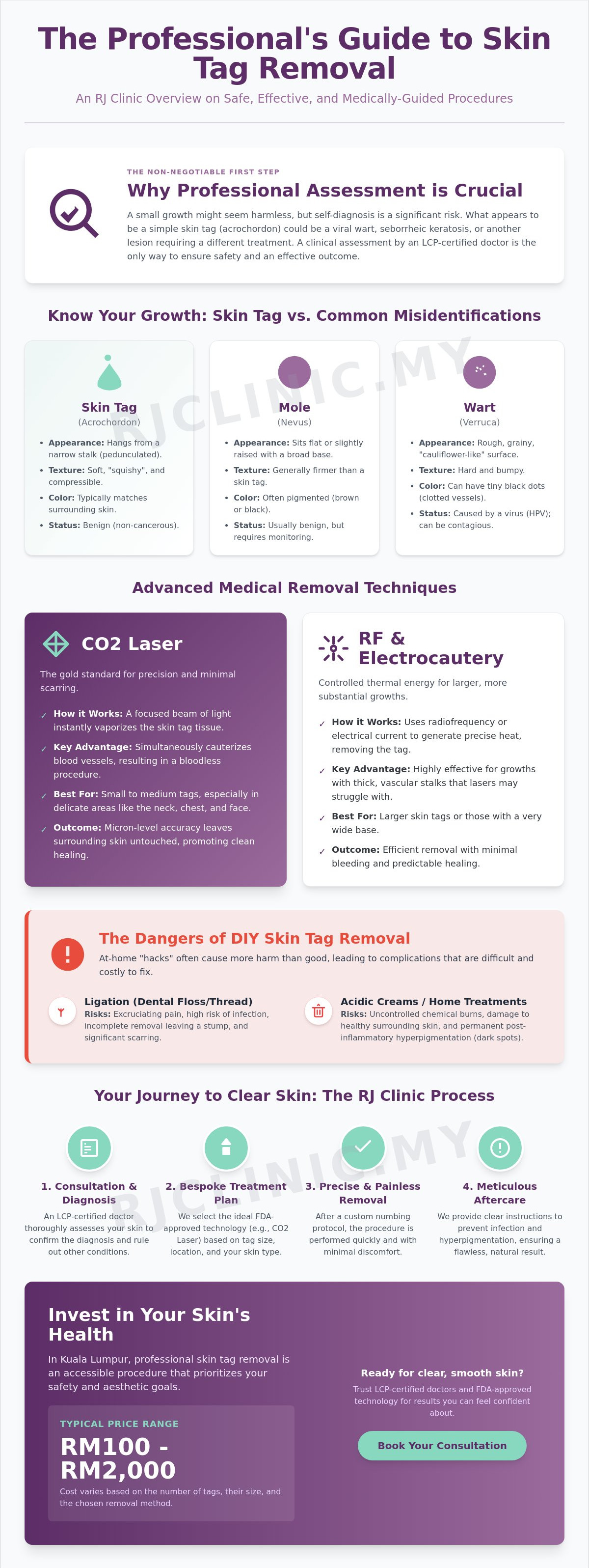
Acrochordons, or skin tags, are benign outgrowths that typically consist of loose collagen fibers and blood vessels wrapped in a thin layer of epidermis. To properly define What are skin tags?, we categorize them as non-cancerous lesions that frequently appear in areas where skin folds create persistent friction. You will most commonly find them on the neck, the axilla (underarms), and the periorbital area of the eyelids. While they are harmless, their presence can be a source of physical irritation or aesthetic concern, especially when they grow in size or number.
The decision to seek professional skin tag removal often begins with a diagnostic necessity. In our clinical experience at RJ Clinic, many patients arrive assuming a growth is a simple tag when it is actually a viral wart or seborrheic keratosis. These conditions require different treatment protocols. A professional assessment by Dr Renee or Dr Cheok is the only way to rule out more complex skin issues and ensure your treatment is safe and effective.
Skin Tags vs. Moles: How Doctors Distinguish Them
Visual cues are the primary way we differentiate a tag from a mole. Skin tags are typically pedunculated, meaning they hang from a narrow stalk. In contrast, moles (nevi) are usually flat or slightly raised pigmented structures that sit broader against the skin surface. Texture is another defining factor. A skin tag feels soft and compressible, often described by patients as "squishy," while moles tend to be firmer. We pay close attention to these nuances because misidentifying a dysplastic nevus as a simple tag can delay critical medical intervention. Our role is to provide that clinical certainty before proceeding with any aesthetic refinement.

Why Certain Patients are More Prone to Growths
Metabolic health plays a significant role in the proliferation of these growths. We often observe a strong correlation between skin tags and insulin resistance or elevated body mass index (BMI). When insulin levels are chronically high, it can stimulate the growth of keratinocytes and fibroblasts, leading to the formation of acrochordons. This is why metabolic screening is sometimes part of a holistic consultation for patients with extensive clusters.
Hormonal fluctuations are another major trigger. It is very common for patients to see a surge in new growths during pregnancy or mid-life transitions when estrogen and progesterone levels shift. In our local KL patient demographic, genetic predisposition also remains a primary factor. If your parents were prone to these growths, you are statistically more likely to develop them regardless of lifestyle. Understanding these triggers allows us to customize your skin tag removal plan and provide realistic expectations for long-term skin clarity.
Medical Removal Techniques: Laser vs. Electrosurgery
Clinical practice has evolved significantly from the days of basic surgical "snip" excision. While traditional methods are effective, manual cutting often involves more bleeding and a higher risk of minor scarring. Modern skin tag removal now prioritizes thermal and light-based technologies that offer superior precision. We prioritize these non-invasive methods because they minimize infection risks and allow for a more refined, natural-looking finish. By utilizing energy-based devices, Dr Renee and Dr Cheok can remove growths with minimal trauma to the surrounding dermis.
The choice of technology depends heavily on the anatomical location and the size of the growth's stalk. We utilize a range of FDA-approved tools, from CO2 lasers to radiofrequency (RF) ablation, to ensure the procedure is both efficient and aesthetically successful. Our goal is to achieve a scarless result that integrates seamlessly with your natural skin texture.
CO2 Laser: The Gold Standard for Precision
The CO2 laser works by emitting a concentrated beam of light that vaporizes the water content within the tissue. This process simultaneously cauterizes blood vessels, which means there's virtually no bleeding during the procedure. It's particularly effective for small tags on the neck or chest. Because the laser targets the growth with micron-level accuracy, surrounding healthy tissue remains untouched. This level of control is vital for patients who are prone to acne and scars, as it reduces the likelihood of long-term texture issues or uneven healing.
Radiofrequency (RF) and Electrocautery for Larger Tags
Larger growths with thick, vascular stalks often require the controlled thermal energy of radiofrequency ablation or electrocautery. These tools allow for the precise sealing of the base of the tag, which prevents recurrence. A key clinical consideration in our KL practice is managing the risk of Post-Inflammatory Hyperpigmentation (PIH), which is more common in Asian skin tones. To mitigate this, we may integrate Deusaderm or other regenerative protocols to accelerate epidermal healing and stabilize pigment production. If you have concerns about multiple growths, you can book a clinical assessment to determine the most suitable energy-based approach for your skin profile.
The Clinical Risks of DIY Skin Tag Removal
Many patients attempt to manage acrochordons at home before seeking medical help. This often results in complications that are far more difficult to treat than the initial growth. While "home hacks" like apple cider vinegar or dental floss ligation are popularized online, they lack clinical safety protocols. From a dermatological perspective, applying high-acidity liquids to the skin causes localized chemical burns. Since the acid cannot distinguish between the tag and healthy tissue, it often damages the surrounding dermis, leading to deep inflammation and permanent scarring.
Dental floss ligation, or tying off the growth, presents a different set of dangers. This method creates a site of necrotic tissue that remains attached to your body for days. Without a sterile environment, this dead tissue becomes a breeding ground for secondary bacterial infections. In a clinical setting, skin tag removal is performed using sterilized, medical-grade technology to eliminate these risks entirely. DIY attempts frequently result in incomplete removal, where the base of the tag remains, often leading to faster recurrence and a more irregular skin texture.
The Danger of Eyelid DIY Attempts
The periorbital area is one of the most delicate regions of the human body. DIY attempts here are exceptionally hazardous. A single slip with a tool or a drop of an acidic solution can cause corneal damage or permanent eyelid deformity. Because the skin around the eyes is so thin, it requires the steady hand of an LCP-certified doctor. If you're noticing growths around your eyes, we recommend a laser eyebag removal consultation. This allows us to assess the overall health of the eye area while safely addressing any benign outgrowths with medical precision.
Hyperpigmentation: The Hidden Cost of Inexpert Removal
Asian skin types possess a higher density of melanocytes, making them particularly vulnerable to Post-Inflammatory Hyperpigmentation (PIH). Any trauma, whether from a "home hack" or an inexpertly performed procedure, can leave a dark spot that lasts for months or even years. Dr Renee and Dr Cheok manage the healing environment by utilizing bespoke energy levels and medical-grade aftercare protocols. In the Malaysian climate, UV exposure is high year-round. Protecting the treated site with broad-spectrum SPF post-procedure is non-negotiable to ensure the skin restores its natural, clear appearance. To ensure your skin heals without complications, consult our medical team for a professional removal plan.

What to Expect: The RJ Clinic Consultation and Aftercare
Every successful skin tag removal begins with a meticulous mapping session. Dr Renee or Dr Cheok will examine each growth to confirm its benign nature before we proceed. This diagnostic foundation is essential for your safety. We understand that fear of pain is a primary concern for many patients. To ensure your experience is virtually painless, we apply a high-potency topical numbing cream for approximately 30 minutes before the procedure begins. This allows you to remain comfortable and relaxed throughout the session.
Once the area is sufficiently anesthetized, the actual procedure typically takes between 15 and 30 minutes. The exact duration depends on the number of tags and their anatomical complexity. You'll find the process is efficient and tranquil, reflecting our commitment to a premium patient experience. We focus on precision to ensure that the base of each growth is treated, which reduces the likelihood of it returning in the same spot.
Post-Procedure Healing Timeline
During the first 1 to 3 days, you'll notice small, protective scabs forming at the treatment sites. This is a natural part of the epidermal repair process. It's vital that you don't pick at these scabs. Interfering with the healing process can lead to unnecessary scarring or uneven skin texture. Between day 7 and day 10, these scabs will naturally shed. They reveal new, slightly pinkish skin underneath that will gradually blend with your surrounding complexion over the following weeks.
Preventing Recurrence in the Malaysian Climate
The high humidity and heat in Kuala Lumpur often lead to increased perspiration. This creates persistent friction between skin folds, which is a primary driver for the formation of new growths. While we can remove existing tags, long-term prevention requires addressing these underlying triggers. For some patients, managing metabolic health and body composition is the most effective way to slow down proliferation. We often discuss the link between skin health and medical slimming treatments during our consultations. Reducing friction in fold areas can significantly decrease the rate of recurrence. Our final advice is always to maintain a bespoke skincare regime that strengthens the skin barrier, ensuring your results remain clear, refined, and natural-looking.
Restoring Your Skin's Natural Clarity with Clinical Precision
Choosing the right clinical path for skin tag removal is about more than just aesthetics; it's a commitment to long-term dermatological safety. The transition from irritating growths to smooth, clear skin depends on a precise medical diagnosis and the application of FDA-approved laser technology. Dr Renee and Dr Cheok specialize in managing the unique needs of Asian skin types, where preventing post-inflammatory hyperpigmentation (PIH) is as important as the procedure itself.
By opting for professional care over risky home remedies, you ensure that every lesion is accurately mapped and removed with micron-level accuracy. Our LCP-certified doctors prioritize a bespoke approach, tailoring energy levels to your specific skin profile to promote seamless healing and a natural finish. Whether you're dealing with a single growth or a complex cluster, our goal is to restore your confidence through scientific integrity and refined results.

We invite you to schedule a consultation with Dr Renee or Dr Cheok for a safe skin tag assessment. Taking this step ensures your journey toward clear skin is guided by world-class expertise and a dedication to healthy rejuvenation.
Frequently Asked Questions
Is skin tag removal painful when done in a clinic?
You'll find the procedure is virtually painless because we prioritize your comfort with a medical-grade topical anesthetic. This numbing cream is typically applied 30 minutes before we begin, ensuring the thermal energy from the laser or electrosurgery tool is barely perceptible. Most patients describe the sensation as a minor flick or a localized warming feeling rather than actual pain.
Will the skin tags grow back after laser treatment?
Individual skin tags removed during your session will not grow back, as the laser effectively vaporizes the tissue at its base. However, the procedure doesn't prevent new growths from forming in the future if your underlying triggers, such as friction or metabolic shifts, remain unchanged. We focus on thorough removal to ensure the treated site remains smooth and clear for the long term.
Can I remove a skin tag on my eyelid safely?
Yes, removing a tag on the eyelid is safe when performed by an LCP-certified doctor using high-precision CO2 lasers. Because the periorbital skin is exceptionally thin, we utilize specialized techniques to protect the eye and ensure the surrounding tissue isn't compromised. This delicate area requires the steady hand of a medical professional to avoid any risk of deformity or scarring.
How much does professional skin tag removal cost in Malaysia?
The cost of skin tag removal in Kuala Lumpur typically ranges from RM100 to RM2,000, depending on the number of tags and the technology utilized. For instance, laser or cauterization procedures often start from RM150 per tag, while specific radiofrequency surgery may be priced around RM400. We provide a detailed quote during your initial assessment based on the complexity of your case.
What is the difference between a skin tag and a viral wart?
Skin tags are benign, non-contagious outgrowths that usually hang from a stalk, while viral warts are caused by the Human Papillomavirus (HPV) and can spread to other areas. Warts often have a rough, "cauliflower-like" surface and lack the soft, squishy consistency of a tag. Distinguishing between them is a critical diagnostic step we perform to ensure the correct treatment protocol is applied.
Will insurance cover the cost of removing skin tags?
Most insurance providers in Malaysia classify this procedure as a cosmetic enhancement rather than a medical necessity, so it's rarely covered. Coverage might only be considered if a growth is causing significant functional impairment, such as persistent bleeding or infection. We recommend checking your specific policy, though most patients settle these treatments as out-of-pocket aesthetic investments.


Comments