


Polynucleotide Under-Eye Treatment: When Is It Better Than Filler?


Adding more volume to a hollow under-eye isn't always the answer. In many clinical scenarios, it is the wrong approach for achieving a truly refreshed look. You might have spent years trying to conceal persistent dark circles or hesitated to get tear trough fillers because you fear an unnatural, puffy result. This is where a polynucleotide under eye treatment offers a sophisticated alternative, focusing on repairing the skin's biological foundation rather than just masking a structural deficit.
Dr Renee and Dr Cheok frequently consult with patients who struggle with thin, crepey skin that concealer simply cannot hide. We will explore the cellular benefits of bio-stimulation and why regenerating tissue is often superior to temporary filling. This discussion covers the clinical reasoning behind the shift toward regenerative aesthetics, compares realistic outcomes with traditional hyaluronic acid, and explains how this approach creates thicker, more resilient skin for a naturally rested appearance. By the end of this article, you will understand how these bio-stimulators work to restore skin health at a foundational level.
Table of Contents
Beyond Fillers: The Clinical Logic of Polynucleotide Under Eye Rejuvenation
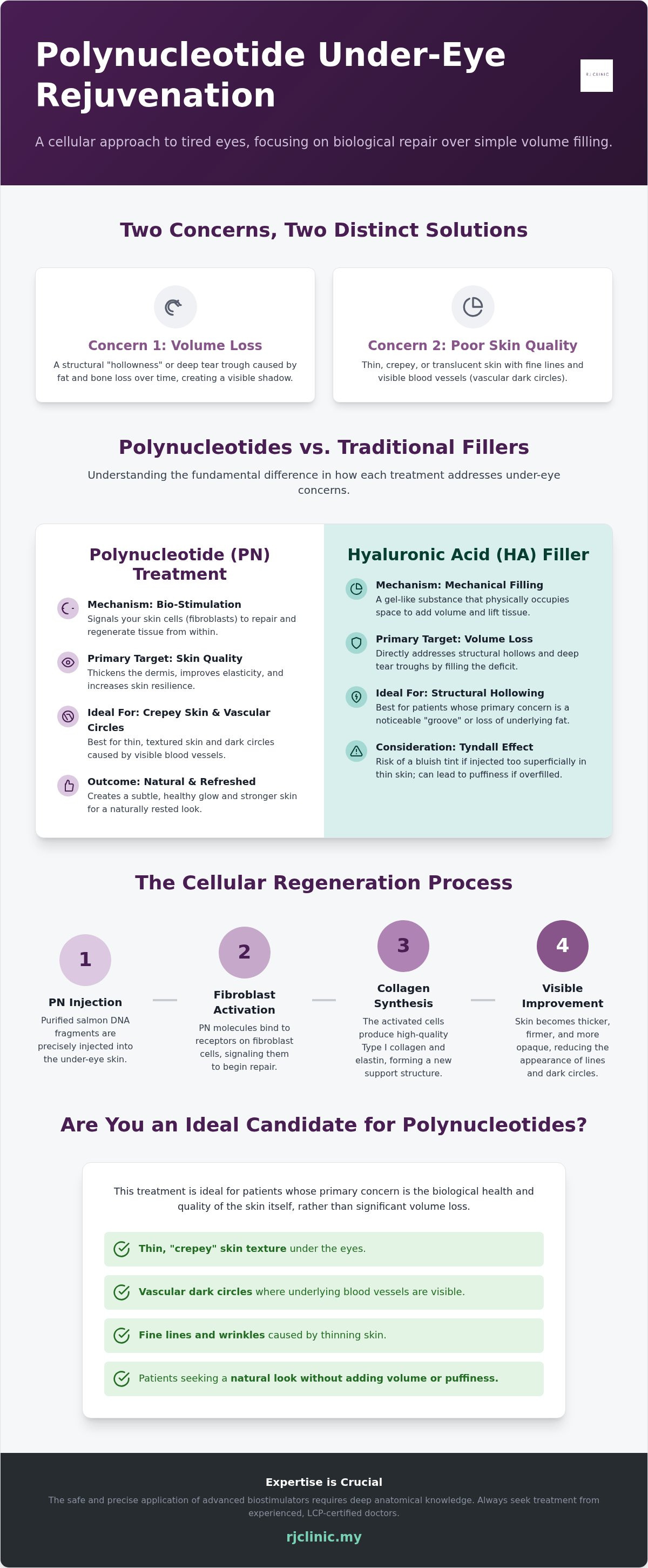
When patients visit Dr Renee or Dr Cheok concerned about tired eyes, the immediate instinct is often to ask for traditional filler. While fillers are excellent for structural hollowing, they don't address the biological health of the skin itself. A polynucleotide under eye treatment represents a shift from mechanical filling to cellular repair. Unlike dermal fillers that use hyaluronic acid to physically take up space, a polynucleotide acts as a bio-stimulator. It communicates with your cells to improve skin architecture from the inside out.
In the delicate periorbital area, the skin is at its thinnest. This makes it particularly susceptible to the Tyndall effect, a blueish discolouration that occurs when light scatters through filler placed too superficially. Polynucleotides avoid this risk entirely because they don't rely on volume. Instead, they thicken the dermis, making the skin more opaque and resilient. This makes them a preferred choice for patients who want a refreshed look without the puffiness often associated with overfilling.
Skin Quality vs. Volume Loss
It's vital to distinguish between a deep tear trough and crepey skin texture. If the primary concern is a structural "void" caused by fat loss, fillers might be appropriate. however, if the issue is fine lines, thinning, or vascular dark circles, the clinical logic points toward regeneration. Vascular circles occur when thin skin allows the underlying blood vessels to show through. By using a polynucleotide under eye protocol, we stimulate the production of collagen and elastin. This natural thickening of the skin's layers provides a biological "concealer" effect that no topical cream can match. This is the essence of regenerative medicine: teaching the body to repair itself.
The Salmon DNA Connection
The science behind these treatments involves highly purified DNA fragments derived from salmon. While this might sound unusual, these molecules are exceptionally compatible with human tissue. The purification process ensures that no protein remains, which minimizes the risk of allergic reactions. Products like Croma Polyneuclotide have set a high standard for safety and efficacy in this category. These DNA fractions possess inherent anti-inflammatory properties, making them ideal for the sensitive eye area. They don't just sit in the tissue; they actively scavenge free radicals and create a healthier environment for skin cells to thrive.
The Cellular Mechanism: How PN Injections Repair Tired Eyes
Polynucleotides aren't inert substances. They are bioactive molecules that fundamentally alter the local environment of the skin. When injected, they act as a signal to the body's internal repair system. This is a significant departure from fillers, which act as a physical cushion. The polynucleotide under eye treatment works by scavenging free radicals and neutralising oxidative stress. This prevents further degradation of the delicate periorbital tissue while providing an immediate boost in skin turgor. Because PN molecules are highly hydrophilic, they bind water to the area, resulting in a subtle, hydrated glow that looks entirely natural.
The most profound benefit of this treatment is the metabolic shift it creates. PN doesn't just sit in the tissue until it is absorbed. It actively changes how your skin cells behave over time, promoting a sustained state of regeneration. This long-term improvement in skin health means the results don't just disappear; they form a new, healthier baseline for your appearance.
Collagen and Elastin Synthesis
The primary "workhorse" of skin rejuvenation is the fibroblast. Polynucleotides bind specifically to A2A receptors on these cells to trigger a wound-healing cascade without the need for actual tissue trauma. This stimulation leads to the production of high-quality Type I collagen, which is stronger and more structured than the Type III collagen often found in younger or scarred skin. Over a series of sessions, this creates a biological scaffolding. As the skin thickens, it becomes more resilient to the repetitive movements of blinking and smiling, effectively smoothing out fine lines from within.
Vascular Improvement and Pigmentation
Many patients believe their dark circles are solely caused by pigment. Often, the culprit is actually vascular congestion seen through translucent skin. By increasing skin density, we create a more opaque barrier that masks the underlying blood vessels. This is a cornerstone of how we treat dark eye circles at RJ Clinic. For those with more complex concerns, such as structural fat bags, PN injections can be used synergistically with laser eyebag removal to refine the skin quality after the volume has been addressed. If you aren't sure whether your concern is skin-deep or structural, a clinical assessment for under-eye rejuvenation can help determine the right approach.
Suitability and Expectations: The Patient Journey in Kuala Lumpur
Success with a polynucleotide under eye treatment depends on accurate patient selection. The ideal candidate isn't someone looking for a dramatic "fill" but rather someone noticing the first signs of skin laxity, fine lines, or a crepey texture that resists topical hydration. Because the active ingredients are derived from salmon DNA, patients with a known fish allergy must avoid this specific treatment. During your consultation, Dr Renee or Dr Cheok will also screen for active infections or inflammatory conditions in the periorbital area to ensure a safe clinical outcome. Unlike fillers, which provide instant gratification, PN is a biological investment in your skin's future health.
The Treatment Protocol
We begin with a precise assessment of your skin laxity and tear trough depth. The application itself involves a series of micro-injections using a specialized "bleb" technique. This places the polynucleotides exactly where they can most effectively interact with your fibroblasts. In some cases, we may use a cannula for deeper delivery if the tissue requires more structural support. You'll notice small, raised bumps immediately after the procedure. In Kuala Lumpur's humid climate, we advise staying in a cool environment for the first 24 to 48 hours while these blebs naturally dissipate into the tissue. This short recovery window is a small trade-off for the long-term cellular benefits.
Managing Expectations and Longevity
Patience is required for regenerative results. While you might see a subtle "glow" within days due to the hydration effect, the actual tissue repair takes time. A single session is rarely sufficient for significant change. We typically recommend a protocol of three treatments spaced four weeks apart to achieve a cumulative effect. Once this foundation is built, results generally last between six to nine months. We suggest a maintenance "top-up" twice a year to sustain the improved skin density and keep the periorbital area looking resilient.
For patients interested in total facial rejuvenation, we often compare this targeted eye treatment to Rejuran Healer, which addresses broader skin quality across the face. If you are ready to move beyond temporary fixes and address the root cause of your tired appearance, you can book a consultation for under-eye repair to see if polynucleotides are the right choice for your skin profile.
Precision Aesthetics: The RJ Clinic Approach to Under-Eye Care
In Malaysia, the regulatory landscape for aesthetic medicine is strict for a reason. Dr Renee and Dr Cheok hold LCP (Letter of Credentialing and Privileging) certifications, which act as a hallmark of clinical safety and expertise. When administering a polynucleotide under eye treatment, precision is everything. Our philosophy centers on subtle enhancement. We believe the best results are those that make you look like a more rested version of yourself, not a different person. This regenerative approach is often woven into a broader face slimming plan or a comprehensive anti-aging strategy. We use only FDA-approved technologies and highly purified products to ensure that every intervention meets international safety benchmarks.
Custom-Designed Treatment Plans
Every patient presents a unique biological puzzle. A hollow tear trough might exist alongside significant skin laxity, requiring a multi-modal approach. At RJ Clinic, we don't believe in one-size-fits-all packages. For instance, we may combine polynucleotides with Ultherapy to tighten the deeper structural layers while the PN repairs the surface texture. We also utilize advanced biostimulators like Deusaderm when a patient requires specific metabolic support. This bespoke methodology ensures that the final outcome is harmonious with your natural facial features.
Safety Standards and Aftercare
Our clinical environments in Mont Kiara and Bangsar are designed to reflect our commitment to both medical integrity and patient comfort. You can expect a sterile, tranquil setting where every step of the process is explained with clarity. While polynucleotide under eye injections are minimally invasive, we provide dedicated post-treatment support to manage expected side effects like minor swelling or localized bruising. These are typically transient and resolve within a few days. We prioritize aftercare as much as the procedure itself, ensuring you feel supported throughout the entire regenerative journey. If you're seeking a refined, evidence-based solution for your under-eye concerns, we invite you to schedule a professional consultation.
Investing in Regenerative Eye Care
Choosing between structural volume and biological repair is a pivotal decision for your aesthetic journey. While fillers address deep hollowing, a polynucleotide under eye treatment offers a fundamental restoration of skin quality that volume alone cannot achieve. By stimulating your own collagen and elastin, this approach ensures a subtle, resilient result that respects your natural anatomy. It's about moving away from temporary concealment and toward a sustainable improvement in tissue health.
At RJ Clinic, Dr Renee and Dr Cheok combine clinical precision with specialized periorbital rejuvenation protocols. Our LCP-certified expertise across multiple locations in KL and Selangor ensures that your care is as safe as it is effective. We focus on custom-designed plans that prioritize your unique skin profile over generic outcomes, ensuring you achieve a refreshed look that feels entirely authentic. If you're ready to address persistent dark circles or crepey texture with a medically led approach, Book a Consultation with our LCP-Certified Doctors today. We look forward to partnering with you in your journey toward long-term skin health and confidence.
Frequently Asked Questions
Is polynucleotide under eye treatment painful?
Most patients find the procedure highly tolerable. We apply a medical-grade topical anaesthetic to the periorbital area before starting the injections. The process involves very fine needles or a blunt-tipped cannula to minimize sensation. You might feel a slight pressure or a pinch at the injection sites, but this is brief. Dr Renee and Dr Cheok prioritize a gentle technique to ensure your comfort throughout the session at our KL clinics.
How many sessions of polynucleotides do I need for dark circles?
Most patients require a series of three sessions to see a significant difference in dark circles. We space these appointments about four weeks apart to give the skin time to regenerate. Unlike traditional fillers, polynucleotide under eye results are cumulative. Each session builds upon the last, progressively thickening the dermis and improving vascular appearance. We often suggest a maintenance session every six months to sustain the refreshed look.
Can I combine polynucleotides with tear trough fillers?
These treatments are frequently combined to address both structural hollowing and surface texture. We often use polynucleotides as a primer to thicken and strengthen the dermis before considering a tear trough filler. This approach reduces the risk of the filler looking lumpy or showing through thin skin. By improving the biological foundation first, we can often achieve a more natural and refined result with less filler than would otherwise be required.
What is the difference between Rejuran and other polynucleotides?
Rejuran is a prominent brand within the polynucleotide category, specifically known for its DNA-derived repair technology. While all polynucleotides aim to stimulate repair, different brands may use varying concentrations or purification methods. For example, Rejuran I is specifically formulated for the thin skin around the eyes. At RJ Clinic, we choose between Rejuran and other premium options like Croma PN based on which formulation best suits your clinical needs and skin type.
Are there any side effects to salmon DNA injections?
Side effects are generally mild and temporary. You may experience localized swelling, redness, or small raised bumps at the injection sites. These bumps, or blebs, usually disappear within a day or two. Minor bruising is also possible but typically resolves quickly. Because the active ingredients are sourced from salmon DNA, we cannot perform this treatment on patients with a fish allergy. Safety remains our primary concern during every procedure.
How long does it take to see results from polynucleotide treatment?
A subtle hydration effect is often visible within a few days. However, the structural repair of the skin is a gradual process. You'll typically begin to see a real change in skin quality and thickness after the second session, which is usually around the eight-week mark. The most significant improvements in polynucleotide under eye texture and resilience peak approximately three months after the start of your initial treatment course.


Comments