


Non-Invasive Skin Tightening Treatments: RF, Ultrasound or RF Microneedling?

Updated: Oct 15

The device with the most impressive-sounding technology isn’t automatically the right choice. Choosing among non invasive skin tightening treatments depends on where the laxity is, how pronounced it is and whether your priority is firmer skin, lifting or improved texture. Ultrasound, radiofrequency, RF microneedling, laser and IPL are different approaches, even if they can sound interchangeable when you’re also weighing comfort and recovery.
Each approach delivers energy differently, so its focus and trade-offs differ too. Ultrasound and radiofrequency work in different ways; RF microneedling combines energy delivery with tiny needles, while laser and IPL use light. None is a universal answer, and a device-based treatment may not address more advanced laxity in the same way as surgery.
The useful starting point is the concern you want to address, not the device name. At RJ Clinic in Kuala Lumpur, an LCP-certified aesthetic doctor, such as Dr Renee or Dr Cheok, can assess your skin and discuss suitable options. Ultherapy Prime is available at the clinic, but a doctor assessment is required before proceeding.
Table of Contents
What non-invasive skin tightening treatments can, and cannot, address
A common misconception is that every tightening device works in the same way. Non invasive skin tightening treatments are intended to address skin laxity without surgery, but the technology, treatment depth and focus vary. “Tighter skin” can also mean different things: you may be concerned about looseness along the jaw, fine crepey texture or a face that appears less full than before. Those concerns can have different causes and may call for different approaches.
Skin laxity, volume loss, and excess skin are not interchangeable
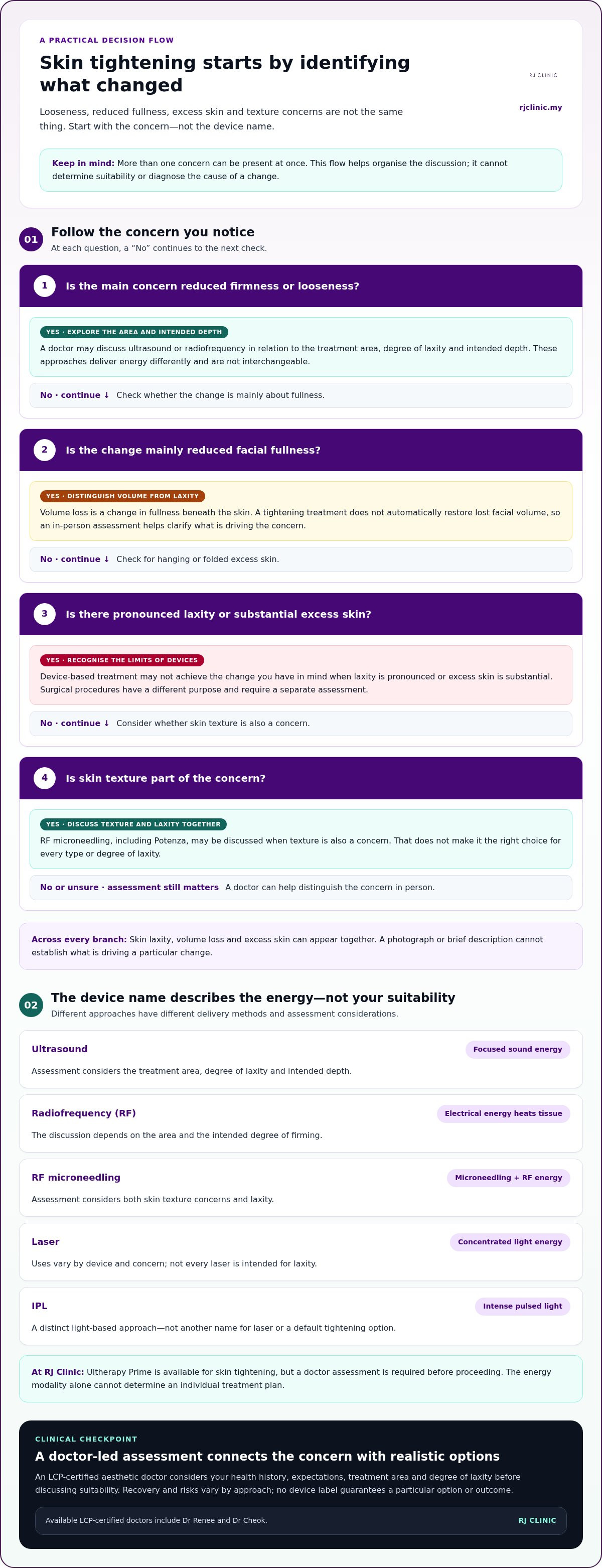
Skin laxity refers to reduced firmness or looseness. Volume loss is a change in fullness beneath the skin, while excess skin describes tissue that may hang or fold. These concerns can appear together, so a photograph or brief description cannot establish what is driving a particular change. A tightening treatment does not automatically restore lost facial volume, and addressing texture alone may not improve visible looseness. A doctor assesses the area in person before discussing suitability.
Why energy-based treatments are not a substitute for every procedure
Energy-based approaches may support gradual refinement, but they have limits. If laxity is pronounced or there is substantial excess skin, a device-based treatment may not achieve the change you have in mind. Surgical procedures have a different purpose and require a separate assessment. The aim is to match the discussion to your concern, rather than assume one method suits everyone or promise a lift.
Expectations matter as much as the device. A modest change in firmness may suit one person, while another may be looking for a more substantial correction. If skin texture is also a concern, Potenza RF microneedling may be discussed, but that does not make it the right choice for every type or degree of laxity.
The practical question is not simply which device is popular, but what you want treated and what degree of change is realistic. An assessment helps distinguish laxity from volume change or excess skin, consider the treatment area and explain relevant limitations before you decide. That clinical judgement informs suitability and the visible change you might reasonably expect.
How ultrasound, radiofrequency, laser, and IPL approaches differ
The device category tells you how energy is delivered, but not whether it matches your concern. Ultrasound uses focused sound energy, while radiofrequency (RF) uses electrical energy to heat tissue. Laser and intense pulsed light (IPL) are different forms of light-based technology. Neither label alone means a treatment is designed to tighten skin.
Ultrasound and radiofrequency: different approaches to tissue
Ultrasound concentrates sound energy, while RF creates heat through electrical energy. These mechanisms aren’t interchangeable. The treatment area and intended depth are clinical considerations, not settings to choose from an online comparison. RJ Clinic offers Ultherapy Prime for skin tightening, but whether it belongs in your plan depends on a doctor’s assessment. You can explore the Ultherapy Prime skin-tightening treatment as one option to discuss.
Laser and IPL: understand the difference before comparing
Laser delivers a focused beam of light; IPL delivers pulses of light across a range of wavelengths. Both categories include different devices and uses, so the name alone doesn’t establish a tightening benefit. The American Society for Dermatologic Surgery’s overview of non-invasive skin tightening offers context on energy-based approaches.
The energy modality alone cannot determine an individual treatment plan. For non invasive skin tightening treatments, the concern, area, degree of laxity and realistic expectations all inform the discussion. A doctor-led assessment helps clarify suitable options and set expectations.
How to assess suitability, limitations, risks, and recovery
A useful consultation is about more than choosing a device. For non invasive skin tightening treatments, a doctor needs to understand what change you’re seeking, what the treatment area requires and whether the likely benefit is proportionate to your concern. A doctor assessment is required before proceeding. It can guide the treatment discussion, but it cannot guarantee a particular option or outcome.
What an LCP-certified aesthetic doctor assesses
An LCP-certified aesthetic doctor can work through five connected questions with you. Each answer helps shape the discussion:
Your concern: Describe what you’d like to change, such as looseness, rather than relying only on a device name.
The treatment area: The face, neck and other areas differ, so the intended area informs which approaches may be relevant.
Your health history: Share relevant medical conditions, medicines and other factors that could affect treatment planning.
Previous aesthetic procedures: Mention prior device treatments or other procedures, including when they took place, so the doctor can consider them in context.
Your expectations and options: Explain the degree of change you hope for. The doctor can discuss limitations and whether another approach, or no treatment, is more appropriate.
If laxity is more pronounced, a non-invasive treatment may not replace surgery. Device-based approaches and surgical procedures have different purposes; an assessment should make that distinction clear. RJ Clinic’s experienced plastic surgeons can inform surgical discussions where appropriate.
Risks, recovery, and the limits of general timelines
Comfort and recovery vary with the approach and your circumstances. Temporary redness, swelling or bruising can occur, and less common but more serious complications may also be possible. A general timeline cannot reliably predict your experience. Discuss likely reactions, relevant risks and aftercare for the specific treatment with your treating doctor.
At RJ Clinic, LCP-certified aesthetic doctors assess suitability before treatment. If you’re considering Ultherapy Prime, discuss whether it fits your concern and expectations with an LCP-certified aesthetic doctor.
Choosing doctor-led skin tightening care in Kuala Lumpur
A considered treatment plan starts with the concern you want addressed, not with a device name. In a consultation, the doctor can discuss what you’ve noticed, the area involved and the change you hope to see, then explain how those priorities shape the options. The conversation should also clarify a treatment’s limits, so you can decide whether its potential benefits align with your expectations.
What to expect from a personalised consultation
Bring a clear description of what you’d like to improve and any questions about the approach. The doctor can consider your circumstances and discuss options and limitations. An assessment does not commit you to a procedure or promise a specific result. For more detail about one skin-tightening option available at RJ Clinic, see the Ultherapy treatment in Kuala Lumpur page.
RJ Clinic uses the latest machines and FDA-approved treatments. These details provide context about the clinic’s approach, but they do not determine which option is suitable for you. A personalised discussion connects your priorities with an appropriate next step.
Local care for Kuala Lumpur and overseas patients
RJ Clinic serves patients across Kuala Lumpur and the Klang Valley, including Mont Kiara, Bangsar, Damansara Heights, Sri Hartamas, TTDI, Segambut, Kepong, Desa ParkCity, Solaris Dutamas, Publika, Bandar Sri Damansara, Mutiara Damansara and Bandar Utama. Overseas clients can also book, with multilingual support available. If you’re arranging care from abroad, use the consultation to discuss your concerns before making a treatment decision. The same individual assessment applies whether you’re local or travelling from overseas.
To explore your options, explore doctor-led aesthetic care at RJ Clinic.
Make your next step an informed one
Before deciding on non invasive skin tightening treatments, be clear about the change you’re hoping for and the trade-offs you’re comfortable with. Note what concerns you most, which areas you want assessed and how much recovery time you can reasonably accommodate. These details help keep the consultation focused on your priorities rather than on choosing a device by name.
Use the discussion to understand what a recommended approach is intended to address, what it may not change and whether an alternative deserves consideration. Take time to weigh those answers. A considered decision should be grounded in your goals, without pressure to proceed.
For a personalised discussion of your options, explore doctor-led aesthetic care at RJ Clinic. A doctor assessment is required before proceeding.
Frequently Asked Questions
Can skin tightening be combined with fillers or Botox?
Combining treatments may be considered, but it isn’t automatically appropriate. The doctor needs to review how the proposed procedures relate to one another, including their timing, risks and intended outcomes. Mention any treatments you’re considering, even if you’re unsure whether they address the same concern. A personalised plan may involve one option, several options or a decision not to combine them.
Should I stop my skincare products or medication before a skin-tightening treatment?
Don’t stop prescribed medication or change your skincare routine based on general online advice. Preparation varies with the proposed treatment and your circumstances. If a product or medicine seems relevant, note its name and how you use it so your treating doctor can give specific guidance. Follow the instructions for your treatment rather than applying a general rule intended for a different procedure.
Can weight changes affect the appearance of skin after treatment?
Changes in body shape can influence how an area appears over time, but the effect varies and cannot be predicted for an individual. Skin tightening isn’t a weight-management treatment, and it may not address concerns for which surgery is clinically relevant. If your weight has changed or is likely to change, include that context in your discussion so the doctor can consider how it relates to your goals.
Can overseas patients book an aesthetic consultation from outside Malaysia?
Yes, overseas patients can book with RJ Clinic, and multilingual support is available. Booking from abroad does not establish whether treatment is suitable or confirm a treatment plan. A doctor assessment is required before proceeding, so decisions are based on an individual clinical evaluation rather than assumptions made from booking alone.
What should I tell the doctor before considering skin tightening?
Start with the change you most want to address, then explain what a satisfactory outcome would look like to you. Mention any previous aesthetic treatment that may be relevant, including whether you were pleased with its effect. It can also help to say which trade-offs matter most, such as visible recovery or a preference for a subtle change. This gives the doctor a clearer basis for assessing suitable options.


Comments