


Lip Filler Aftercare: What to Avoid During the First 7 Days

Updated: Sep 25

The final contour of your lips isn't decided the moment you step out of the treatment room; it's shaped by how your tissue integrates the product over the coming week. Meticulous lip filler aftercare is an active clinical process rather than passive downtime, serving as the primary safeguard against filler migration, prolonged lumpiness, and compromised volume.
Waking up the morning after injections to noticeable swelling, firmness, or localized bruising often triggers immediate panic. It's entirely natural to second-guess whether that initial asymmetry is an expected tissue response or a sign that something went wrong. With contradictory online advice urging everything from aggressive massage to extreme icing, knowing what actually protects your lips can feel overwhelming.
This clinical breakdown outlines precisely what to avoid during the first seven days to protect your investment. You'll gain clear, day-by-day recovery milestones, safe daily habits for eating and sleeping, and the exact red flags that require evaluation by an LCP-certified aesthetic physician.
Table of Contents
Lip Filler Recovery Timeline: What to Expect (Days 1-14)
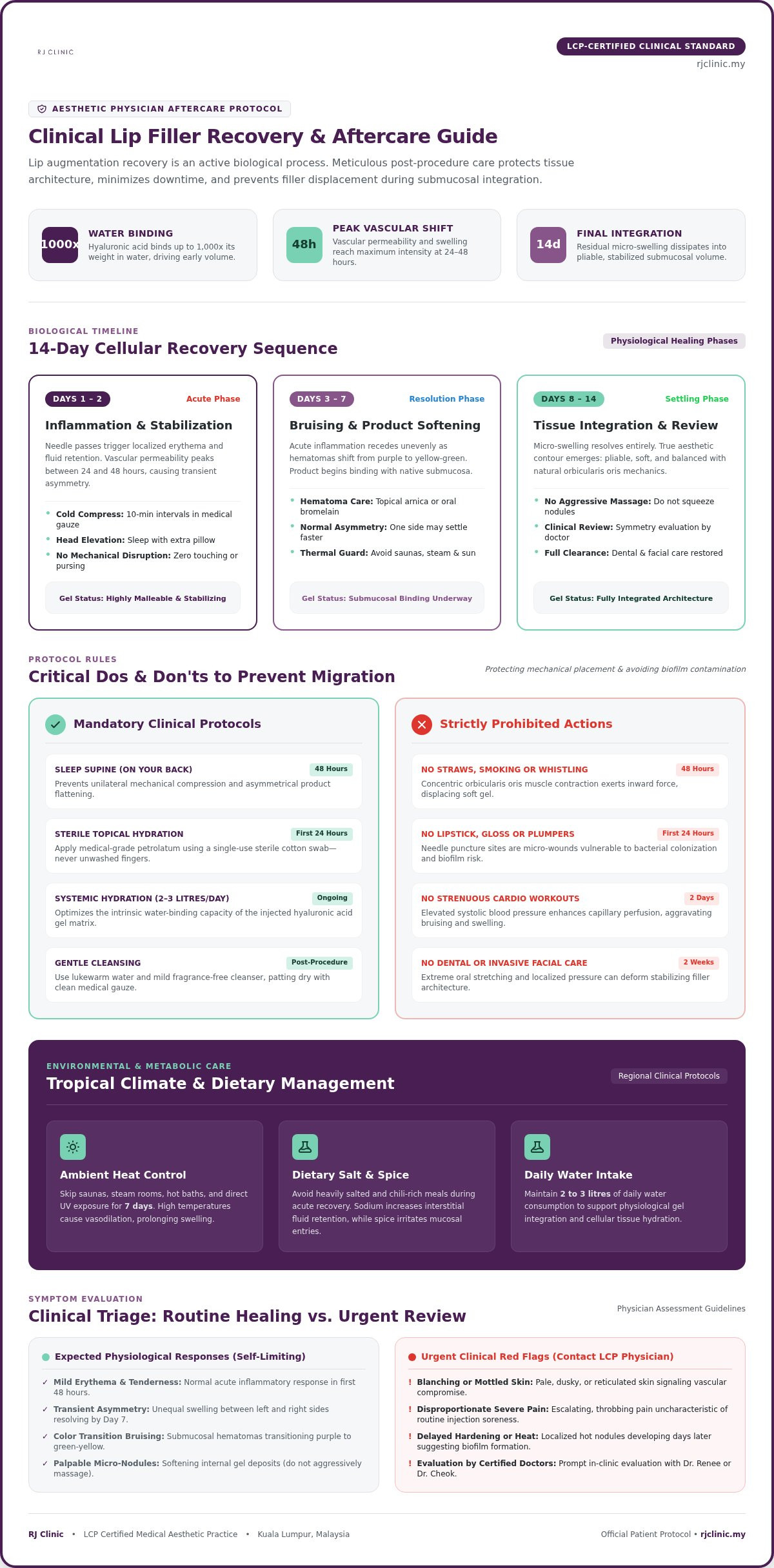
Biological healing follows a predictable physiological sequence. Hyaluronic acid is naturally hydrophilic, binding up to 1,000 times its weight in water. This means the fullness visible during early recovery is a combination of injected gel and localized interstitial fluid retention. While deep structural treatments like Radiesse filler behave differently in static facial planes, modern Lip augmentation using soft hyaluronic acid gels demands an adaptable healing period. Understanding this cellular response is essential to navigating your lip filler aftercare without unnecessary distress.
The First 48 Hours: Managing Acute Swelling and Tenderness
Day 1 brings immediate erythema and tenderness as needle passes trigger a localized inflammatory cascade. Vascular permeability peaks between 24 and 48 hours, often leaving the lips looking dramatically overfilled or uneven. During this window, focus on gentle stabilization:
Apply a clean cold compress wrapped in medical gauze for 10-minute intervals to constrict dilated capillaries without freezing delicate mucosa.
Sleep with your head elevated on an extra pillow to discourage dependent fluid accumulation overnight.
Avoid touching, pressing, or pursing the lips to prevent unnecessary mechanical disruption while the gel stabilizes.
Days 3 to 7: Bruising Resolution and Product Softening
By day 3, acute inflammation begins to subside, but it rarely recedes symmetrically. One side of the lip often clears faster than the other, creating harmless, transient asymmetry that resolves on its own. Bruising typically shifts from deep purple to yellowish-green during this phase. Under clinical guidance from practitioners like Dr. Renee or Dr. Cheok, topical arnica or oral bromelain can accelerate hematoma clearance as the gel binds harmoniously with native submucosal tissue.
Days 8 to 14: Final Tissue Integration and Settling
By the second week, residual micro-swelling dissipates and the filler fully integrates with your natural muscular architecture. What remains is your true aesthetic outcome: pliable, balanced, and soft to the touch. If you detect small, palpable nodules beneath the surface, resist the urge to vigorously self-massage them at home. Aggressive pressure can displace the product. Instead, attend your scheduled clinical review to evaluate symmetry, projection, and tissue response under professional lighting.
Essential Lip Filler Dos and Don'ts: Protecting Your Treatment Outcome
Hyaluronic acid remains moldable during early cellular integration. External pressure, muscular contraction, and sudden vascular shifts can displace the product before it anchors securely within the submucosa. Adhering to established FDA information on dermal fillers and doctor-led protocols protects tissue architecture and prevents unwanted migration.
Immediate Physical Restrictions to Prevent Product Displacement
The orbicularis oris muscle exerts strong inward mechanical forces when engaged. To safeguard your results during early lip filler aftercare:
Avoid drinking through straws, smoking, or whistling for at least 48 hours to prevent concentric muscle contraction from shifting malleable gel.
Pause strenuous cardiovascular workouts for two days, as elevated blood pressure increases capillary perfusion and worsens bruising.
Sleep supine on your back to prevent unilateral flattening against pillows.
Postpone dental appointments, deep facial massages, and invasive oral procedures for two weeks.
Safe Skincare, Makeup, and Topical Application Practices
Injection needle entries are microscopic open wounds vulnerable to bacterial colonization and biofilm formation. Keep your lips completely free of colored lipsticks, glosses, and plumping balms for the first 24 hours. When hydration is required, apply medical-grade petrolatum using a sterile, single-use cotton swab rather than unwashed fingers. Cleanse the surrounding area gently with lukewarm water and a mild, fragrance-free cleanser, patting dry with a clean towel.
Dietary and Environmental Adjustments for Tropical Climates
Living in a warm, humid climate like Malaysia introduces unique post-procedure variables. Ambient heat triggers systemic vasodilation, prolonging swelling and micro-hematomas. Skip saunas, steam rooms, and direct sun exposure for seven days. Prioritize steady systemic hydration; drinking two to three liters of water daily optimizes the water-binding capacity of the hyaluronic acid gel. Additionally, avoid heavily salted or chili-laden meals that can physically irritate the sensitized vermilion border. For patients seeking balanced, natural facial harmony, adhering to a customized clinical protocol ensures your lip filler augmentation settles with pristine symmetry and enduring contour.
Expected Side Effects vs Complications: When to Seek Medical Attention
Every injection produces localized tissue trauma, but distinguishing routine inflammation from acute vascular pathology is vital for patient safety. According to clinical guidelines in the Cleveland Clinic's review of lip filler aftercare, standard post-procedure symptoms resolve on their own, whereas true complications demand prompt clinical intervention. Dedicated lip filler treatments conducted by LCP-certified aesthetic physicians prioritize micro-cannula precision and anatomical depth selection to prevent structural hazards before they can occur.
Benign Post-Treatment Signs: Swelling, Bruising, and Palpable Lumps
Ecchymosis, pinpoint crusting at needle entry sites, and localized soreness are expected tissue responses. Research shows that minor side effects occur in approximately 50% of patients, with tenderness reported in roughly 33% of cases. Small, firm submucosal lumps are usually cohesive droplets of gel adapting to perioral movement, and they soften naturally over two to four weeks. These temporary textural changes shouldn't be confused with true filler migration, which results from excessive volume or placing product outside the proper anatomical boundaries.
Critical Red Flags: Recognizing Vascular Compromise and Infection
Vascular occlusion occurs when filler compresses or enters the labial arterial arcade, restricting microvascular perfusion. While rare, occurring in roughly one out of every 6,410 syringes, immediate identification is critical. Contact your treating doctor if you notice:
Escalating, severe throbbing pain that feels distinctly disproportionate to routine post-injection tenderness.
Unusual skin blanching, a livedo reticularis pattern resembling purplish lace, or mottled, grayish tissue discoloration.
Delayed capillary refill; if pressing firmly on the lip produces a pale spot that takes longer than two seconds to return to pink, circulation is compromised.
Signs of infection, including expanding redness, radiating heat, or purulent fluid discharge.
Emergency Reversal Protocols: The Role of Hyaluronidase
Hyaluronic acid's primary safety advantage is its complete reversibility. If vascular compromise occurs, physicians administer hyaluronidase directly into the affected tissue plane. This specialized enzyme breaks down cross-linked hyaluronic acid bonds within hours, clearing the blockage and restoring oxygenated blood flow before ischemic necrosis can develop. Thorough lip filler aftercare requires direct access to medical oversight; if you observe blanching or severe pain, contact our medical team immediately for prompt clinical assessment.
Maintaining Your Results: Longevity, Touch-Ups, and Long-Term Care
Aesthetic longevity extends well beyond initial healing. The lifespan of hyaluronic acid gels depends on molecular cross-linking density, injected volume, and individual metabolic turnover rates. While dynamic tissue naturally metabolizes product faster than static facial zones, diligent lip filler aftercare combined with structured maintenance preserves refined, natural volume over time. For balanced lower-face rejuvenation, many patients also pair perioral enhancement with targeted dermal fillers to support surrounding structural planes like the chin and marionette lines.
Biological Breakdown of Hyaluronic Acid in Dynamic Areas
Hyaluronic acid fillers placed in dynamic zones typically maintain structural integrity for six to nine months, though certain advanced formulations can persist up to a year. Because the orbicularis oris muscle contracts thousands of times each day during speech, mastication, and facial expression, mechanical shearing forces accelerate the breakdown of the gel matrix. High personal metabolic rates, frequent high-intensity training, and systemic dehydration further increase natural enzymatic degradation. Fortunately, premium cross-linked gels break down evenly, preventing sudden volume loss.
The Strategy of Conservative Maintenance vs Overfilling
Preserving an elegant, natural outcome requires conservative touch-ups rather than excessive, frequent volume stacking:
Schedule clinical follow-ups around month six to nine before the existing product completely dissolves, which often requires less filler to restore your baseline.
Prioritize micro-adjustments along the vermilion border rather than continually filling the wet-dry mucosal body.
Prevent unnatural shelf projection or "duck lips" by allowing older filler to metabolize naturally before re-injecting.
Consult an LCP-certified aesthetic doctor in Kuala Lumpur, such as Dr. Renee or Dr. Cheok, who can calibrate maintenance sessions to your unique lip anatomy and facial balance.
Complementary Treatments for Comprehensive Perioral Rejuvenation
Enhancing lip shape is often only one component of total perioral harmony. Vertical perioral lines benefit from subtle micro-dosing to soften muscular creasing without compromising natural movement. If you experience uneven pigmentation along the mucosal edge, clinical therapies designed for dark lips restore a fresh, radiant undertone. Daily application of a broad-spectrum lip balm with UV protection shields delicate mucosal tissue against photo-aging, preventing premature collagen loss and extending your aesthetic investment.
Protecting Your Aesthetic Investment Through Clinical Partnership
Achieving refined, enduring lip volume requires both precision during injection and patience throughout the cellular recovery phase. Diligent lip filler aftercare protects delicate mucosal tissue while hyaluronic acid integrates, ensuring early swelling and transient unevenness subside smoothly into balanced proportions. By minimizing mechanical strain, moderating heat exposure, and prioritizing biological healing over aggressive home remedies, you safeguard your enhancement from the start.
At RJ Clinic, every treatment is calibrated to your individual facial architecture. Led by LCP-certified physicians Dr. Renee and Dr. Cheok, our practice maintains strict adherence to international clinical safety and hygiene protocols, focusing on personalized aesthetic planning that preserves natural, balanced facial harmony. Whether you're navigating your first week of healing or planning long-term maintenance, doctor-led oversight provides genuine peace of mind. Schedule a consultation with our doctors to discuss a personalized treatment plan designed around your unique features.
Frequently Asked Questions
How long does swelling last after getting lip fillers?
Acute swelling typically subsides within three to five days, while residual micro-swelling takes up to 14 days to resolve completely. The first 48 hours show the most pronounced volume due to the hydrophilic nature of hyaluronic acid. By the end of the second week, your tissue fully integrates the gel, revealing the final shape. Patients in warm climates like Kuala Lumpur should remain well-hydrated to encourage smooth fluid drainage.
Can I drink hot coffee or tea immediately after lip filler injections?
Avoid hot coffee, tea, and warm soups for at least 24 hours following your procedure. Heat causes local vasodilation, increasing blood flow to sensitized lip tissues and worsening both swelling and bruising. Residual numbness from local anesthesia also increases your risk of accidental thermal burns. Stick to room-temperature or chilled liquids, and remember to sip straight from an open glass rather than using a straw.
What should I do if I feel hard lumps inside my lips after treatment?
Leave the lumps untouched and allow them to soften naturally over the first two weeks. Firmness usually represents localized healing tissue or concentrated hyaluronic acid gel that hasn't fully integrated with the submucosa. Refrain from aggressive self-massage, which can inadvertently push product out of the vermilion border. If distinct nodules persist beyond day 14, consult an LCP-certified aesthetic doctor like Dr. Renee or Dr. Cheok for clinical evaluation.
Is it safe to fly or travel right after getting lip fillers?
It's best to wait at least 48 to 72 hours before boarding an airplane. Pressurized aircraft cabins alter atmospheric pressure and feature extremely dry air, which can exacerbate acute fluid retention and tissue dehydration. Traveling immediately also complicates your lip filler aftercare if you need rapid in-person evaluation by your clinic. If flying is unavoidable, stay thoroughly hydrated and carry doctor-approved perioral moisturizers in your hand luggage.
Can I apply lip balm or lipstick the day after my lip filler appointment?
You can apply clean, medical-grade occlusives 24 hours post-treatment, but colored lipsticks and glosses should wait 48 hours. Puncture sites remain microscopic entry points where cosmetic pigments, waxes, and applicators introduce bacteria, raising the risk of perioral infection. Once 24 hours have passed, apply pure petrolatum or a clinical healing balm using a sanitized cotton tip rather than dragging a lipstick bullet across tender tissue.
When should I contact my doctor about unusual pain or discoloration?
Contact your treating clinic immediately if you experience severe, throbbing pain or notice pale, mottled discoloration on or around your lips. While mild tenderness is routine, sudden severe discomfort or grayish-white blanching can indicate vascular occlusion, where filler impedes arterial flow. Effective lip filler aftercare depends on prompt communication. Doctors can immediately administer hyaluronidase to dissolve the blockage, restore vascular perfusion, and safeguard tissue health within hours.


Comments