


How to Fix Sagging Skin on the Face: A Clinical Guide to Structural Lifting

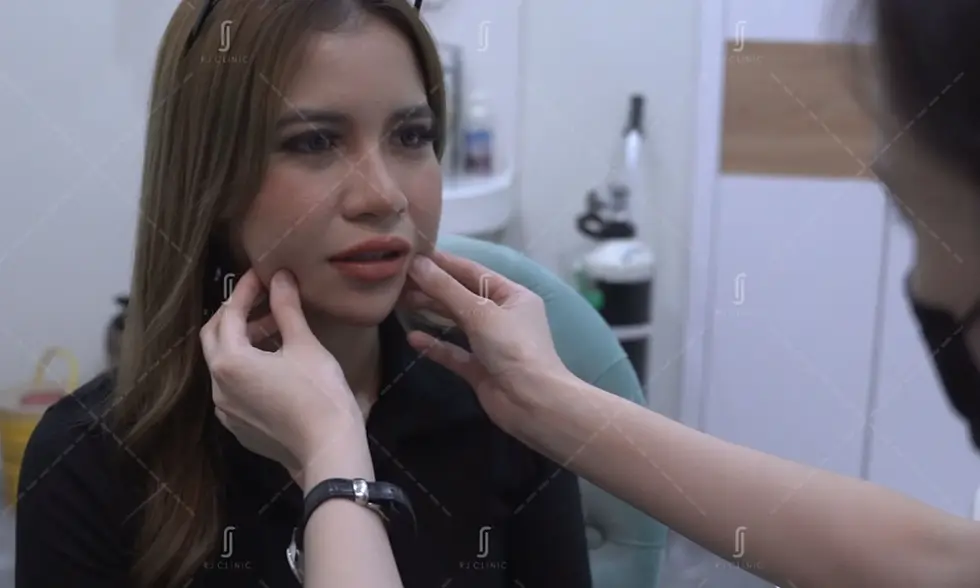
Most luxury firming creams are essentially high-end moisturizers that cannot reach the structural layers where facial laxity begins. While these topicals may refine the skin surface, they lack the depth to counteract gravity or the 30 percent loss of collagen most people experience by age 50. It's common to feel frustrated when expensive routines fail to restore a sagging jawline or lift the mid-face, leading to confusion about which clinical intervention actually works.
We believe that understanding the medical causes of facial descent is the first step toward a successful transformation. This guide explains how to fix sagging skin on face by looking at the clinical framework Dr Renee and Dr Cheok use to select between non-surgical lifting and surgical intervention. You'll learn how we prioritize natural-looking outcomes using technologies like Ultherapy Prime and structural dermal fillers to restore volume without looking artificial. We will also outline a clear roadmap for long-term collagen maintenance, helping you move away from trial-and-error treatments toward a customized, medically sound plan for facial refinement.
Key Takeaways
Understand why surface-level treatments fail by identifying the three layers of facial descent, which include bone resorption and fat migration.
Learn how to fix sagging skin on face by targeting the SMAS layer with Ultherapy Prime for structural lifting rather than just surface tightening.
Discover the role of biostimulators like Ellanse in restoring lost volume while naturally encouraging your body's own Type I collagen production.
Identify your "surgical threshold" to determine if non-surgical energy devices or minimally invasive options like Accusculpt are the most appropriate fit for your goals.
Table of Contents
The Anatomy of Aging: Why Skincare Creams Fail to Lift Sagging Skin
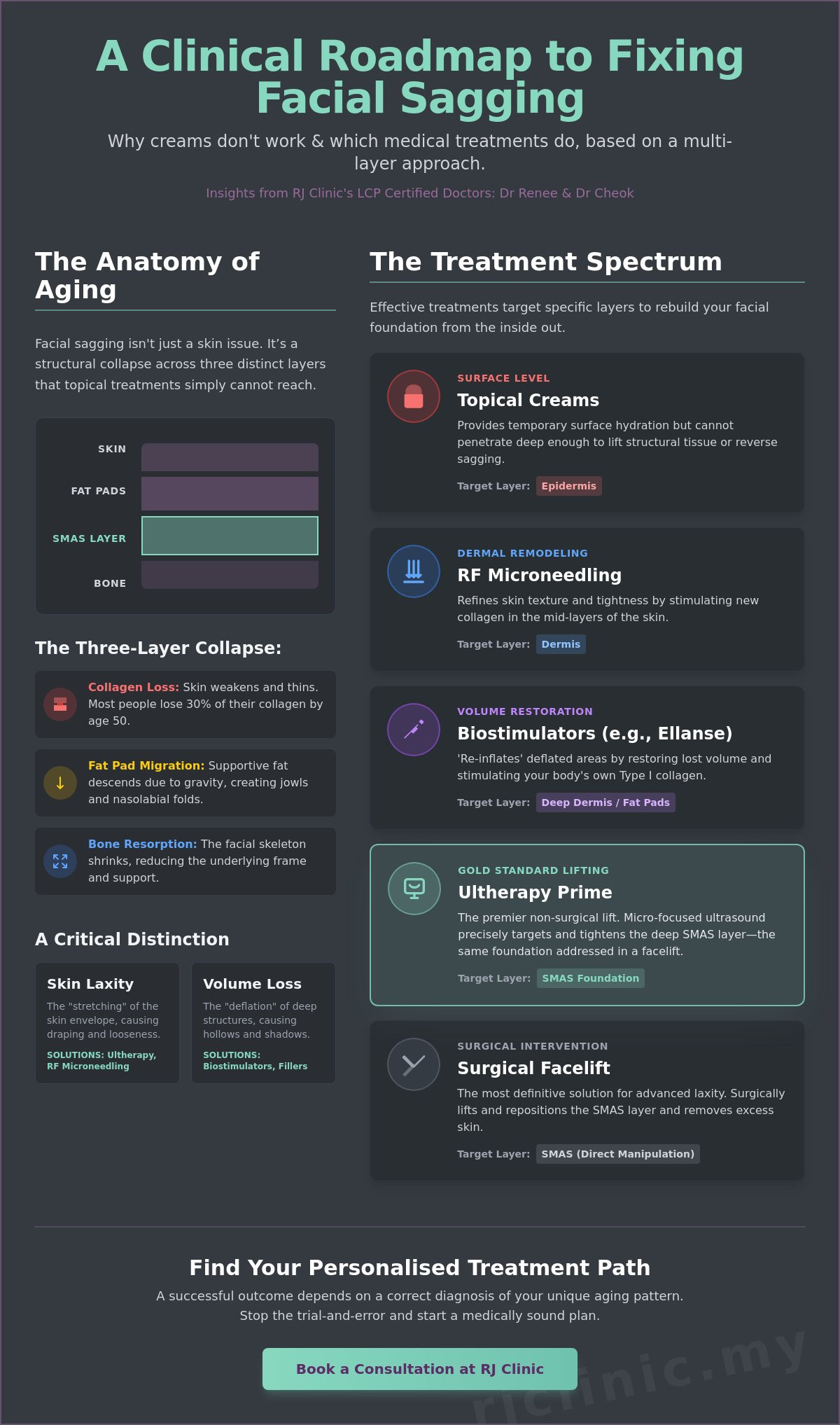
Clinical experience shows that many patients initially mistake surface-level dehydration or fine lines for true structural sagging. While a high-quality moisturizer can temporarily plump the epidermis, it lacks the mechanical strength to address the biological descent occurring in deeper tissues. When discussing how to fix sagging skin on face, we must look beyond the surface at a three-layer collapse: the gradual thinning of facial bones, the downward migration of fat pads, and the eventual loss of skin elasticity. Topical retinoids and peptides are excellent for supporting skin health, but they cannot lift the heavy, displaced tissue that defines advanced aging.
By age 50, most individuals have lost around 30 percent of their collagen. This depletion doesn't just affect the skin's texture; it weakens the entire support system of the mid-face and jawline. Determining how to fix sagging skin on face requires an understanding that topicals cannot reach the SMAS layer, which is the actual foundation of facial tension. Without intervention at this depth, the skin continues to drape over a shrinking internal frame, leading to the familiar appearance of jowls and nasolabial folds.
The SMAS Layer: The Foundation of Facial Support
The Superficial Musculoaponeurotic System, or SMAS, is a fibrous scaffold that connects your facial muscles to your skin. It's the critical layer that surgeons manipulate during Surgical Interventions for Sagging Skin to create a lasting lift. As collagen production drops by approximately 1 percent each year after age 30, this SMAS layer weakens. Gravity eventually wins, causing the entire facial structure to shift downward. This is why effective clinical lifting must target this foundation rather than just the skin's surface, using technologies like Ultherapy Prime to reach depths previously only accessible through surgery.
Laxity vs. Volume Loss: A Critical Distinction
True sagging is often a combination of skin stretching (laxity) and the 'deflation' of underlying support (volume loss). Hollowing in the temples and cheeks creates a lack of tension, which causes the skin to gather around the lower face. Facial ptosis is the medical term for the downward migration of tissue. Distinguishing between these two factors is vital for a natural result. We must decide whether to tighten the skin envelope or 're-inflate' the structure using biostimulators like Ellanse. Without addressing both, the result may look incomplete or lead to an over-filled appearance that lacks genuine structural lift.
Medical Technologies for Non-Surgical Lifting and Tightening
Clinical results for non-surgical lifting depend heavily on the body's biological response. While lasers often target the surface, advanced energy-based devices focus on structural remodeling of the deeper dermis and connective tissue. Patients frequently ask how to fix sagging skin on face without the downtime of traditional surgery. The answer lies in stimulating new collagen and elastin through controlled thermal energy. It's vital to understand that these results aren't immediate; the biological window for collagen synthesis typically spans three to six months as the tissue gradually reorganizes and tightens.
Suitability for these treatments is determined by the degree of existing skin elasticity and the specific layers of descent. Energy-based lifting is most effective for individuals with mild to moderate laxity who want to delay more invasive procedures. These FDA-Cleared Non-Surgical Technologies provide a way to strengthen the skin's foundation with minimal disruption to daily life.
Ultherapy Prime: Lifting from the Inside Out
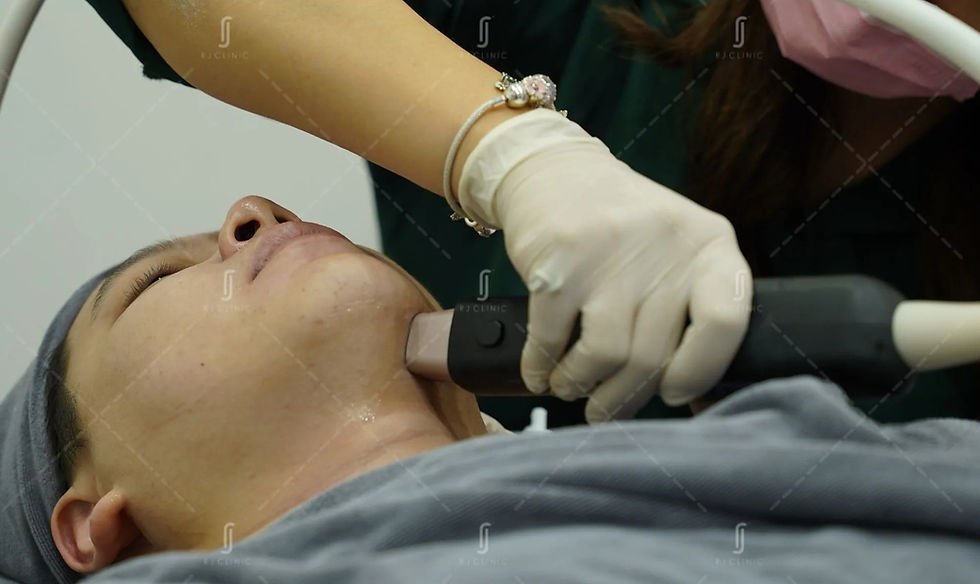
Ultherapy Prime represents a significant advancement in micro-focused ultrasound technology. Unlike standard treatments, it allows Dr Renee and Dr Cheok to utilize real-time visualization to see the specific tissue layers they're treating. This ensures the energy is delivered precisely to the SMAS layer, the same foundation addressed in a surgical facelift. This level of precision is why it's considered the gold standard for Ultherapy in Malaysia. By targeting the scaffold of the face, it provides a lift that looks organic rather than artificial.
RF Microneedling: Tightening the Dermal Envelope
While ultrasound focuses on depth, radiofrequency (RF) technologies excel at refining the skin's texture and "crepiness." Devices like Density RF and Potenza RF Microneedling are essential for addressing accordion lines and fine wrinkles that ultrasound alone might not reach. Potenza triggers a dual healing response by combining mechanical micro-needling with thermal RF energy. It's paramount to seek LCP-certified doctors for these treatments, as precise heat management is required to avoid unintended fat loss. For a truly comprehensive result, we often suggest a customized lifting plan that combines these modalities to address both depth and surface quality.
The Role of Injectable Biostimulators and Fillers in Facial Contouring
Many patients worry that injectables will lead to an "overfilled" or puffy appearance, a concern often fueled by visible examples of "filler fatigue" in popular media. However, modern aesthetic medicine has moved away from simply filling lines toward restoring the underlying architecture of the face. When we analyze how to fix sagging skin on face, we often find that the skin is draping because the internal "tent poles"—the bone and deep fat pads—have receded. By restoring this lost support, we can achieve a lift that looks both natural and structural rather than merely inflated.
The clinical trade-off usually involves a choice between the immediate gratification of traditional hyaluronic acid (HA) fillers and the long-term biological investment of biostimulators. While HA fillers are excellent for precise contouring, biostimulators like Ellanse offer a dual benefit. They provide an immediate corrective lift while simultaneously triggering the production of your own Type I collagen. This results in a gradual improvement in skin density and firmness that can last significantly longer than standard fillers.
Biostimulation: Investing in Your Skin’s Future
Biostimulators differ fundamentally from HA fillers because they are designed to act as a scaffold for your body's own regenerative cells. Polycaprolactone (PCL) based stimulators like Ellanse allow us to build volume that feels and behaves like natural tissue. Dr Cheok often emphasizes a philosophy of "subtle refinement," using these tools to thicken the dermis and improve overall elasticity. For patients focusing more on skin quality and "crepiness" rather than significant volume, we may incorporate Deusaderm or Rejuran to enhance the skin’s biological health from within.
Structural Support with Dermal Fillers
A "Liquid Lift" involves the strategic placement of high-G prime fillers at specific anchor points, such as the cheekbones and the jawline. This technique creates a mechanical upward pull, redefining the lower face and lifting the corners of the mouth. It is a highly effective way to restore a youthful V-shape, a core goal in our approach to Face Slimming and Contouring. For a comprehensive result, we often combine these structural injections with Ultherapy Prime. This addresses both the SMAS layer descent and the volume loss that energy devices alone cannot fix. If you want to understand which biostimulator is right for your anatomy, schedule a consultation for a structural assessment with Dr Renee or Dr Cheok.
When Non-Surgical Options Reach Their Limit: Surgical Interventions
Every clinical journey eventually encounters what we call the "Surgical Threshold." This is the point where skin excess and tissue descent exceed the biological capacity of energy-based devices or biostimulators. If the skin envelope has lost significant elasticity, simply tightening the existing fibers won't be enough to achieve a visible lift. When patients ask how to fix sagging skin on face at this advanced stage, we must shift the conversation toward interventions that can physically reposition tissue or remove stubborn fat deposits that weigh down the lower face.
For many patients in Kuala Lumpur, the jump from a non-invasive treatment to a traditional facelift feels too extreme. This is where Accusculpt serves as a sophisticated bridge. It is a minimally invasive laser lipolysis procedure that targets specific fat pads while simultaneously triggering skin contraction. Unlike a full surgical lift, it requires only tiny entry points, making it an ideal middle ground for those who need more than a laser but aren't ready for a surgical suite.
Accusculpt: The Precision Tool for Jowls and Double Chins
Accusculpt utilizes a specific 1444nm wavelength laser that is highly attracted to both water and fat. This precision allows Dr Renee and Dr Cheok to emulsify fat cells in the jowls and under the chin with exceptional accuracy. The thermal energy delivered during the process doesn't just melt fat; it also causes the surrounding skin to tighten through a process of internal collagen remodeling. This dual-action approach is a hallmark of our Laser Lipolysis methodology, providing a sharper jawline with minimal scarring and significantly less downtime than traditional surgery.
Making the Decision: Consultation and Customization
In aesthetic medicine, a one-size-fits-all "lifting package" is often a red flag. Effective results depend on a doctor's ability to evaluate your unique bone structure, skin thickness, and the degree of facial ptosis. As LCP-certified doctors, Dr Renee and Dr Cheok prioritize a structural assessment to determine if your anatomy will respond best to non-surgical tightening or if a more definitive intervention is required. While we have discussed many ways how to fix sagging skin on face, the most successful outcomes always begin with preventative care. Investing in biostimulation early can often delay the need for more invasive procedures by maintaining the skin's density and structural integrity for years to come.
Designing Your Path to Facial Restoration
Addressing facial laxity is a journey of structural restoration rather than a surface-level fix. By now, you understand that effective results require targeting the SMAS layer and addressing volume loss simultaneously. Whether you're suitable for the precision of FDA-approved Ultherapy Prime technology or require the targeted fat reduction of Accusculpt, the goal remains a refined, organic appearance. Understanding how to fix sagging skin on face is about matching the right clinical tool to your unique biological baseline.
At RJ Clinic, our LCP-certified aesthetic physicians, Dr Renee and Dr Cheok, specialize in these custom-designed approaches. We move away from generic packages, focusing instead on the subtle, natural-looking outcomes that respect your individual anatomy. To move from confusion to a clear, medically sound roadmap, we're here to help you schedule a personalized consultation with Dr Renee or Dr Cheok at RJ Clinic. Restoring your facial contours is a patient, meticulous process, and we're committed to ensuring every step is safe, precise, and tailored to your needs.
Frequently Asked Questions
Is there a permanent way to fix sagging skin without a facelift?
No non-surgical treatment is truly permanent because the biological process of aging and the effects of gravity continue every day. However, you can achieve long-lasting results by focusing on structural biostimulation and maintaining the health of your SMAS layer. While a surgical facelift physically removes excess skin, clinical treatments like Ultherapy Prime or biostimulators focus on strengthening your internal framework to delay the signs of descent for several years.
At what age should I start professional skin tightening treatments?
Most patients benefit from starting professional treatments in their early 30s, which is when collagen production typically begins its annual decline of one percent. Initiating "pre-juvenation" early allows Dr Renee and Dr Cheok to maintain your skin's structural integrity before significant laxity occurs. Starting early often means you'll require less invasive interventions in the future, as your skin's regenerative capacity is higher in your 30s and 40s.
Will Ultherapy make my face look thinner or lose fat?
Ultherapy is specifically designed to target the SMAS and deep dermal layers to lift tissue, not to melt subcutaneous fat. When performed by LCP-certified doctors who utilize real-time visualization, the energy is precisely mapped to avoid fat layers that provide youthful volume. Any "slimming" effect is usually the result of lifting heavy, sagging tissue back to its original position, which restores a more contoured and defined jawline without actually reducing fat volume.
How many sessions of RF microneedling are needed for visible lifting?
Optimal results for RF microneedling, such as Potenza, typically require a series of three to four sessions spaced about one month apart. While you might notice an immediate glow due to the micro-needling effect, the true structural lift develops over three to six months. This timeframe is necessary for the body to complete the complex process of collagen remodeling and dermal thickening, which eventually pulls the skin tighter over the facial frame.
What is the difference between a thread lift and Ultherapy for sagging?
The main difference is that a thread lift provides immediate mechanical suspension, whereas Ultherapy creates a gradual biological lift. Threads are a physical intervention that reposition the skin using sutures, which is helpful for those seeking an instant change. Ultherapy is an energy-based treatment that strengthens the foundation of the face from within. Many patients find that combining these two approaches is a highly effective way for how to fix sagging skin on face by addressing both immediate and long-term needs.
Can lifestyle changes like diet or facial yoga actually reverse sagging?
Lifestyle changes can preserve your current collagen levels, but they cannot medically reverse structural sagging once it has occurred. A diet rich in antioxidants and strict sun protection are essential for preventing further damage to your skin's fibers. However, facial yoga often involves repetitive stretching of the skin, which can actually exacerbate fine lines and does nothing to address bone resorption or the migration of deep fat pads. Clinical intervention is the only reliable way to physically lift displaced tissue.


Comments