


Hair Loss After Stress in Malaysia: A Clinical Guide to Recovery in 2026

Updated: Apr 22
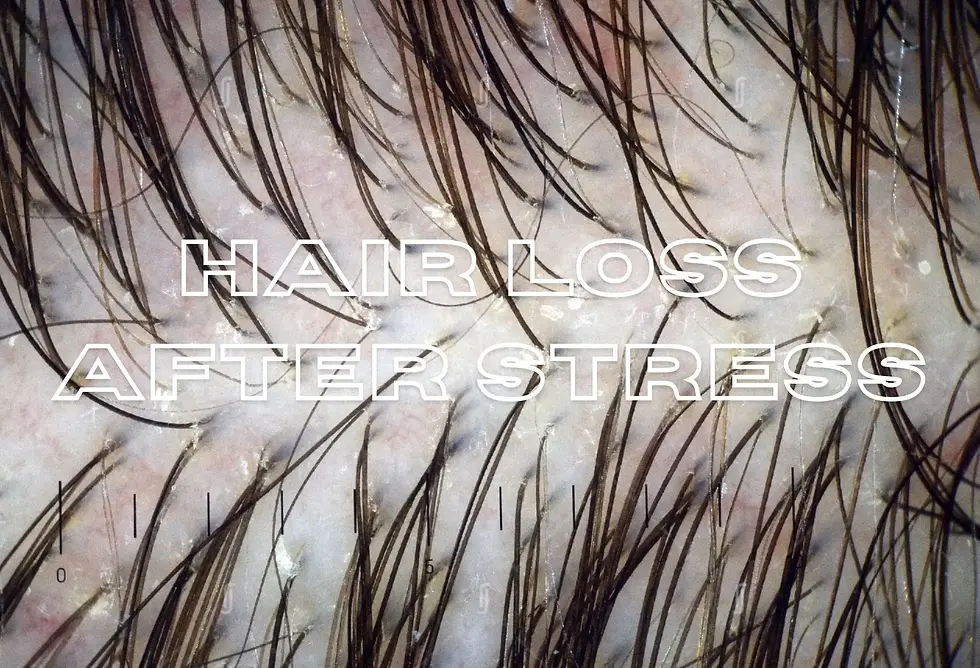
Why does the scalp often wait three months after a period of intense pressure to begin shedding hair at an alarming rate? This delayed physiological response, known as Telogen Effluvium, accounts for a significant portion of consultations regarding hair loss after stress malaysia. Many patients arrive at our clinic convinced they are experiencing irreversible balding, yet the clinical reality is often a manageable disruption of the hair growth cycle. While the sight of thinning patches is distressing, it’s rarely a sign of permanent follicle death.
At RJ Clinic, Dr Renee and Dr Cheok focus on decoding the medical link between cortisol spikes and follicular dormancy to provide clarity during this transition. You’ll understand the specific clinical markers that separate temporary shedding from genetic thinning and explore the medical-grade pathways to restoring your natural density in Kuala Lumpur. We’ll preview the latest FDA-approved technologies and bespoke topical formulations designed to shift your hair back into the active growth phase, ensuring your journey toward recovery is both scientifically grounded and aesthetically refined.
Key Takeaways
Understand the clinical link between cortisol and Telogen Effluvium to identify how systemic stress prematurely shifts hair follicles into a shedding cycle.
Learn to use the "White Bulb" test and observe thinning patterns to accurately distinguish between temporary stress-related shedding and permanent hair loss.
Evaluate the medical-grade topicals and bespoke oral supplements available in Kuala Lumpur that stabilize the scalp environment and encourage a return to the Anagen growth phase.
Identify the specific clinical indicators for hair loss after stress malaysia that necessitate professional intervention, particularly if shedding persists beyond six months.
Discover why early consultation with LCP-certified practitioners like Dr Renee or Dr Cheok is essential for protecting the hairline and ensuring natural-looking density restoration.
Table of Contents
Understanding Telogen Effluvium: Why Stress Triggers Hair Shedding in Malaysia
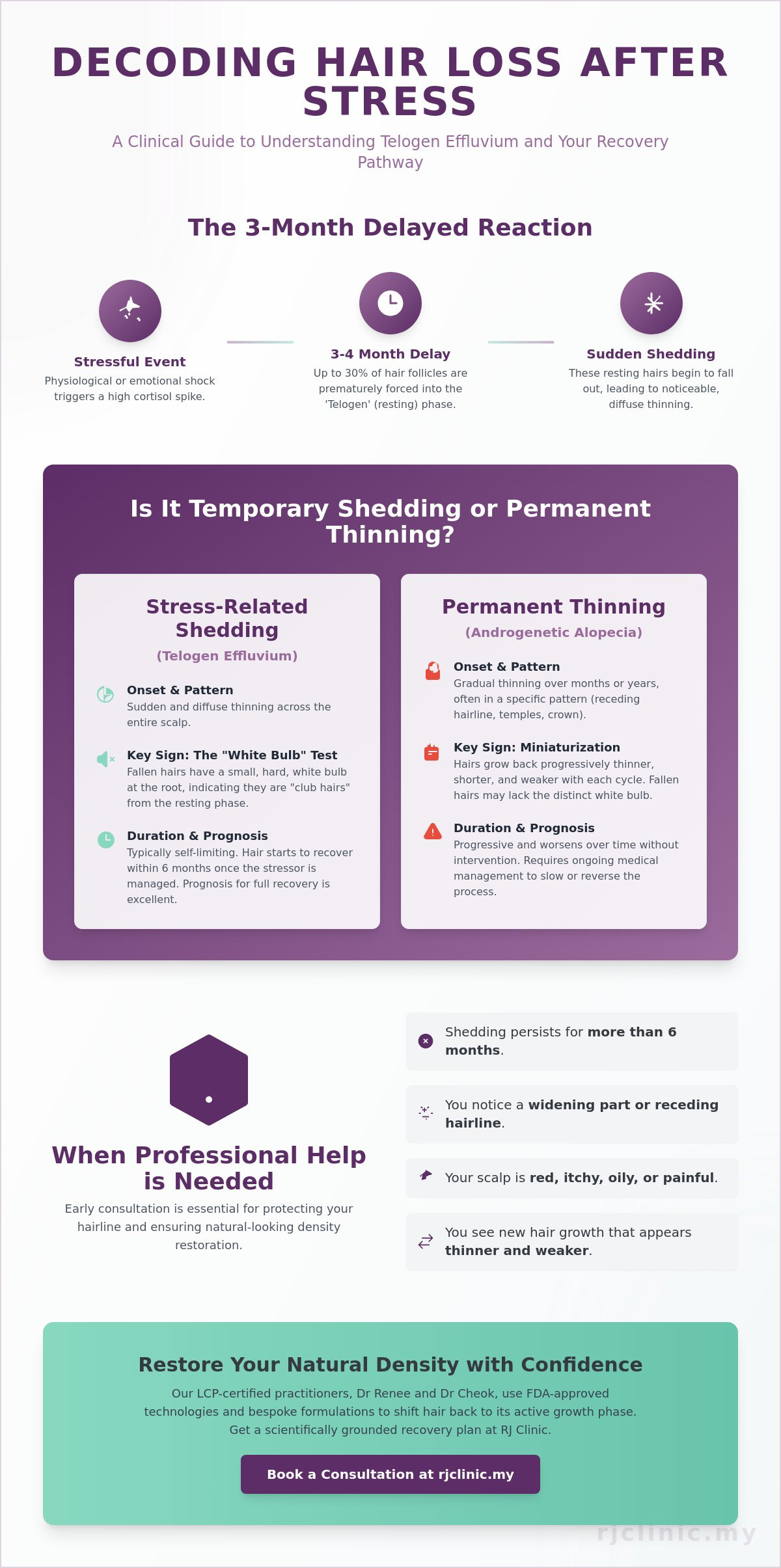
Patients often visit our clinic in a state of high anxiety, noticing significant clumps of hair in the shower drain or on their pillows. The most common misunderstanding is that this loss is permanent or indicative of a sudden onset of genetic balding. In reality, what Dr Renee and Dr Cheok frequently observe is Telogen Effluvium, a temporary condition where the hair's natural growth cycle is interrupted by a physiological or emotional shock. While a healthy scalp typically has about 10% of its hair in the resting phase, a stressful event can force up to 30% or more of follicles to stop growing and prepare to shed simultaneously.
The Cortisol-Follicle Connection
Cortisol, the body's primary stress hormone, serves as a biological "stop" signal for hair production. High levels of cortisol effectively shorten the Anagen, or growth phase, of the hair follicle. This disruption applies to both acute stress, such as a major surgery or sudden trauma, and chronic stress, like the long-term workplace burnout common in urban professional hubs. Because the resting phase of a follicle lasts approximately 90 to 120 days, the visible hair loss after stress malaysia patients report usually occurs three to four months after the initial trigger. Telogen Effluvium is a self-limiting condition where hair typically begins its recovery window within six months once the underlying stressor is managed.
The Malaysian Environmental Factor
The local climate in Kuala Lumpur adds a specific layer of "scalp stress" that can complicate recovery. High humidity levels, often exceeding 80%, combined with high temperatures, lead to excessive sweat and sebum production. When the body is under stress, sebaceous glands often become overactive, creating an oily environment that can harbor micro-inflammation. This compromised scalp barrier, further irritated by intense UV exposure, makes the hair more vulnerable during its shedding phase. Managing these external factors is a critical component of our bespoke hair loss treatments, as a healthy scalp environment is the foundation for follicular rejuvenation. We focus on a holistic approach that addresses both the internal hormonal shift and the external environmental triggers to ensure the most robust regrowth possible.
Clinical Hallmark: Sudden, diffuse thinning across the entire scalp rather than a receding hairline.
Primary Trigger: Elevated cortisol levels disrupting the transition from growth to rest.
Local Impact: Humidity and UV exposure exacerbating scalp inflammation during the shedding period.
Identifying the Signs: Is it Stress-Related or Permanent Thinning?
Many patients visit our clinics in Kuala Lumpur feeling distressed by the sudden volume of hair they find on their pillows or in the shower drain. A common misunderstanding is that all hair loss is permanent, yet the clinical reality of hair loss after stress malaysia often points toward a temporary condition known as Telogen Effluvium. One of the simplest ways to identify this is the "White Bulb" test. If the fallen strands have a small, hard white bulb at the root, these are "club hairs." This indicates that a physiological or emotional stressor has pushed an abnormally high percentage of your follicles into the resting phase simultaneously.
Distinguishing between diffuse shedding and patterned thinning is the next diagnostic step. Stress-induced shedding usually occurs uniformly across the entire scalp, leading to a general loss of density. However, we often observe cases where acute stress acts as a catalyst for underlying Androgenetic Alopecia (AGA). If the thinning is localized to the temples or the crown, or if we detect scalp inflammation and redness, the condition may require a more complex intervention than simple lifestyle adjustments. When we see miniaturized hairs, which are strands that grow back thinner and shorter with each cycle, it suggests the hair follicles are shrinking rather than just resting.
Shedding vs. Thinning: Key Differences
Shedding is characterized by the sudden loss of large amounts of hair, often triggered by a specific event three to four months prior. In contrast, thinning is a gradual process where the hair part slowly widens over years. During a consultation, we look closely at "baby hairs." If these new growths appear healthy and pigmented, the prognosis for recovery is excellent. However, if the new growth is wispy, translucent, or accompanied by scalp tenderness, it may indicate a chronic issue that requires a bespoke hair loss treatment plan to restore follicle health.
The Clinical Pull Test and Scalp Analysis
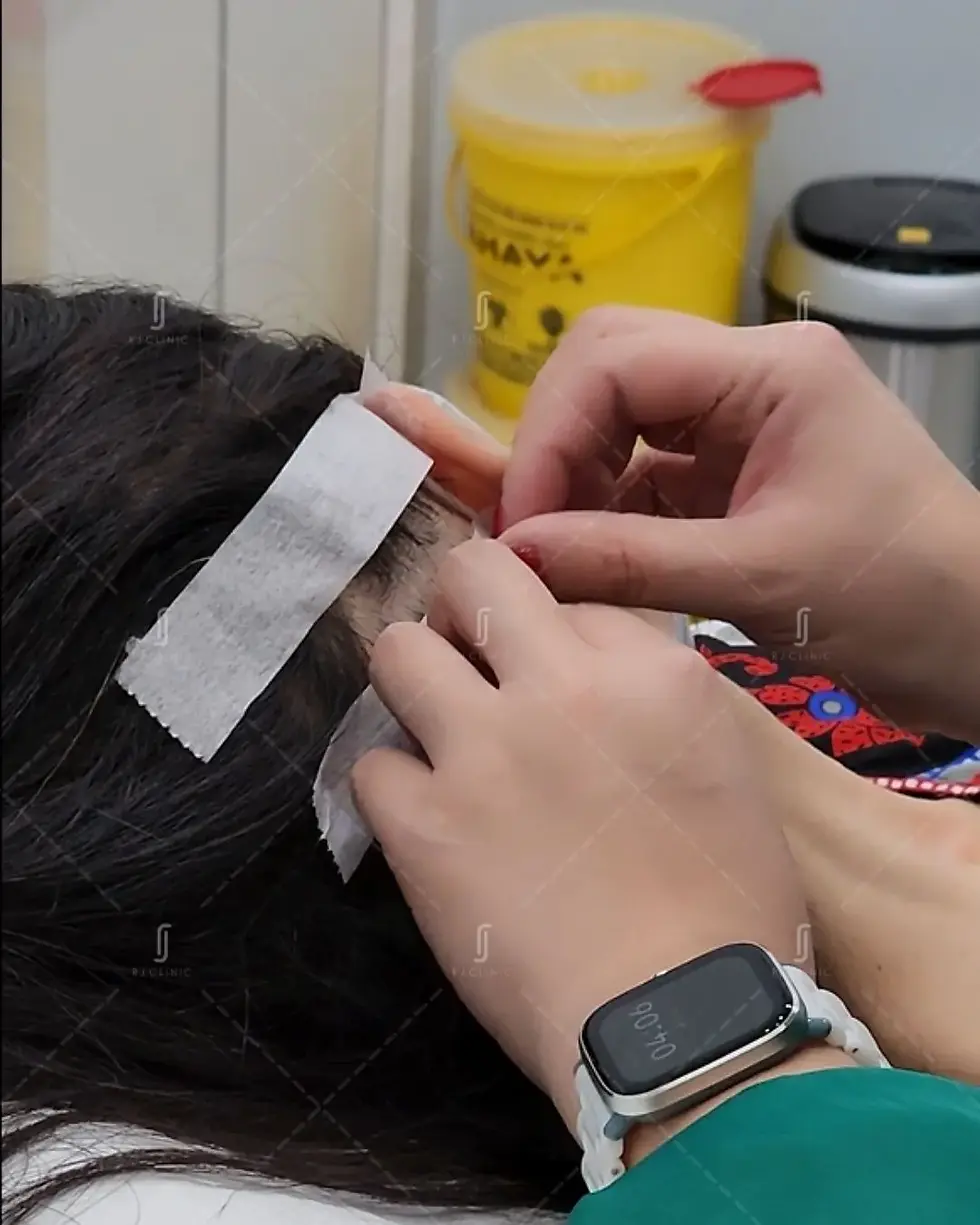
To move beyond guesswork, Dr Renee or Dr Cheok perform a professional pull test. This involves grasping approximately 40 to 60 strands of hair and applying gentle traction from the base to the ends. If more than 10% of the hairs are removed, it confirms an active shedding phase. We supplement this with trichoscopy, using high-definition magnification to examine the scalp environment in detail. This clinical precision is vital; many patients waste significant resources on over-the-counter tonics that cannot address the internal hormonal or inflammatory triggers identified during a professional analysis in our KL clinics.
Clinical Recovery Pathways: Medical Treatments Available in Kuala Lumpur
Patients often ask why their hair doesn't simply grow back once a stressful event ends. In our clinical experience at RJ Clinic, we've observed that the scalp environment often remains stuck in a state of inflammation or nutritional deficiency long after the initial trigger has passed. Stabilizing this environment is the first priority. We don't just want to stop the shedding; we want to actively encourage the follicles to return to the Anagen, or growth, phase. This requires a bespoke approach because a patient's hormonal profile or a specific nutrient deficiency, such as low ferritin or Vitamin D levels, can stall recovery for months. We transition from the "stopping the loss" phase to "optimising the growth" by combining medical-grade topicals with targeted oral supplements that address the specific gaps in your biology.
PRP and Biostimulators for Follicle Rescue
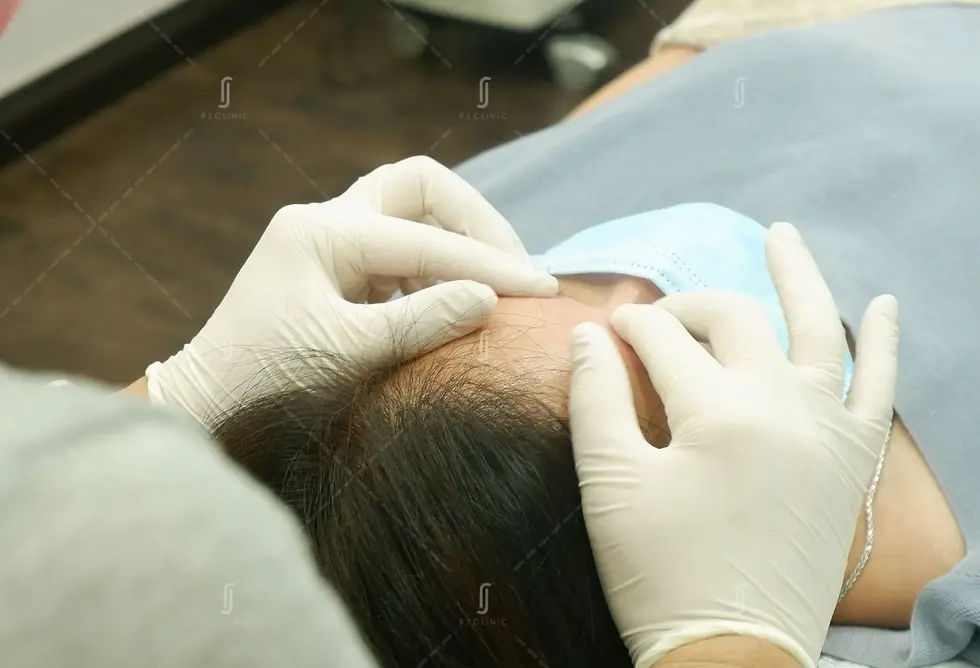
For many individuals dealing with hair loss after stress malaysia, the most effective first step is PRP treatment. This involves using your own blood plasma, concentrated with platelets, to deliver a high dose of natural growth factors directly to the dormant follicles. Dr Renee and Dr Cheok often combine this with medical-grade biostimulators to rejuvenate the scalp tissue. This isn't a one-size-fits-all procedure. We tailor the concentration and depth of delivery based on the degree of thinning. It's particularly ideal for Telogen Effluvium patients because it provides the biological nudge needed to wake up follicles that have prematurely entered the resting phase without the need for invasive surgery.
Regenerative Medicine and FUE Options
Sometimes, acute stress unmasks an underlying genetic condition that wouldn't have appeared for several more years. In these cases, we might discuss an FUE Hair Transplant to restore density in areas where the loss has become permanent. For those who aren't ready for surgery or need to improve their scalp's overall health first, Dermomine or RJ Follicle Boost offers an advanced regenerative solution. It works by optimizing the scalp's cellular health, creating a more resilient foundation for new hair. Patients should expect a timeline of 90 to 180 days to see visible changes. Clinical results aren't instant; they follow the natural biological cycle of hair growth, and patience is a vital part of the medical journey.
If you're noticing persistent thinning that hasn't improved with over-the-counter fixes, schedule a scalp analysis at RJ Clinic to identify the clinical cause of your hair loss.
Professional Management: When to Consult an LCP-Certified Doctor
Patients often struggle to distinguish between a temporary shedding phase and a condition requiring clinical intervention. While telogen effluvium is a common physiological response to pressure, it should not be ignored if the hair fall persists beyond six months. Chronic shedding suggests that the hair follicles haven't returned to their natural growth rhythm, potentially masking underlying androgenetic alopecia. A "wait and see" approach is particularly risky if you notice your hairline is actively receding or your part line is widening. Early intervention is the most effective way to preserve follicle viability before permanent miniaturization occurs.
In the Malaysian medical landscape, safety and expertise are regulated through the Letter of Credentialing and Privileging (LCP). Choosing an LCP-certified doctor ensures that your practitioner has undergone rigorous assessment by the Ministry of Health to perform aesthetic procedures. This certification is your primary safeguard against substandard care and unregulated treatments. When preparing for your consultation, bring a detailed timeline of your lifestyle over the last six months. We need to understand your history of high-stress events, nutritional changes, or recent illnesses, as these factors directly influence the hair growth cycle's recovery speed.
The RJ Clinic Consultation Experience
Dr Renee and Dr Cheok prioritize a bespoke diagnostic process that goes beyond a surface-level scalp examination. We recognize that hair loss after stress malaysia is rarely an isolated issue. Our clinical team meticulously excludes secondary causes such as iron deficiency, ferritin imbalances, or thyroid dysfunction through targeted blood profiles. This systemic approach allows us to treat the root cause rather than just the symptoms. Our commitment in KL is to provide natural-looking results through evidence-based protocols, ensuring every patient feels secure and informed throughout their restoration journey.
Long-term Scalp Health and Prevention
Sustainable recovery requires a transition from reactive treatment to proactive maintenance. We design specific protocols to fortify the scalp environment against future episodes of stress-induced loss. This holistic strategy integrates medical-grade interventions with practical stress management techniques to stabilize cortisol impacts on the hair follicle. Maintaining long-term density is a partnership between clinical care and daily wellness habits. If you've noticed persistent thinning or a lack of regrowth, it's time to seek a professional opinion. You can schedule a scalp assessment with our specialists to determine the most effective path forward for your unique profile.
Restoring Your Hair’s Natural Growth Cycle
Distinguishing between the temporary nature of telogen effluvium and the onset of permanent thinning is essential for an effective recovery strategy. While the body's physiological response to high-pressure environments often triggers sudden shedding, targeted clinical intervention ensures follicles transition back to their active growth phase efficiently. Addressing hair loss after stress malaysia involves more than just waiting; it requires a precise diagnostic approach to ensure scalp density is preserved. At RJ Clinic, we prioritize bespoke protocols that combine medical rigor with a focus on natural-looking rejuvenation.
Our LCP-certified doctors, Dr Renee and Dr Cheok, employ advanced FDA-approved regenerative technologies to stabilize the scalp environment across our clinics in KL and Selangor. These professional pathways move beyond the limitations of home remedies, providing a structured medical framework for those seeking to reverse the visible effects of stress. It's about making an informed decision for your long-term aesthetic health. You can restore your hair density with a bespoke treatment plan at RJ Clinic and take the first step toward a fuller, healthier appearance. We're here to guide you through every stage of your hair restoration journey with clarity and expertise.
Frequently Asked Questions
Can stress hair loss be permanent?
Telogen effluvium, the clinical term for stress-induced shedding, is typically a reversible condition. Unlike permanent scarring alopecia, the hair follicles remain alive and capable of production. However, Dr Renee often observes that prolonged physiological stress can unmask underlying genetic thinning in about 15% of patients. If the trigger isn't addressed or if it transitions into a chronic phase lasting over 6 months, the perceived density might not fully return without medical intervention.
How long does it take for hair to grow back after stress?
You can expect to see initial regrowth approximately 3 to 6 months after the stressful event has subsided. Hair grows at a rate of roughly 1cm per month, so achieving noticeable volume usually requires a 9 to 12 month commitment to recovery. At RJ Clinic, we monitor this progress through digital trichoscopy to ensure new terminal hairs are replacing the shed ones, as the lag between the trigger and visible regrowth often causes patient anxiety.
What are the best hair loss treatments in Malaysia for stress-related shedding?
The most effective clinical approach for hair loss after stress Malaysia involves a combination of FDA-approved low-level laser therapy and bio-stimulating injections. Dr Cheok frequently utilizes Dermomine or Regenera Activa or growth factor therapy to re-awaken follicles that have entered a premature resting phase. These bespoke treatments focus on shortening the telogen phase and strengthening the hair shaft, providing a more robust recovery than over-the-counter topical solutions alone.
Is it normal to see the white bulb on fallen hair?
Seeing a small white bulb at the end of a fallen strand is a normal clinical sign that the hair was in the telogen, or resting, phase. This bulb is simply a keratinized club that anchors the hair before it naturally sheds. It doesn't mean the follicle or the root has been lost forever. In fact, its presence confirms that the hair follicle is intact and preparing to enter a new growth cycle shortly.
Does the KL weather make hair loss worse?
High humidity and UV intensity in Kuala Lumpur don't directly cause stress-related shedding, but they significantly impact scalp health and hair quality. Excessive sweating can lead to malassezia overgrowth or seborrheic dermatitis, which creates an inflammatory environment that may exacerbate existing hair loss. We often advise patients to manage scalp hygiene meticulously to ensure that environmental factors don't hinder the recovery of follicles already weakened by internal physiological stress.
How much does a medical hair loss consultation cost in Kuala Lumpur?
A professional consultation for hair loss in Kuala Lumpur typically RM50 at established aesthetic clinics. This fee generally covers a detailed scalp analysis, a review of your medical history, and a bespoke treatment plan tailored to your specific shedding pattern. While some general practitioners may charge less, seeking an LCP-certified doctor ensures the diagnostic accuracy required to distinguish between temporary stress shedding and permanent hair disorders.


Comments