


Dark Eye Circle Treatment: A Clinical Guide to Restoring Tired Eyes

Most topical eye creams fail because they treat the skin's surface while the actual cause of your dark circles resides millimeters deeper in the underlying anatomy. If you've spent significant sums on luxury serums only to find you still look exhausted in the morning, it's likely because your "tired eyes" are a result of structural hollows or vascular congestion rather than simple surface pigmentation. Finding an effective dark eye circle treatment requires moving past the retail counter and into a clinical setting where LCP-certified practitioners like Dr Renee or Dr Cheok can diagnose whether you're dealing with a shadow from volume loss or true dermal staining.
You deserve a refreshed, natural look that reflects how you actually feel, without the constant need for heavy concealer. This guide examines the medical causes of periorbital darkening and explains why the Medical Device Authority (MDA) is increasing oversight on aesthetic technologies starting June 1, 2026. We will detail how bespoke clinical interventions, ranging from RM400 for targeted lasers to RM1,500 for precise dermal fillers, provide the long-lasting results that over-the-counter products cannot achieve. You will gain a clear understanding of which FDA-approved technologies are suitable for your specific anatomy to ensure a restored appearance that looks entirely your own.
Key Takeaways
Identify whether your under-eye concerns are caused by vascular congestion, dermal pigment, or structural shadows to avoid wasting resources on ineffective topical solutions.
Explore how clinical lasers target deep melanin and vascularity to brighten the periorbital area from within the skin's deeper layers.
Learn how strategically placed dermal fillers serve as a foundation for a successful dark eye circle treatment by smoothing the tear trough and eliminating hollow-induced shadows.
Distinguish between the immediate results of volume restoration and the patient, gradual improvement seen with pigment-correcting therapies.
Understand the value of a bespoke clinical assessment with Dr Renee or Dr Cheok to align medical interventions with your unique facial anatomy and aesthetic goals.
Table of Contents
Why Topical Creams Fail: The Three Clinical Types of Dark Circles
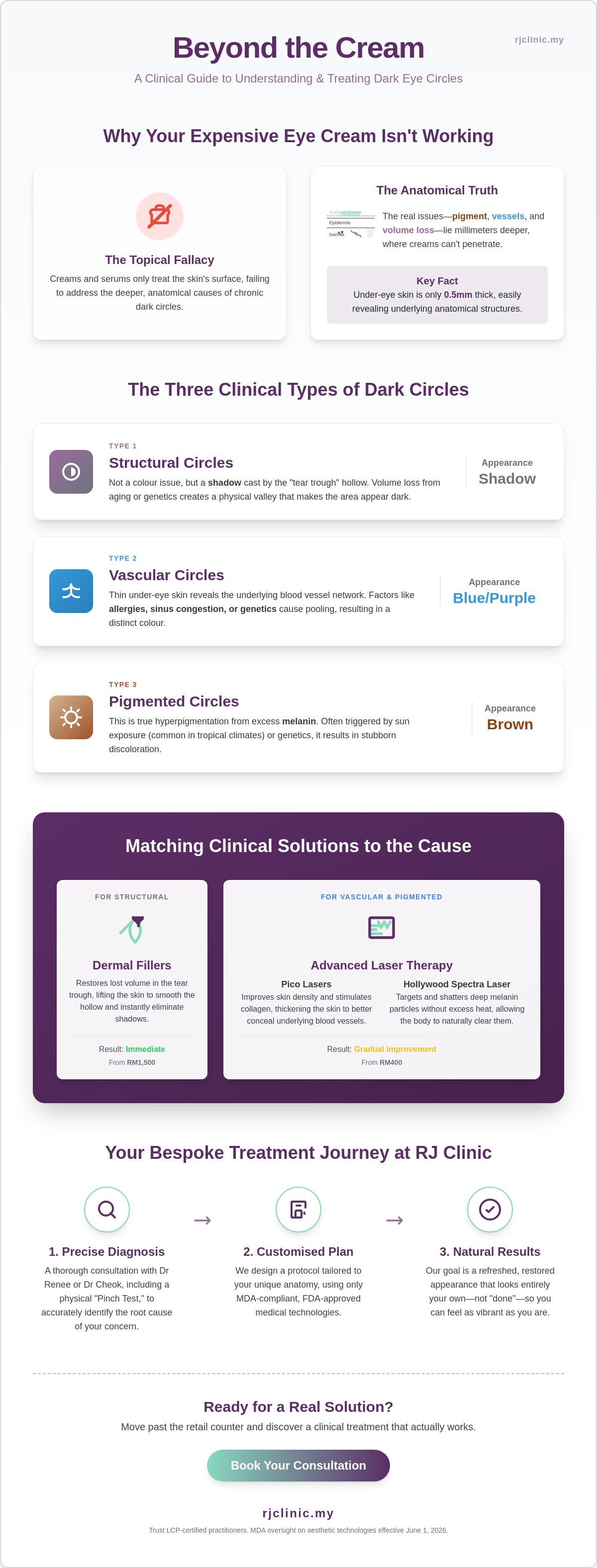
Most patients arrive at our clinic after years of applying expensive caffeine-infused serums with little to show for it. The reason is simple: sleep and skincare only address the very surface of a complex anatomical problem. While a late night might make circles appear darker due to fluid retention, chronic shadows are usually hard-wired into your genetics and facial structure. A successful dark eye circle treatment begins by identifying which of the three clinical categories your eyes fall into, as a laser meant for pigment will do nothing for a structural hollow.
Vascular circles often manifest as a persistent bluish or purplish hue. Because the skin under the eye is the thinnest on the entire body, it easily reveals the underlying blood vessels and muscle. If you suffer from chronic allergies or sinus congestion, this vascular pooling becomes even more pronounced. In contrast, pigmented circles appear brown or muddy. In the tropical climate of Kuala Lumpur, sun exposure frequently triggers dermal melanin deposition, making this type of darkening particularly stubborn to treat with non-medical methods; this is why we often integrate medical-grade pigmentation treatments into our rejuvenation plans.
Structural circles are perhaps the most misunderstood. These aren't caused by color at all, but by the "tear trough" hollow. As we age, the fat pads in our cheeks descend and the bone of the orbital rim slightly recedes, creating a physical valley. This valley catches overhead light and casts a shadow, which mimics the appearance of dark skin. Periorbital dark circles are a multifactorial medical condition that rarely responds to a single-modality approach.
The Anatomy of the Periorbital Area
The area surrounding the eye is a delicate balance of thin dermis, minimal subcutaneous fat, and complex ligamentous support. Under-eye skin is roughly 0.5mm thick, which is significantly less than the 2-3mm found on the rest of the face. As collagen production slows, usually starting in our mid-twenties, this skin loses the "buffer" that hides underlying structures. When the fat pads shift or the orbital rim becomes more prominent, the resulting shadows can make you look ten years older than your chronological age.
The Doctor's Diagnostic Approach
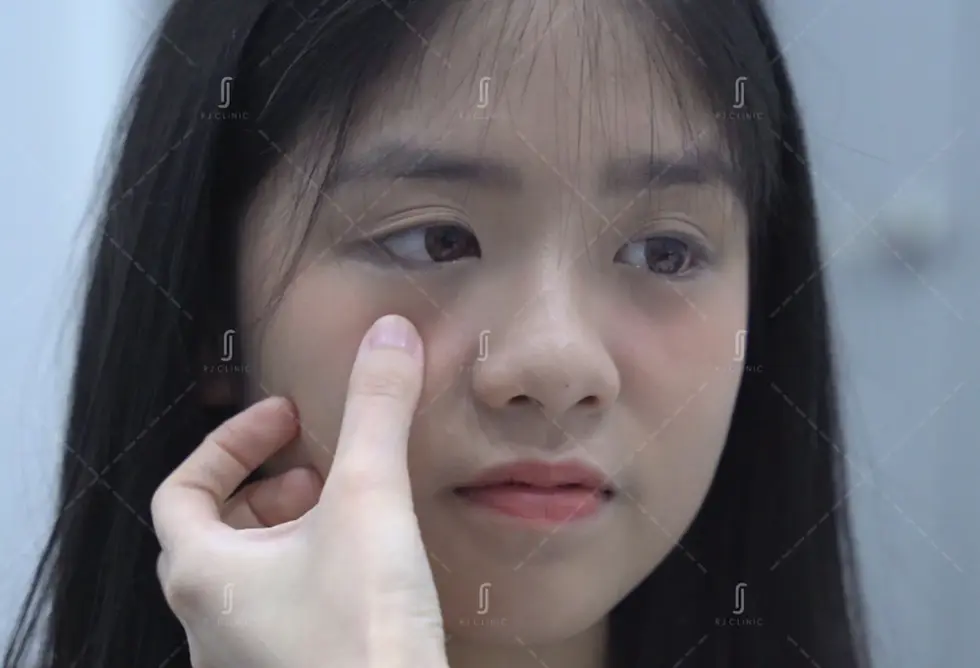
During a consultation in KL, Dr Renee or Dr Cheok will perform a physical assessment known as the "Pinch Test." By gently lifting the skin away from the underlying structure, we can see if the darkness moves with the skin, indicating surface pigment, or stays deep, indicating vascular or structural causes. This distinction is critical for selecting the right dark eye circle treatment, whether that involves volume restoration or laser interventions. We also evaluate systemic factors like nasal congestion, which can cause "allergic shiners" by obstructing blood flow. Understanding these nuances ensures that we don't just treat the symptom, but the anatomical source of the concern.
Medical Interventions: Matching Treatment to Under-Eye Anatomy
Clinical success in dark eye circle treatment isn't found in a one size fits all procedure, but in the precise matching of medical technology to your specific anatomical needs. Choosing the wrong modality, such as using a laser for a structural shadow caused by volume loss, often leads to patient frustration and wasted investment. A comprehensive clinical review of treatments highlights that the most effective outcomes occur when we address the underlying cause, whether it's dermal melanin, thin skin, or the physical "valley" of the tear trough.
Lasers for Pigmented and Vascular Circles
When the primary concern is true pigmentation, we utilize the Hollywood Spectra Laser. This technology is designed to shatter stubborn melanin into tiny particles that the body naturally clears, all without the excessive heat that can lead to post-inflammatory hyperpigmentation. For vascular circles, Pico lasers or specific wavelengths can help improve skin density, making the underlying blue vessels less visible through the dermis. During the procedure, you'll feel a light snapping sensation, similar to a rubber band against the skin. Each session typically lasts about 15 to 20 minutes, with minimal redness that usually subsides within a few hours.
Volume Restoration and Skin Quality
Structural shadows require a different logic. To eliminate the shadow cast by a deep tear trough, Dr Renee and Dr Cheok use high-precision dermal fillers to restore lost volume. This requires an expert hand to avoid the Tyndall effect, a bluish swelling that occurs when filler is placed too superficially. While fillers fix the shadow, they don't necessarily fix "crepy" or thin skin texture. This is where biostimulators like Rejuran I (Polynucleotides) excel. Unlike fillers that simply add volume, Rejuran I works at a cellular level to repair the skin barrier and increase elasticity, making it a superior choice for patients whose dark circles are exacerbated by skin laxity.
Surface discolouration can often be refined by incorporating Chemical Skin Peels. These medical-grade acids gently exfoliate the top layer of the epidermis, allowing newer, brighter skin to surface. At RJ Clinic, we often find that a combination approach, perhaps pairing a biostimulator with a targeted laser, provides the most holistic rejuvenation. If you're unsure which path is right for your anatomy, a bespoke skin assessment can clarify the most efficient route to a refreshed look.
Expectations and Longevity: Is Permanent Removal Possible?
One of the most frequent questions we hear during consultations is whether a dark eye circle treatment can permanently erase shadows. While some sources suggest that medical interventions offer a permanent fix, it is more accurate to view these procedures as long-term restoration. The biological process of aging, including bone resorption and collagen loss, continues over time. However, clinical treatments provide a significant, natural-looking improvement that far outlasts any topical serum. As the Mayo Clinic on dark circles notes, effective management depends on correctly identifying the underlying cause to set realistic goals for your rejuvenation journey.
The timeline for visible improvement depends entirely on the modality used. Volume restoration with dermal fillers provides immediate results; the structural shadow often disappears before you leave the clinic. In contrast, treating deep-seated pigment with the Hollywood Spectra laser requires a more measured approach. Melanin shattering is a cumulative process, and most patients observe a gradual brightening of the skin over three to five sessions. Maintaining these results in the intense Malaysian sun requires a commitment to high-SPF UV protection and a diet rich in antioxidants to support vascular health.
Understanding Treatment Durability
Under-eye fillers are known for their impressive durability. Because the periorbital area is a zone of low muscle mobility, the filler material isn't broken down as rapidly as it is in the lips or nasolabial folds. Many of our patients find that their tear trough restoration remains effective for 12 to 18 months. For laser-based dark eye circle treatment, the results are stable once the targeted pigment is cleared, provided you manage sun exposure. Yearly maintenance has become the gold standard for our discerning patients in Kuala Lumpur who wish to stay ahead of the natural aging process and maintain a consistently refreshed look.
Safety and Potential Side Effects
The delicate nature of the under-eye area demands a high level of clinical expertise. Choosing LCP-certified doctors like Dr Renee or Dr Cheok is essential to avoid complications such as the Tyndall effect or more serious vascular issues. You might experience mild swelling, redness, or minor bruising immediately following an injection or laser session, but these responses typically resolve within 3 to 5 days. At RJ Clinic, we exclusively use FDA-approved technologies and premium medical-grade products to ensure your safety and peace of mind throughout the process. To begin your journey toward a more rested appearance, you can schedule a bespoke skin assessment with our medical team.
The Bespoke Approach at RJ Clinic: Your Consultation in KL
Dr Renee and Dr Cheok prioritize an aesthetic of subtle enhancement. In our clinical practice, we've observed that the most successful dark eye circle treatment isn't the one that completely alters your appearance, but the one that restores the natural contours and brightness you once had. We avoid the "overfilled" look by meticulously assessing the balance between your bone structure, fat pads, and skin quality. This bespoke approach ensures that your results appear refreshed rather than artificial, preserving the unique character of your face while addressing the signs of fatigue.
Your journey at our Mont Kiara or Kuala Lumpur branches begins with a comprehensive diagnostic session. Depending on your anatomy, your plan might involve a multi-modality strategy. For instance, if significant puffiness accompanies your shadows, we may recommend Laser Eyebag Removal to address the underlying fat protrusion before refining the skin surface with biostimulators or lasers. We also integrate medical-grade topicals into your home-care routine to protect and prolong the effects of your in-clinic procedures, ensuring a holistic path to rejuvenation.
Why Experience Matters for Eye Treatments
The periorbital zone is an unforgiving area for "budget" or non-medical treatments. The skin here is exceptionally thin, and the proximity to vital ocular structures leaves no room for error. Choosing an LCP-certified doctor ensures that your practitioner understands the complex vascular network around the eyes, significantly reducing the risk of complications like prolonged bruising or the Tyndall effect. At RJ Clinic, we manage the entire patient journey, from the initial assessment of your dark circles to the final follow-up, ensuring every step meets our rigorous medical and safety standards.
Taking the Next Step
Preparing for your first appointment is straightforward. We ask that you bring a list of your current skincare products and a brief medical history, particularly regarding allergies or previous aesthetic procedures. During the consultation, we'll discuss your specific concerns and provide a transparent breakdown of the recommended technologies and expected timelines. We invite you to experience the RJ Clinic difference in a tranquil, professional environment where your aesthetic goals are met with scientific precision and artistic care. Booking a professional assessment is the first step toward a dark eye circle treatment that finally delivers the rested, natural look you've been seeking.
Restoring Vitality Through Clinical Precision
Moving beyond the frustration of ineffective retail serums requires a shift toward precise anatomical diagnosis. Achieving a refreshed appearance depends on whether we are correcting dermal melanin, improving vascular density, or restoring lost volume in the tear trough. By prioritizing medical-grade technology over superficial fixes, you can secure a dark eye circle treatment that addresses the biological root of the issue rather than just masking symptoms. Our LCP-certified physicians, Dr Renee and Dr Cheok, utilize only FDA-approved laser and filler technologies to ensure your safety and the longevity of your results.
The hallmark of a successful periorbital rejuvenation is a subtle, natural-looking transformation that leaves you looking well-rested without appearing artificial. We invite you to move past the guesswork and partner with a team that values clinical integrity as much as aesthetic artistry. Schedule a Bespoke Eye Consultation with Our LCP-Certified Doctors at our Mont Kiara or Kuala Lumpur clinics to begin your personalized journey. It's time to align your appearance with the energy and confidence you feel every day.
Frequently Asked Questions
Can dark eye circles be removed permanently?
Permanency is a common misconception in aesthetic medicine because the human face continues to age through bone resorption and fat migration. While a clinical dark eye circle treatment provides significant restoration that can last 12 to 18 months, maintenance is required to keep pace with these natural biological changes. You can expect long-term improvement, but the area will still require periodic attention to maintain its refreshed appearance.
How much does dark eye circle treatment cost in Malaysia?
As of May 2026, the cost of professional intervention in Malaysia varies according to the specific modality required for your anatomy. Laser treatments generally range from RM400 to RM1,200 per session, while tear trough fillers typically start from RM1,500 per syringe. These prices reflect the use of FDA-approved technologies and the clinical expertise of LCP-certified doctors like Dr Renee and Dr Cheok.
Is the treatment painful, especially around such a sensitive area?
Most patients describe the sensation as a light snapping or a mild pressure rather than actual pain. We prioritize your comfort by applying a high-strength topical anesthetic 20 to 30 minutes before the procedure. Modern dermal fillers also contain lidocaine, which further numbs the area during the injection to ensure a tranquil and controlled experience.
How many sessions of laser treatment will I need for my dark circles?
A standard protocol for addressing deep-seated pigment usually involves 3 to 6 sessions spaced approximately 4 weeks apart. While you may notice a subtle brightening after your first appointment, the shattering of dermal melanin is a cumulative process. Dr Renee or Dr Cheok will calibrate the laser settings at each visit to ensure the most efficient and safe progression toward your goals.
What is the difference between dark circles and eyebags?
Dark circles refer to the discoloration or shadows under the eyes, whereas eyebags are a physical protrusion caused by herniated fat pads. While a dark eye circle treatment focuses on shattering pigment or filling hollows, eyebags often require laser lipolysis or surgical intervention to address the bulging tissue. Many patients present with a combination of both, which requires a bespoke, multi-layered clinical plan.
How long is the downtime for under-eye fillers?
Downtime is minimal, with most patients experiencing only 3 to 5 days of mild swelling or minor bruising. You can typically return to your social and professional activities immediately after the session. We recommend avoiding high-intensity exercise for 24 hours to allow the filler to settle perfectly within the tear trough area without displacement.


Comments