


Laser for Acne Scars in Malaysia: A Clinical Guide to Pico and CO2 (2026)

Updated: Apr 20

Many patients arrive at our clinic frustrated, having already tried a powerful laser treatment elsewhere with underwhelming results. This experience highlights a common misunderstanding in aesthetic medicine: that a single, high-tech device is the definitive solution for acne scars. The clinical reality is that effective, lasting scar revision is not about the machine, but about the diagnosis. The texture, depth, and structure of your scars dictate the strategy, which almost always involves a combination of carefully selected treatments.
Lasting improvement requires a multi-faceted approach that first addresses the underlying architectural problem—the fibrotic bands tethering the skin down—before resurfacing the top layer. Without this foundational work, even the most advanced laser can only offer superficial, temporary changes.
Understanding Your Acne Scars: A Clinical Diagnosis
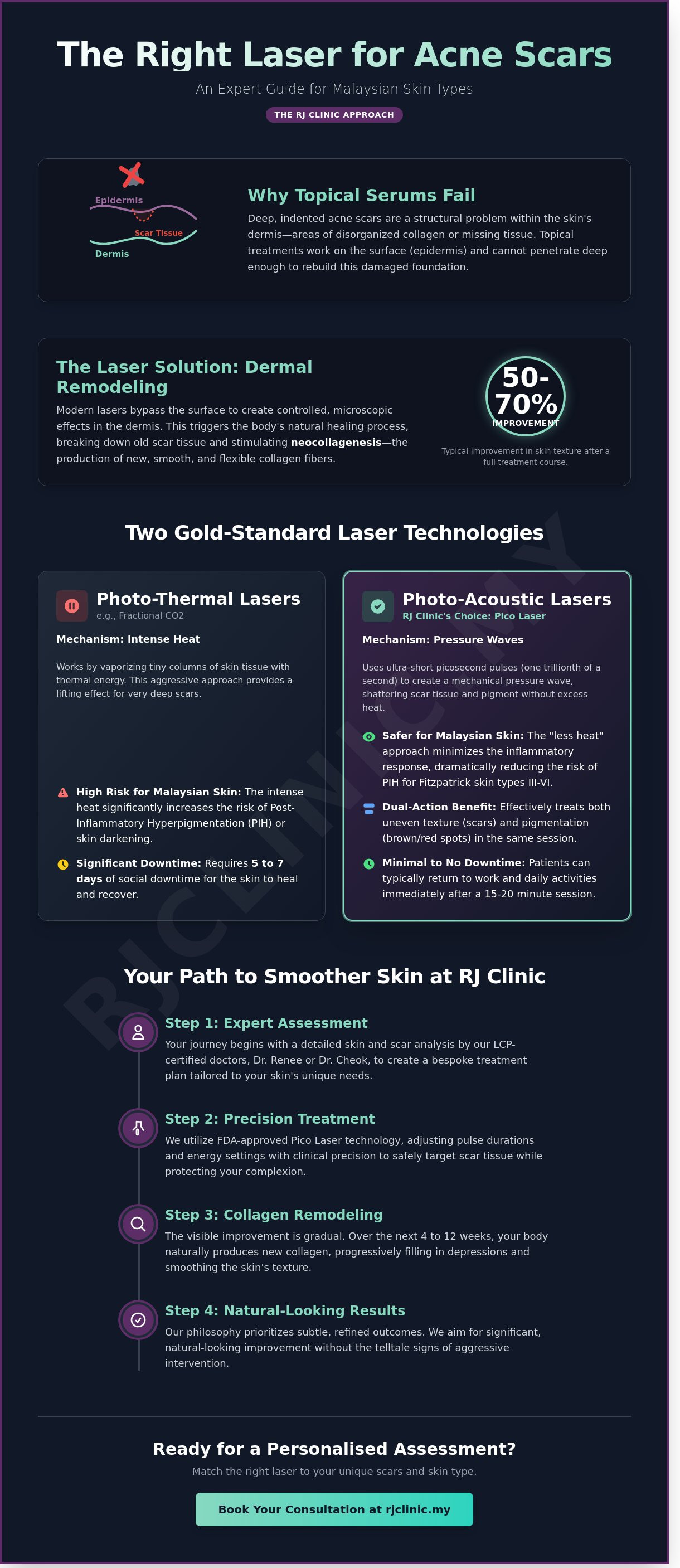
Acne scars are not merely surface-level imperfections; they are areas of abnormal healing deep within the skin's dermal layer. When a severe acne lesion resolves, the body’s healing process can produce either too little or disorganized collagen, resulting in a permanent textural depression. This is why topical creams and serums consistently fail—they cannot penetrate deep enough to break down scar tissue or rebuild the skin's structural foundation.
An effective treatment plan begins with an accurate diagnosis by an LCP-certified doctor. We must first identify the specific type, or morphology, of your scars, as each requires a different therapeutic approach. For patients in Malaysia, we must also consider the inherent risk of post-inflammatory hyperpigmentation (PIH) in our skin tones (typically Fitzpatrick IV-VI), which makes precise, doctor-controlled energy settings paramount.
According to Understanding Laser Technology for Acne Scars, this is a well-documented area of ongoing research and practical application.
Identifying Your Acne Scar Morphology
A successful outcome depends entirely on matching the right tool to the right scar. Most patients present with a combination of scar types, each needing a specific solution:
Ice Pick Scars: These are deep, narrow pits that resemble a puncture mark. Due to their depth, they respond poorly to general resurfacing. They require a targeted approach like TCA CROSS (Trichloroacetic Acid Chemical Reconstruction of Skin Scars) to stimulate collagen from the very base of the scar upwards.
Rolling Scars: Characterised by wide, shallow depressions with a wave-like or undulating appearance, these scars are caused by fibrous bands of tissue pulling the epidermis down. The first and most critical step is subcision, a procedure to physically break these tethers and release the skin.
Boxcar Scars: These are broader depressions with sharply defined, vertical edges, similar in appearance to chickenpox scars. They respond well to treatments that stimulate collagen and smooth the scar edges, such as radiofrequency microneedling or fractional laser resurfacing.

Crafting a Bespoke Treatment Plan in Malaysia
A one-size-fits-all approach to acne scars is destined for failure. At RJ Clinic, we build a strategic, multi-stage treatment plan that combines different modalities to address your specific scar architecture. This ensures we are not just treating the surface but fundamentally remodelling the skin for smoother, more permanent results.
The Power of Combination Therapy
Relying on a single technology is rarely sufficient. A truly effective acne scar treatment plan integrates several techniques in a planned sequence. For instance, a patient with rolling scars would first undergo subcision to release the fibrous anchors. Only then would we introduce an energy-based device to rebuild the collagen in the newly liberated space.
Research published by Systematic Review of Fractional CO2 Laser shows that this is a well-documented area of ongoing research and practical application.
This layered strategy produces synergistic results that are far superior to any single treatment. We might combine subcision with Potenza™ RF Microneedling to break down old scar tissue and simultaneously trigger new collagen formation, or use targeted fractional laser resurfacing to smooth the edges of stubborn boxcar scars once the deeper issues are resolved.
Key Modalities in Our Scar Revision Toolkit
Our treatment protocols are built on a foundation of proven, FDA-approved technologies and techniques, selected and combined based on your clinical needs:
Subcision: An essential first step for rolling scars. A specialised needle is used to manually break the fibrotic bands pulling the skin down, immediately releasing the depression and creating space for new collagen to grow.
Potenza™ RF Microneedling: This advanced treatment delivers targeted radiofrequency energy deep into the dermis via ultra-fine needles. It triggers a powerful collagen-remodelling response with less heat on the skin's surface, making it a highly effective and safer option for Malaysian skin tones concerned with PIH. It is excellent for improving the texture of boxcar and rolling scars.
Fractional CO2 Laser: Considered a gold standard for skin resurfacing, this ablative laser creates microscopic columns of thermal injury in the skin, prompting an intense healing and collagen-building response. It is highly effective for shallow boxcar scars and overall textural improvement, but energy levels must be expertly managed by a doctor to minimise downtime and PIH risk.
TCA CROSS: The primary treatment for deep ice pick scars. By applying a high concentration of trichloroacetic acid to the base of the scar, we create a controlled chemical reaction that stimulates new collagen synthesis, gradually raising the scar floor.
The RJ Clinic Approach: Bespoke Care in Kuala Lumpur
Our philosophy is rooted in medical precision and patient safety. Dr. Renee and Dr. Cheok personally design and oversee every treatment plan, ensuring that the chosen technologies and energy settings are perfectly calibrated for your skin type, scar morphology, and lifestyle. We prioritise subtle, natural-looking improvements that restore your skin's confidence.

Navigating Recovery in a Tropical Climate
Post-treatment care is critical for achieving optimal results, especially in the Malaysian climate. The risk of hyperpigmentation from sun exposure is significantly higher after any energy-based treatment. We provide a comprehensive post-care protocol focused on two key areas:
Sun Protection: Rigorous application of a broad-spectrum, high-SPF sunscreen is non-negotiable. We guide you on the best formulations and reapplication practices to protect your healing skin from Kuala Lumpur's strong UV radiation.
Healing Support: We may recommend adjunctive treatments like Rejuran or skinboosters to enhance the skin’s regenerative capacity, reduce inflammation, and accelerate recovery. These treatments infuse the skin with polynucleotides or hyaluronic acid, creating the ideal environment for new collagen to flourish.
Long-term Maintenance and Skin Health
Achieving smoother skin is the first goal; maintaining it is the next. We provide guidance on how to manage any active acne to prevent new scars from forming. Depending on the initial severity, periodic maintenance sessions with treatments like Potenza™ RF microneedling can help sustain collagen levels and continue to refine skin texture over time. Ultimately, choosing a clinic should be based on the LCP certification of its doctors and their demonstrated experience in creating safe, effective, and customised scar revision plans.
Frequently Asked Questions
Is acne scar treatment painful?Patient comfort is a priority. We use a strong topical numbing cream before procedures like RF microneedling or laser. Subcision involves local anaesthetic injections. Most patients describe the sensations as manageable pressure or a mild prickling feeling.
How much does a combination acne scar treatment cost in Malaysia?The cost varies significantly as it depends on the combination of treatments required (e.g., subcision, TCA CROSS, Potenza™ RF, laser), the number of sessions, and the severity of the scarring. A personalised consultation is necessary to provide an accurate quotation.
Why do I need subcision before other treatments for rolling scars?Rolling scars are physically tethered to deeper tissue. Without subcision to cut these tethers, any energy-based device applied to the surface will be ineffective, as the skin cannot lift and fill with new collagen. Subcision is the essential first step to release the scar.
What is the downtime for a combination treatment plan?Downtime depends on the specific procedures performed. Subcision may cause some bruising for 5-7 days. A fractional CO2 laser session can result in 5-7 days of redness and peeling. Potenza™ RF Microneedling typically involves only 1-3 days of mild redness. We will tailor your treatment schedule to accommodate your social and professional commitments.
Can I treat scars if I still have active acne?It is crucial to get active acne under control before beginning any significant scar revision. Performing resurfacing treatments on inflamed skin can worsen breakouts and increase the risk of new scarring. We will first design a plan to manage your active acne.
Are the results from acne scar treatment permanent?The structural improvements from collagen remodelling are permanent, as the scar tissue is physically broken down and replaced with new, healthier tissue. However, the natural ageing process will continue, and preventing new acne is key to maintaining long-term results.


Comments