


Why Your Fat Reduction Treatment Isn’t Working: A Clinical Perspective from Kuala Lumpur

Updated: Apr 21
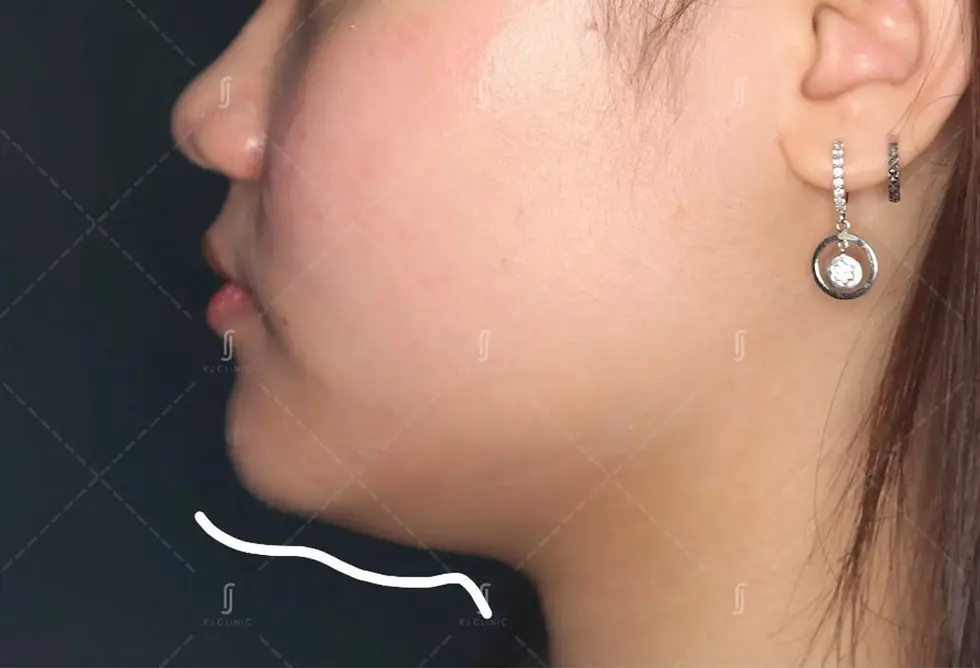
What if the reason your silhouette remains unchanged isn't a lack of discipline, but a fundamental mismatch between the chosen technology and your body's specific adipose structure? At our practice in Kuala Lumpur, Dr Renee and Dr Cheok often consult with patients who feel defeated after discovering their fat reduction treatment not working as promised elsewhere. It's a valid frustration when significant financial investment and high expectations don't translate into the visible refinement you were led to anticipate. Clinical observations suggest that up to 22% of patients may see suboptimal results when a generic approach ignores individual biological variables like tissue density or metabolic health.
You deserve to understand the precise medical reasons behind stagnant progress, whether it involves lymphatic drainage efficiency or an incorrect initial assessment of your suitability for a specific device. This article explores how to align advanced medical technology with your body’s unique physiology to restore your confidence. We'll examine the biological timeline of fat clearance, the crucial differences between various treatment modalities, and the practical steps you can take to salvage your results and achieve a bespoke, natural looking transformation.
Key Takeaways
Understand the biological timeline of fat clearance and why your lymphatic system is the ultimate gatekeeper for visible body contouring results.
Identify the clinical differences between subcutaneous and visceral fat to understand why a fat reduction treatment not working may simply be a matter of targeting the wrong layer of tissue.
Learn how to manage the "compensation effect" and why proper hydration is medically essential for processing cellular debris after a non-invasive procedure.
Discover when to transition from standard non-invasive technology to advanced medical contouring like Accusculpt for more precise, surgical-grade fat melting.
Gain insights into how Dr Renee and Dr Cheok use clinical markers to design a bespoke treatment plan that aligns with your specific fat density and physiology.
Table of Contents
The Biology of Fat Clearance: Why Results Are Never Instant
I often meet patients at RJ Clinic who feel a sense of immediate frustration when they don't see a visible change in their silhouette just two weeks after a procedure. The most frequent reason someone believes their fat reduction treatment isn't working is a simple misunderstanding of human biology. Unlike surgical liposuction, where fat is physically vacuumed out in an hour, non-invasive medical treatments rely on your body's internal "waste management" system to do the heavy lifting. We aren't just shrinking fat cells as you do during a diet; we are inducing permanent cellular death.
When we utilize technologies like cryolipolysis or RJ Slimshot fat melting injections, we disrupt the integrity of the adipocyte. However, the body doesn't just "melt" this fat into nothingness. It must be processed. This is why the concept of The Biology of Fat Clearance is so critical to understand. Your lymphatic system must identify the damaged cells, break them down into lipids, and transport them through the liver for eventual excretion. This is a physiological marathon, not a sprint, and your metabolic rate dictates the pace.
The 90-Day Metabolic Timeline
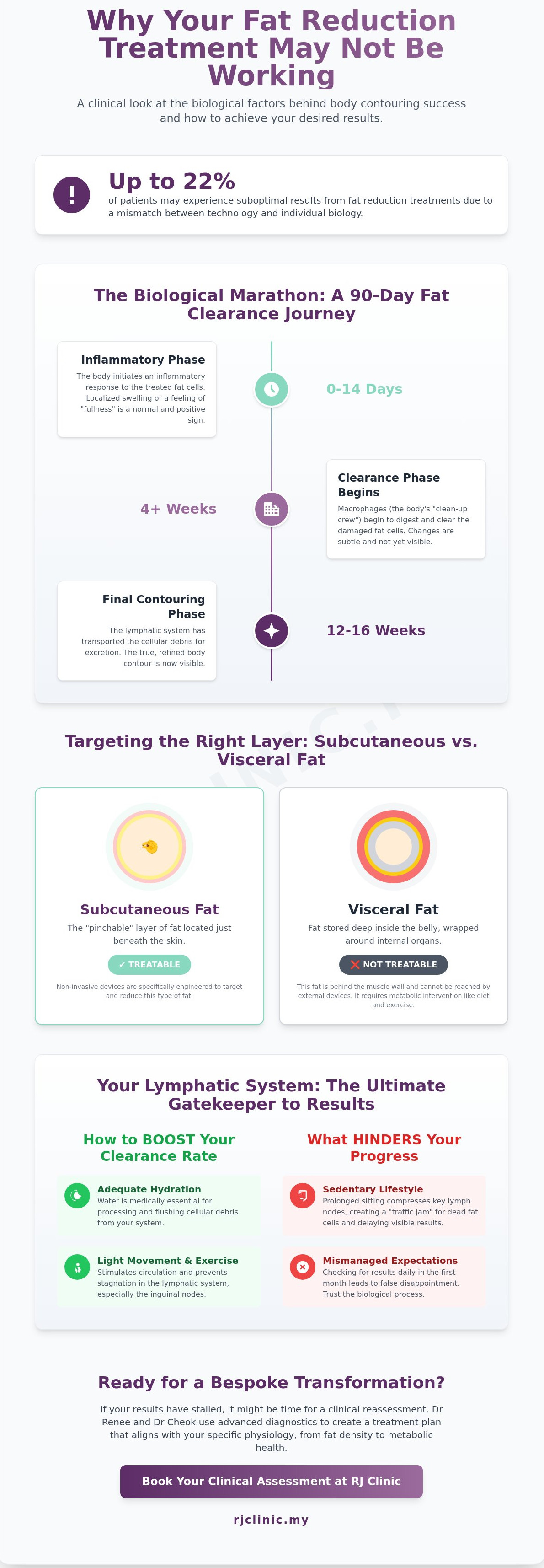
Clinical data confirms that the body requires a 12 to 16 week window to fully clear treated fat cells. During the first 14 days, you are in the inflammatory phase. You might actually feel slightly "fuller" or heavier in the treated area due to localized swelling. By week four, the clearance phase begins in earnest, but the changes are often too subtle for the naked eye to catch in a daily mirror check. It's only by day 90 that the final contouring phase reveals the true result. Fat apoptosis is the process of programmed cell death where adipocytes are systematically dismantled and cleared by macrophages over a period of 12 to 16 weeks in healthy adults. Checking your progress daily in the first month is the fastest way to experience false disappointment.
Lymphatic Efficiency and Result Latency
The speed of your results is directly tied to your systemic circulation. In our Kuala Lumpur practice, Dr Renee and Dr Cheok often observe that patients with sedentary desk jobs in the Golden Triangle or Mid Valley experience slower result latency. Sitting for eight to ten hours a day significantly compresses the inguinal lymph nodes, which are the primary drainage points for the abdomen and thighs. If your lymphatic flow is stagnant, the "dead" fat cells linger in the interstitial space longer than they should.
There are clinical signs that your body is processing the treatment correctly even if the tape measure hasn't moved yet. Many patients report a specific "firmness" in the tissue or a mild, tingly sensation in the weeks following treatment. These are positive indicators of macrophage activity. If you aren't supporting your lymphatic system with adequate hydration and light movement, you might mistakenly conclude your fat reduction treatment isn't working when, in reality, your body's disposal system is simply backed up.
Clinical Variables: Identifying Why Your Body May Resist Treatment
A common clinical observation during follow-up appointments is the patient's frustration when they feel their
**fat reduction treatment not working
**as expected. In many cases, the issue isn't the technology itself but a fundamental mismatch between the patient’s biological tissue and the chosen modality. Success in body contouring depends on whether the targeted tissue is actually treatable by non-invasive means.

Subcutaneous vs. Visceral Fat Limits
Non-invasive devices are engineered to target subcutaneous fat, which is the "pinchable" layer located just beneath your skin. Visceral fat, however, sits deep within the abdominal cavity, wrapping around your internal organs. Because this fat is located behind the muscle wall, external cooling or heating panels simply cannot reach it. Patients often present with a firm, distended abdomen that doesn't "pinch" easily; this is usually visceral fat, which requires metabolic intervention rather than aesthetic machinery.
In high-pressure professional hubs like Bangsar or Mont Kiara, we frequently see patients struggling with high cortisol levels due to chronic stress. Elevated cortisol and insulin resistance act as biological shields, signaling the body to preserve fat stores regardless of the external energy applied during a session. This hormonal environment can turn a technically perfect procedure into a "non-responder" case. Understanding these boundaries is a core part of Advanced Medical Contouring protocols, which prioritize patient selection over generic application.
Tissue Composition and Fibrosis
The physical "feel" of the fat, often assessed via the clinical pinch test, dictates the likely outcome. Soft, pliable fat is the ideal candidate for thermal-based technologies. Conversely, fibrous fat, which feels firm or knotty, often resists standard cooling or heating cycles. This fibrosis is frequently the result of old injuries, previous surgical procedures, or even long-term inflammatory issues.
Stubborn zones like the lower abdomen often possess a higher density of connective tissue, requiring a more bespoke approach to energy delivery rather than relying on standard manufacturer templates. If the tissue is too dense for machines to effectively penetrate, Dr Renee or Dr Cheok may suggest transitioning to targeted fat melting injections to physically disrupt the fat cell membranes. Furthermore, what many perceive as a
**fat reduction treatment not working
**
Lifestyle Factors and Post-Treatment Management in Kuala Lumpur
I often observe that the most technically perfect procedure can be undermined by what happens in the weeks following the appointment. When a patient feels their fat reduction treatment isn't working, the culprit is frequently the "Compensation Effect." This occurs when the body, sensing a loss of lipid stores, subtly triggers an increase in appetite. Consuming just 150 to 200 extra calories a day, perhaps through an extra serving of rice or a late-night snack, can cause remaining fat cells to expand. This effectively masks the 20% to 25% reduction in fat cell count achieved during the session.
In Kuala Lumpur, our local culinary landscape presents a specific challenge for post-treatment recovery. Many popular dishes contain upwards of 2,000mg of sodium in a single serving. This high salt intake causes significant systemic water retention. If you're holding two liters of excess fluid, the localized fat loss will be invisible on the scale and in the mirror. Additionally, alcohol consumption is a major deterrent to success. The liver prioritizes the detoxification of ethanol over the metabolic processing of treated fat cells. If the liver is busy with a weekend of cocktails, the fat clearance process stalls for 48 to 72 hours.
Nutritional Interference and the Insulin Spikes
The clearance of lipids from the bloodstream relies heavily on a stable hormonal environment. Frequent "hidden sugars" found in local beverages like Teh Tarik or iced kopi can cause sharp insulin spikes. Because insulin is a primary storage hormone, these spikes signal the body to divert circulating fats into untreated areas rather than excreting them. Dr Renee and Dr Cheok emphasize that maintaining a stable weight is not about dieting to lose more weight, but about providing the biological "quiet" necessary for the body to reveal the treatment results. Understanding the science of non-invasive fat reduction shows that this inflammatory and clearing process is gradual and requires a healthy metabolic baseline to function efficiently.
Hydration and Movement Protocols
Hydration is perhaps the most underestimated variable in aesthetic medicine. We recommend drinking exactly 3 liters of water daily for the first 14 days post-procedure. This volume is medically necessary to facilitate lymphatic transport; without it, the cellular debris from the treatment remains stagnant in the interstitial space.
Light Cardiovascular Exercise: Engaging in 20 to 30 minutes of brisk walking helps "flush" the lymphatic system by increasing heart rate and circulation.
Lymphatic Drainage: In cases where patients experience persistent firmness, professional lymphatic massage can accelerate the removal of broken-down fat cells.
Weight Monitoring: A fluctuation of more than 1.5kg can indicate that new fat storage is offsetting the clinical results.
If you're concerned about your progress, we can evaluate your metabolic markers to ensure your lifestyle is supporting your goals.
When to Pivot: Transitioning to Advanced Medical Contouring
Patients often arrive at our Kuala Lumpur practice frustrated after months of non-invasive procedures that yielded no visible change. If you've completed a full cycle of cryolipolysis or external radiofrequency treatments without a measurable shift in your silhouette, it is likely your fat reduction treatment not working because the technology has reached its physiological limit. Non-invasive devices rely on the body's lymphatic system to clear damaged cells over several months. When fat deposits are particularly fibrous or the metabolic rate is sluggish, the body simply cannot keep up with the clearance required for a noticeable result.

The Case for Laser Lipolysis and Mesotherapy
When external applicators fail, we look toward minimally invasive methods that interact directly with the adipose tissue. Accusculpt utilizes a 1444nm wavelength laser to physically melt fat cells from within. This precision is vital for small, resistant pockets like the double chin or the "bra bulge" where standard suction applicators struggle to maintain contact. Because the laser heat also stimulates collagen, it addresses the skin laxity that often accompanies fat loss.
For patients who aren't ready for a laser fiber but need more than a cooling panel, RJ Slimshot provides a chemical solution. This detergent-based solution liquefies fat cells, which are then naturally eliminated. While these medical-grade options bridge the gap, surgical liposuction remains the gold standard for significant volume reduction. It's the only method that provides immediate, high-volume removal in a single session, making it the logical pivot for those seeking a total transformation.
Bespoke Consultation and Realistic Expectations
A primary reason for a fat reduction treatment not working is an incorrect initial diagnosis. Many patients mistake skin sagging for excess fat. In these cases, freezing the area will never yield results. Dr Renee and Dr Cheok provide an LCP-certified assessment to determine if the issue is subcutaneous fat, muscle separation, or a loss of dermal elasticity. Our approach often involves a multi-modal plan; for example, combining fat dissolution with Ultherapy to lift and tighten the treated area for a cohesive, natural finish.
We believe in transparency regarding what science can achieve for your specific body type. A bespoke plan ensures that every energy-based device or injection serves a distinct purpose in your journey. If you feel your progress has stalled, it's time for a clinical review of your protocol. Schedule a clinical assessment at RJ Clinic to diagnose your treatment stagnation and refine your path to a contoured silhouette.
Refining Your Strategy for Lasting Contouring
Identifying why a fat reduction treatment not working as expected often requires a shift from general aesthetics to precise clinical analysis. Dr Renee and Dr Cheok frequently see patients whose results have stalled because the treatment wasn't calibrated to their specific metabolic rate or tissue structure. It's vital to remember that the body's clearance of treated fat cells is a biological process that typically requires 12 weeks to manifest fully. If you haven't seen the change you expected, it doesn't mean you've reached a dead end. Instead, it's often a sign that your protocol needs the intervention of LCP-certified expertise and FDA-approved technologies. We specialize in bespoke, natural-looking body and face contouring that respects your unique anatomy. We're here to help you navigate these clinical nuances to ensure your next step is the right one. You deserve a plan that works with your biology, not against it.
Frequently Asked Questions
Is it normal to see no results 4 weeks after a fat reduction treatment?
It's completely normal to see minimal changes at the 4-week mark because your body's lymphatic system requires time to metabolize and flush out the destroyed adipocytes. In our clinical experience at RJ Clinic, most patients begin to notice a subtle refinement in their silhouette between 6 to 8 weeks, with the most significant transformation appearing after 12 weeks. If you feel your fat reduction treatment not working early on, remember that biological remodeling is a gradual process that cannot be rushed if you desire natural-looking results.
Can I gain weight in other areas after fat cells are removed?
You can certainly gain weight in untreated areas if a caloric surplus is maintained after your procedure. While non-invasive treatments permanently eliminate about 20% to 25% of fat cells in the targeted zone, the remaining fat cells in your body still retain the capacity to expand. We focus on a holistic approach where the treatment refines your contours, but a stable lifestyle ensures that your newly sculpted proportions remain balanced across your entire frame.
Why does the treated area feel firm or lumpy months later?
Firmness or small lumps are often a sign of late-stage tissue remodeling or a localized inflammatory response as the body clears cellular debris. This texture change, sometimes called induration, typically resolves on its own within 3 to 4 months as the subcutaneous tissue settles and heals. Dr Renee or Dr Cheok may recommend gentle lymphatic massage or specific radiofrequency protocols to smooth the area if these sensations persist beyond the 90-day mark.
How many sessions are actually required for visible fat reduction?
Most patients achieve their aesthetic goals after 2 to 3 bespoke sessions spaced approximately 8 weeks apart. While a single application of FDA-approved technology can provide visible reduction, clinical data shows that cumulative treatments yield a more profound 40% reduction in the targeted fat layer. During your consultation, we design a tailor-made plan based on your tissue density and specific anatomical requirements to ensure the outcome looks refined rather than overdone.
Does drinking more water really help the fat reduction process?
Increasing your water intake to approximately 2.5 liters daily is a practical necessity for optimizing your results. Proper hydration supports the lymphatic system, which acts as the primary drainage route for the lipids released during your session. If you're dehydrated, the metabolic clearance of these cells slows down, which might lead you to believe your fat reduction treatment not working as efficiently as expected.
Will my fat come back if I stop exercising after the treatment?
The specific fat cells destroyed during your treatment are gone permanently and won't return. However, the remaining 75% of adipocytes in that area can still increase in volume if physical activity levels drop significantly. To protect your investment and maintain the rejuvenation achieved at our Kuala Lumpur clinic, we recommend a consistent movement routine that prevents the expansion of existing fat stores and preserves your sculpted profile.


Comments