


Lip Filler Swelling Day by Day: What Is Normal After Treatment?

The most common reason patients hesitate to refine their lips isn't a fear of the needle, but a fear of the first forty-eight hours. It's a valid concern; the immediate post-procedure phase often involves significant edema that can temporarily mask the artistry of the treatment. Understanding the biological lip filler swelling stages is essential for any patient seeking a natural result, as it allows you to distinguish between a healthy inflammatory response and a complication that requires clinical attention.
Dr Renee and Dr Cheok often observe that the psychological peak of recovery happens when swelling is at its highest, usually around Day 2. You might worry that your lips look overfilled or asymmetrical, yet this is simply the body's vascular system responding to the hyaluronic acid integration. This guide provides a clear timeline for the next four weeks of your healing journey, explaining how the product settles and when you can expect to see the final, sophisticated contour. We'll also share practical, clinical advice on minimizing downtime and explain why the two-week follow-up is the most critical appointment in your treatment plan to ensure a refined, organic-looking outcome.
Table of Contents
The Biological Mechanism of Lip Filler Swelling
The lips are structurally unique compared to the rest of the face. Unlike the denser tissues of the cheeks or jawline, the vermilion border and the mucosal tissue of the lips are exceptionally vascular. They contain a dense network of capillaries and sensory nerves, which makes them highly sensitive to any lip augmentation procedure. When a practitioner performs lip filler injections, the tissue experiences a controlled form of micro-trauma. This triggers an immediate inflammatory response, which is the body's natural method of stabilizing the exogenous hyaluronic acid within the tissue layers.
Hyaluronic acid (HA) is inherently hydrophilic, a term that describes its ability to attract and bind water molecules up to a thousand times its own weight. This characteristic is what makes HA an ideal volumizer, but it's also the primary driver of the early lip filler swelling stages. The "overfilled" appearance many patients notice in the first 48 hours isn't just the volume of the gel itself; it's the result of the filler actively drawing moisture into the treatment area while the vascular system responds to the injection process.
Hydrophilic vs. Elastic Fillers
Not all dermal fillers behave identically during the recovery phase. Fillers with a high degree of water attraction, often used for a soft and hydrated look, typically cause more pronounced initial edema. Conversely, more elastic resins designed for structural definition or "lifting" the lip border may result in less water retention. Dr. Renee and Dr. Cheok select specific filler rheologies based on your goals, as a filler designed for sharp definition will settle differently than one intended for a plush, voluminous effect. Understanding these chemical differences helps manage expectations during the first week of healing.
The Role of Injection Technique
The choice of tool and the depth of placement are critical factors in the inflammatory arc. Dr. Renee and Dr. Cheok prioritize minimal-pass techniques, which reduce the number of times the skin is breached, thereby limiting tissue disruption. Using a blunt-tipped cannula can sometimes minimize bruising in the body of the lip, while a fine-gauge needle is often necessary for precise work on the Cupid's bow. Deep-plane placement, where the filler is tucked beneath the orbicularis oris muscle, often leads to a more diffuse and manageable swelling pattern compared to superficial injections, which may feel firmer and tighter during the initial days of recovery.
The Lip Filler Swelling Timeline: Day 1 to Week 4
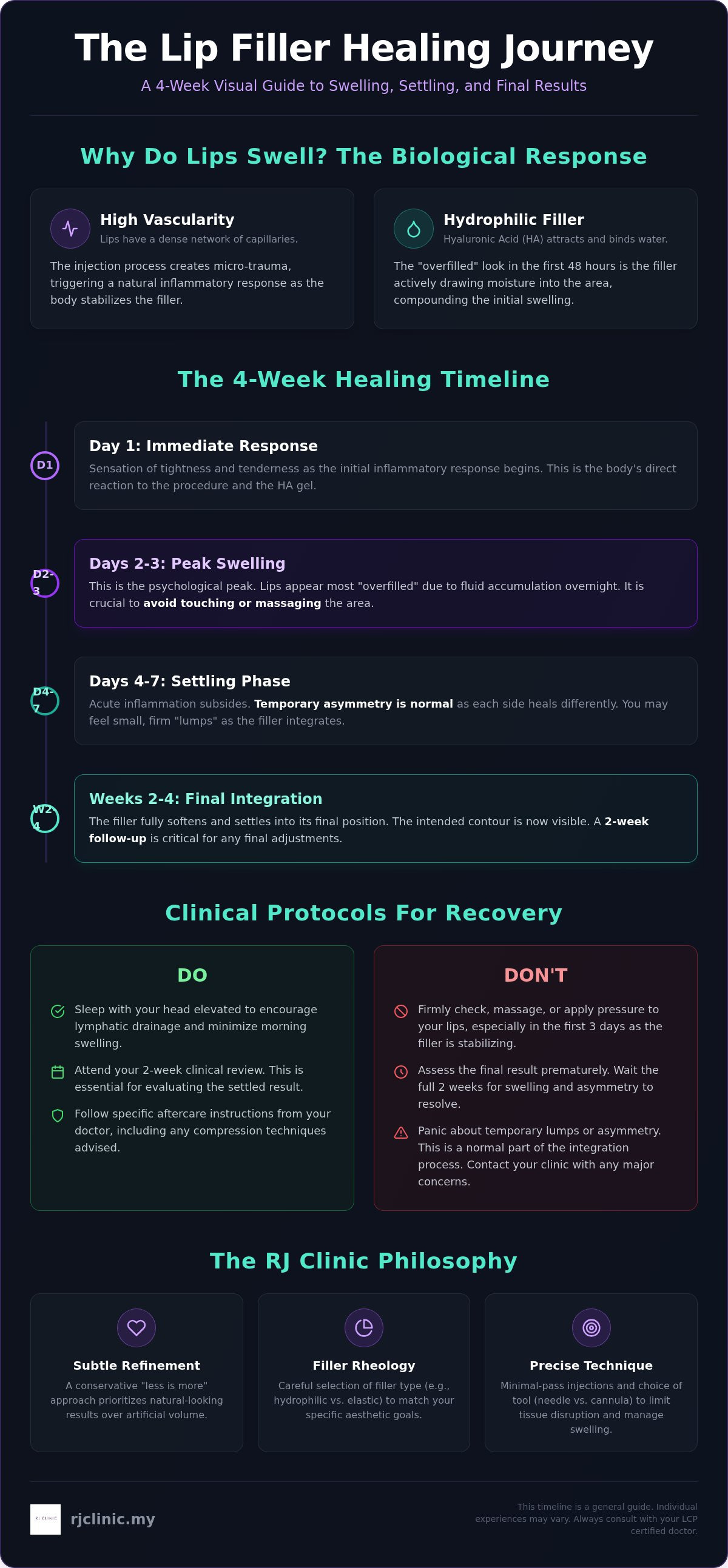
The recovery arc following a treatment is a predictable biological process. Most patients experience a sequence of events that we categorize into four distinct lip filler swelling stages. On Day 1, you'll likely feel immediate tenderness and a sensation of tightness as the tissue begins its inflammatory response. This is the body's direct reaction to the needle and the initial hydration of the hyaluronic acid gel.
Managing the Peak Swelling Phase (Days 2-3)
The morning of Day 2 is frequently the most challenging moment for patients. Because fluid naturally accumulates in the facial tissues while you sleep, your lips may appear significantly more "overfilled" or stiff upon waking than they did immediately after the procedure. It's vital during this peak window to avoid firmly checking or massaging the area, as the filler is still in its early stabilization phase. While significant swelling is expected, we advise patients to consult the FDA information on dermal fillers to understand the difference between standard inflammation and rare complications like vascular compromise, which typically presents as extreme, escalating pain or unusual skin blanching.
Temporary Asymmetry and Settling
Between Day 4 and Day 7, the acute inflammation subsides, yet this is often when temporary asymmetry becomes visible. It's perfectly normal for one side to heal faster or swell more than the other, simply because the vascular distribution in your lips isn't perfectly mirrored. You might also feel small, firm areas or subtle "lumps" when pressing your lips together. This isn't a sign of a poor injection; it's the filler integrating with your natural tissue and attracting the final necessary water molecules for stabilization.
From Week 2 to Week 4, the product fully softens and settles into its final position. Dr Renee and Dr Cheok strictly advise waiting until the 14-day mark before considering any adjustments. This patience ensures that any tweaks are based on the actual settled result rather than lingering edema. If you're planning a lip augmentation, scheduling your treatment at least two weeks before a major event is the best way to ensure you're in the final, refined phase of recovery where the artistry of the injection truly shines.
Clinical Protocols for Managing Recovery
The way you manage the first 48 hours is just as critical as the injection technique itself. To effectively navigate the early lip filler swelling stages, we recommend a disciplined approach to aftercare. Applying a cold compress in intervals of 10 minutes on and 10 minutes off is the most effective way to constrict blood vessels and limit the initial inflammatory volume. This should be done gently; excessive pressure can displace the filler before it has stabilized in the tissue.
Elevation is another essential clinical tool. Sleeping with an extra pillow for the first two nights encourages gravity-assisted lymphatic drainage away from the face, which prevents the heavy morning swelling often seen on Day 2. We also emphasize maintaining high internal hydration. Since hyaluronic acid is hydrophilic, keeping your body well-hydrated supports the filler's integration without it needing to "strip" moisture from the surrounding lip tissue, which can lead to localized dryness or unevenness.
For at least 48 hours, you must avoid activities that increase your core body temperature or blood pressure. This includes strenuous exercise, alcohol consumption, and blood-thinning supplements like Vitamin E or fish oil. These factors induce vasodilation, which can significantly exacerbate bruising and prolong the acute swelling phase.
Environmental Factors in Kuala Lumpur
Kuala Lumpur's tropical climate presents unique challenges for post-procedure recovery, a reality also shared by patients at Best Filler Clinic in Singapore. High heat and humidity naturally cause vasodilation, which can make swelling feel more intense or persistent. We advise patients to avoid direct sun exposure, saunas, and steam rooms for at least 72 hours. If you're outdoors, stay in shaded, air-conditioned environments as much as possible to keep the skin temperature stable and the inflammatory response controlled.
While dermal fillers used by LCP-certified physicians have an excellent safety profile, you must remain vigilant. It's essential to distinguish between a standard bruise and more serious complications in lip augmentation, such as vascular occlusion. If you notice "blanching" (skin that looks unusually white or pale) or a dusky, mottled appearance accompanied by escalating pain, contact us immediately. At RJ Clinic, Dr Renee and Dr Cheok prioritize patient safety through a rigorous post-procedure protocol, including a dedicated emergency line for immediate clinical review. If you're unsure about your healing progress, you can consult with Dr Renee or Dr Cheok to ensure your recovery is proceeding as expected.
Achieving the Final Result: The RJ Clinic Philosophy
The transition from acute inflammation to a settled, elegant result requires clinical patience. Dr Renee and Dr Cheok advocate for a "Less is More" philosophy, prioritizing subtle enhancement over the dramatic, overfilled look that often causes patient anxiety. By respecting the natural anatomy of the mouth, we ensure that the filler supports your features rather than overwhelming them. This approach is particularly important when navigating the lip filler swelling stages, as it allows for a more predictable and refined outcome once the initial edema subsides.
We consider the two-week follow-up appointment an essential part of the treatment process. At this stage, the hyaluronic acid has integrated with your tissue, and any temporary asymmetry from the healing phase has resolved. This is the point where Dr Renee and Dr Cheok can accurately assess symmetry and patient satisfaction, making minor adjustments if necessary. A successful lip filler augmentation often serves as a sophisticated component of a broader face-slimming strategy, providing the necessary projection to balance the lower third of the face.
Beyond Volume: Refinement and Symmetry
A consultation at RJ Clinic looks beyond simple volumization. We often address concurrent concerns such as dark lips, vertical perioral lines, or age-related volume loss in the vermillion border. As we age, the structural support of the lips diminishes, leading to a flatter appearance and less definition. Our clinicians use their judgment to select products that offer the right balance of structural support and soft integration, ensuring your smile remains mobile and natural-looking during both rest and animation.
Your Long-Term Maintenance Plan
While the immediate results are visible once the lip filler swelling stages conclude, the longevity of the treatment depends on your individual metabolism and the specific product used. On average, premium hyaluronic acid fillers in the lips last between six to twelve months. We find that strategic, long-term maintenance yields cumulative benefits; smaller, regular touch-ups often require less product over time to maintain a consistent, youthful contour. For those looking to maintain a youthful profile beyond just the lips, expert clinics like Skinstitute suggest that addressing the jawline and neck can provide a more complete and lasting aesthetic balance. Trusting the clinical timeline and the expertise of your practitioner is the key to achieving a sophisticated aesthetic that feels as good as it looks.
Understanding the biological lip filler swelling stages is the essential bridge between the procedure and your final, sophisticated look. By recognizing that the dramatic volume of the first 48 hours is a temporary inflammatory response, you can navigate your recovery with confidence. At RJ Clinic, our approach centers on the clinical reality that true refinement takes time to settle. We prioritize your long-term aesthetic health by using only FDA-approved fillers and precise, minimal-trauma techniques that respect your tissue's integrity.
Our LCP-certified physicians, Dr Renee and Dr Cheok, specialize in creating subtle, natural-looking results at our premium clinics in Mont Kiara and Bangsar. We believe that the best work is that which enhances your existing beauty without ever appearing artificial. Once the two-week integration phase is complete, the result is a balanced, plush, and entirely organic-looking smile that complements your unique facial structure and restores your self-confidence.
If you're ready to refine your appearance under the guidance of expert medical practitioners, schedule a consultation with Dr. Renee or Dr. Cheok for a personalized lip assessment. We're here to ensure your aesthetic journey is as predictable and rewarding as the final result itself.
Frequently Asked Questions
How long does the most intense swelling last after lip fillers?
The most intense inflammatory response typically lasts between 48 and 72 hours. You'll likely observe that the morning of Day 2 represents the peak of the lip filler swelling stages, as fluid accumulates while you're horizontal during sleep. By Day 4, the acute tightness and dramatic volume should begin to subside significantly. If you still have extreme, unyielding swelling after five days, a clinical review is advisable to ensure your recovery is proceeding as expected.
Is it normal for my lips to feel lumpy or hard during the first week?
It's entirely normal for your lips to feel firm, stiff, or even slightly lumpy during the first seven to ten days. This sensation is often more apparent to you when pressing your lips together than it is visible to others. These small firm areas are typically just the hyaluronic acid integrating with your natural tissue and attracting water. We advise against firm massaging; the product will naturally soften and settle by your two-week follow-up appointment.
Can I eat and drink normally immediately after the procedure?
You should wait until any local anesthesia or numbing cream has completely worn off before eating to avoid accidental biting of the lip tissue. For the first 24 hours, avoid very hot liquids and spicy foods, as these can increase blood flow to the area and exacerbate swelling. It's also best to drink directly from a cup rather than using a straw, which requires a puckering motion that can displace the filler before it has stabilized.
What should I do if one side of my lip is more swollen than the other?
Temporary asymmetry is a frequent occurrence during the initial healing phase. One side of the lip may swell more than the other because the vascular network and lymphatic drainage aren't perfectly symmetrical. Unless the asymmetry is accompanied by severe pain or skin discoloration, the best course of action is patience. Dr Renee and Dr Cheok recommend waiting exactly 14 days for all edema to resolve before evaluating the final symmetry of your treatment.
Will icing my lips really help reduce the swelling stages?
Applying a cold compress is one of the most effective ways to manage the early lip filler swelling stages. The cold temperature induces vasoconstriction, which limits the amount of fluid that leaks into the surrounding tissue. Use a clean, soft compress for 10 minutes at a time, several times a day, during the first 48 hours. Always wrap the ice pack in a thin cloth to prevent direct thermal injury to the sensitive mucosal skin.
How can I tell the difference between normal swelling and a complication?
Normal swelling feels like tightness or tenderness and gradually improves after Day 3. In contrast, a complication like vascular occlusion often involves escalating, throbbing pain and visible changes in skin color, such as a pale, white (blanching) appearance or a dusky, mottled pattern. If you experience these symptoms, or if the skin feels unusually cold to the touch, contact the clinic immediately. Rapid intervention is key to resolving rare but serious vascular issues safely.


Comments