


Hair Transplant Aftercare in Malaysia: A Doctor’s Guide to Graft Survival (2026)

Updated: Jul 22

Most patients believe the success of their hair transplant is determined the moment they leave the operating theater, but clinical reality suggests that the surgeon's work accounts for only half of the final result. The remaining fifty percent rests entirely on how you manage the delicate recovery phase. Meticulous hair transplant aftercare malaysia is the silent architect of your new hairline, especially when navigating our unique tropical climate.
It's natural to feel a sense of hyper-vigilance during those first few nights. You don't want to compromise a significant investment because of a simple mistake during washing or an accidental bump while sleeping. You're likely seeking a clear, clinical path through the discomfort of swelling and the scabbing phase while protecting those vulnerable grafts from the intense heat and humidity found in Kuala Lumpur.
I have outlined the specific protocols used by Dr. Renee and Dr. Cheok to ensure optimal graft survival during the critical first 14 days. We will examine the precise timeline for scalp hygiene, activity levels, and environmental protection required to achieve 100% graft retention and a seamless transition back to your professional routine with natural looking results.
Table of Contents
The First 72 Hours: Critical Graft Stabilization and Protection
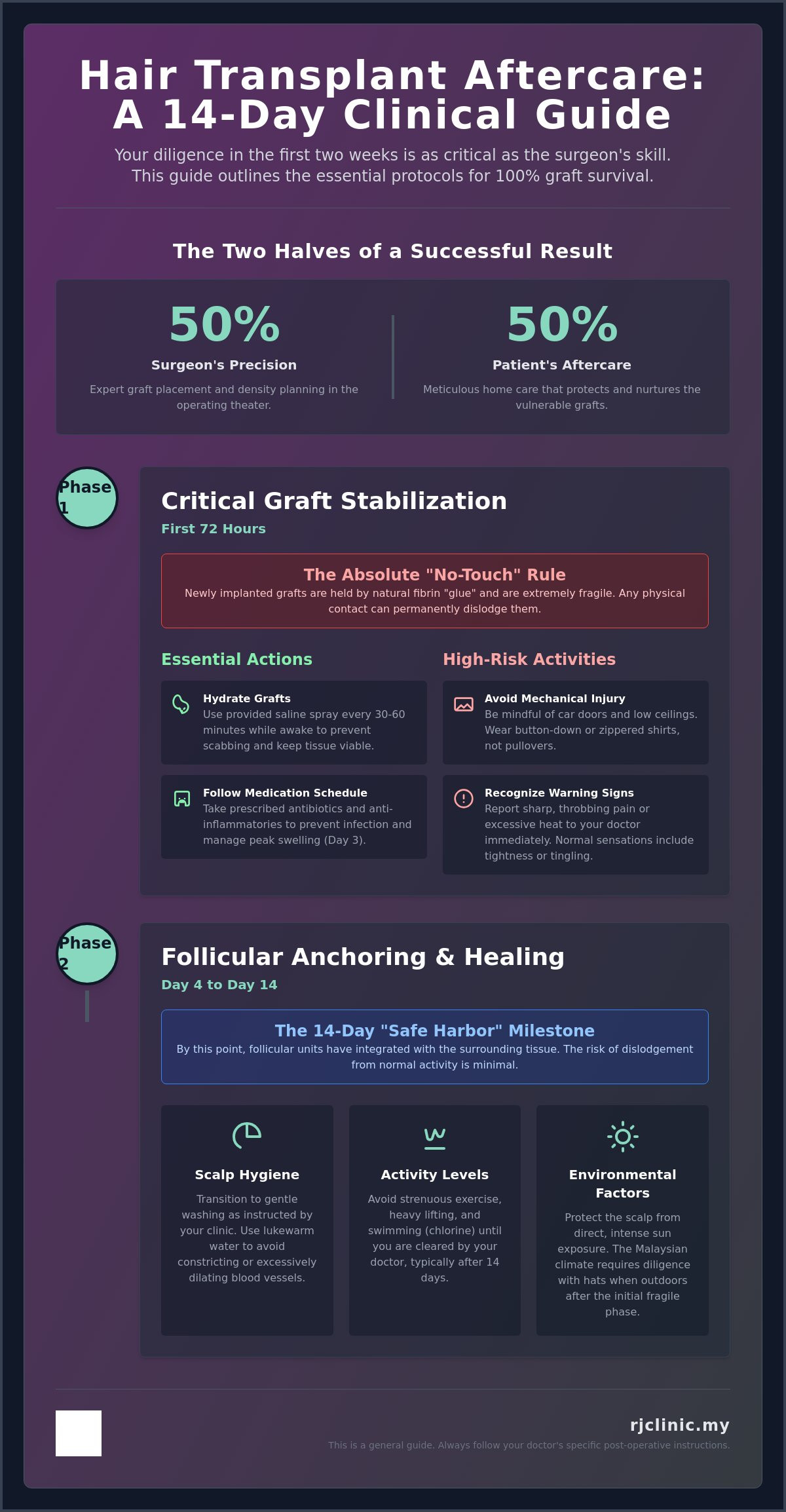
The immediate aftermath of a hair transplant procedure is a period of biological transition. For the first three days, the newly implanted follicular units are held in place by little more than fibrin, a natural "glue" formed by blood clotting. They haven't yet established a permanent blood supply, making them exceptionally vulnerable to being dislodged or damaged. At RJ Clinic, we emphasize an absolute "No-Touch" rule during this window. Even a light graze with a fingernail or a slight pull from a tight t-shirt can permanently displace a graft, leading to a gap in your final results.
Effective hair transplant aftercare malaysia begins with understanding that these grafts are living tissue in a state of shock. Our protocol focuses on stabilization through environmental control and mechanical protection. We provide specific medications to manage the initial inflammatory response, which is crucial because excessive swelling can actually push grafts out of their microscopic channels. During this phase, the goal is to keep the scalp clean and the grafts stationary while the body begins the healing process.
Protecting the Recipient Area from External Trauma
Mechanical injury is the leading cause of graft loss in the first 72 hours. Patients often forget the temporary change in their scalp's height or sensitivity due to local anesthesia, leading to accidental contact with car door frames or low ceilings. We mandate wearing button-down or zippered shirts during this period. Pulling a garment over your head is a high-risk activity that we simply don't permit. If you're recovering from an FUE hair transplant, you must treat the recipient site as a "sterile zone" where nothing, including your own hands, should make contact. The donor area, while also healing, is much more resilient and can be managed with less mechanical restriction.
Medication Schedule and Pain Management
Managing discomfort is about more than just patient comfort; it's about preventing the patient from subconsciously touching the site. We prescribe a targeted course of antibiotics to prevent infection and anti-inflammatories to mitigate the peak swelling that typically occurs around day three. We also provide a clinical-grade saline spray to be used frequently. This keeps the grafts hydrated and prevents the formation of hard, restrictive scabs that can pull on the hair follicles.
Hydration Protocol: Use the provided saline spray every 30 to 60 minutes while awake to maintain graft viability.
Donor Area Care: While the recipient area is often numb, the donor area may feel tight or tender. We provide specific analgesics to manage this without increasing bleeding risks.
Warning Signs: It's normal to feel "tightness" or slight tingling. However, sharp, throbbing pain or excessive heat at the site should be reported to Dr. Renee or Dr. Cheok immediately for assessment.
The 14-Day Recovery Timeline: Washing and Sleeping Protocols
After the initial 72-hour stabilization period, we enter the most critical phase of home-based hair transplant aftercare malaysia. Patients often ask when they can stop worrying about every minor movement. At RJ Clinic, the 14-day mark is our "safe harbor" milestone. By this point, the follicular units have usually integrated into the surrounding tissue and are no longer at risk of dislodgement from normal movement. However, the journey from day 4 to day 14 requires a disciplined transition from clinical oversight to self-managed care. Understanding what to expect after a hair transplant helps in managing these subtle environmental factors.
Scalp circulation is the engine of graft survival. While you might be tempted to use hot water to soothe the donor area, excessive heat can cause vasodilation that may lead to bleeding or increased swelling. Conversely, extreme cold can constrict blood flow. We recommend lukewarm water and maintaining a stable indoor temperature to support the metabolic needs of the new grafts. If you've undergone a Hair FUE Transplant, the donor area on the back of the head is usually healed enough by day 10 that direct contact is no longer uncomfortable.
The Clinical First Wash Technique
The first wash is a high-anxiety moment. We typically perform this in-clinic, but if you're managing this at home, you must avoid the high-pressure stream of a showerhead. First, dilute a pH-neutral shampoo in a cup of lukewarm water until it foams. Second, use the "cup-pour" method to gently rinse the area without rubbing. Finally, allow the scalp to air-dry naturally. Never use a towel or hairdryer, as friction and heat are the primary enemies of graft survival in the first week.
Sleeping Positions to Prevent Graft Displacement
Gravity is your ally during the first week. Sleeping at a 45-degree angle is non-negotiable for at least five nights. This elevation facilitates lymphatic drainage, preventing fluid from settling around your eyes and forehead. A travel pillow is the most effective tool; it keeps your head centered and prevents you from rolling onto the recipient area during the night. By day 10, most patients can return to a flatter position, though we recommend using an extra pillow for a few more days to ensure all residual swelling subsides. For those seeking personalized guidance on their recovery journey, a detailed consultation can help tailor these protocols to your specific healing rate.
Navigating Side Effects and Recovery Milestones in Malaysia
The transition from the initial stabilization phase into the first month often brings a new set of physiological responses that can cause unnecessary alarm if not understood through a clinical lens. Swelling is perhaps the most visible side effect, typically peaking between days three and five. This fluid often migrates downward due to gravity, leading to temporary periorbital edema or swelling around the forehead and eyes. While it may look significant, it is a standard inflammatory response. Maintaining the 45-degree sleeping position mentioned earlier remains the most effective way to resolve this quickly. If you find the swelling persists beyond day seven, it's a good idea to speak with our clinical team to ensure your recovery is progressing as expected.
As the tiny incisions heal, scabbing is an inevitable part of the process. These crusts act as biological bandages, but they can become itchy as the skin underneath regenerates. Picking at these scabs is the primary cause of premature graft loss in hair transplant aftercare malaysia. If a scab is removed forcefully before the graft is fully anchored, the entire follicle may come with it. To manage itching safely, we recommend continued use of the saline spray or a doctor-prescribed antihistamine. Avoid any scratching or friction, as even minor trauma can cause localized inflammation that hinders the growth of the new hair.
Normalizing the "Shock Loss" Phase
Around the third week, many patients experience what we call "shock loss." This is the sudden shedding of the transplanted hair shafts. It's vital to distinguish this from the loss of the actual graft. The follicle remains healthy and dormant beneath the skin; it's simply the hair fiber that is falling out due to the temporary trauma of the hair transplant procedure. This "ugly duckling" phase is temporary and actually signals that the follicle is entering a new growth cycle. You'll begin to see the permanent, organic growth emerge in the coming months.
Addressing Scalp Folliculitis and Redness
As new hairs begin to break through the skin, you might notice small, red bumps similar to pimples in the recipient area. This is often mild folliculitis, caused by the new hair trying to emerge through the scalp. While usually self-limiting, persistent redness or pustules should be reviewed by Dr. Renee or Dr. Cheok. We can provide targeted topical treatments to calm the skin and ensure the environment remains optimal for hair density. If you're concerned about any unusual sensations or persistent redness, you can book a follow-up assessment to ensure your scalp health is being meticulously maintained.
Sustaining Long-Term Growth in the Malaysian Climate
While the first 14 days focus on the physical anchoring of follicles, the subsequent months are about creating a physiological environment where those follicles can thrive. In our local context, effective hair transplant aftercare malaysia requires a specific strategy to combat intense UV radiation and high humidity. Newly transplanted skin lacks the melanin protection of the surrounding scalp, making it exceptionally prone to sun damage. For at least six months, we advise avoiding direct midday sun exposure. If you're outdoors in Kuala Lumpur, a loose-fitting hat is acceptable after the two-week mark, but it must not create friction against the recipient site.
Lifestyle choices also play a silent but significant role in graft maturation. I cannot overstate the impact of smoking on your final density. Nicotine is a potent vasoconstrictor that reduces blood flow to the scalp, effectively starving the new grafts of the oxygen they need to survive the dormant phase. Similarly, alcohol should be avoided for at least ten days post-surgery to prevent blood thinning and potential micro-bleeding. For a broader perspective on the surgical techniques used during the procedure, you can read our Hair Transplant Malaysia guide.
Sweat Management and Physical Activity
In Malaysia's tropical climate, sweat management is a clinical necessity rather than a comfort preference. During the first week, sweat can act as a carrier for bacteria, increasing the risk of localized infection in the open micro-incisions. We recommend staying in air-conditioned environments as much as possible for the first seven days. While light walking is encouraged after day four to aid circulation, you should avoid heavy weightlifting and high-intensity cardio for at least 21 days. The internal pressure generated during heavy lifting can compromise the healing of the follicular units. Swimming in chlorinated or salt water is strictly prohibited for one month to prevent chemical irritation of the scalp.
To enhance your comfort while staying indoors, you might consider mobile wellness services. For those recovering in the region, including patients in Singapore, The Outcall Spa offers professional spa treatments that come to you, allowing you to relax without the exertion of traveling or exposure to the tropical heat.
Complementary Therapies for Enhanced Density
To optimize your results, we often integrate complementary treatments into your recovery plan. Platelet-Rich Plasma (PRP) therapy is a valuable tool we use at RJ Clinic to deliver growth factors directly to the transplanted follicles, potentially accelerating the transition from the shedding phase to active growth. We also prescribe medical-grade topical solutions that support the scalp's health during the six to twelve-month window. Regular follow-up assessments with Dr. Renee or Dr. Cheok are essential; these allow us to monitor your progress and make clinical adjustments to your regimen, ensuring your journey toward permanent hair restoration is both successful and seamless.
Securing Your Investment in Permanent Hair Restoration
The success of your hair transplant doesn't end when the last graft is placed; it begins with the discipline you maintain during the healing process. By strictly adhering to the "No-Touch" rule in the first 72 hours and managing the 14-day transition with clinical precision, you ensure the survival of every follicular unit. Mastering your hair transplant aftercare malaysia involves more than just routine cleaning; it requires a strategic response to our tropical environment to protect your new hairline from UV damage and humidity.
At RJ Clinic, we combine FDA-approved hair restoration technologies with personalized recovery protocols designed for our unique climate. Dr. Renee and Dr. Cheok, both LCP-certified physicians, provide the expert oversight necessary to navigate milestones like shock loss and scalp sensitivity with confidence. Professional monitoring during the first six months is the most effective way to guarantee the dense, natural-looking results you expect from a high-end medical procedure.
If you have questions about your healing progress or wish to optimize your growth results, we're here to provide medical guidance. Book a Post-Op Consultation with our LCP-Certified Doctors to ensure your journey toward a fuller head of hair is supported by rigorous clinical standards. We look forward to seeing your transformation reach its full potential.
Frequently Asked Questions
When can I wear a cap or hat after a hair transplant?
You should wait at least 10 to 14 days before wearing any headwear that makes direct contact with the recipient area. The grafts require this window to securely anchor into the scalp tissue. If you must be outdoors in the sun earlier, a very loose-fitting snapback hat that rests on the forehead and doesn't touch the crown may be used with extreme caution. After day 14, ensure any cap is adjustable to avoid friction.
Is it normal for my scalp to feel numb after FUE surgery?
Temporary numbness or a "pins and needles" sensation is a standard clinical observation following an FUE procedure. This occurs because the microscopic incisions temporarily disrupt small sensory nerve endings in the scalp. Most patients find that sensation returns gradually over three to six months as the nerves regenerate. It isn't a cause for concern unless accompanied by signs of infection like unusual heat, persistent throbbing, or discharge.
Can I use Minoxidil or Finasteride immediately after the procedure?
You can typically continue oral medications like Finasteride immediately, but topical Minoxidil must be paused for at least 14 days. The alcohol base in topical solutions can cause significant irritation and inflammation on a healing scalp, potentially compromising graft survival. We recommend resuming topical treatments only after the incisions have fully closed and scabbing has resolved, usually around the two-week mark of your hair transplant aftercare malaysia protocol.
How long do I need to take leave from work in Malaysia?
Most patients return to desk-based roles within three to five days, provided they are comfortable with the temporary post-operative appearance. If your profession involves physical labor or outdoor activity in the heat, we recommend taking a full seven days of leave. This allows the initial swelling to subside and ensures you aren't exposing the grafts to excessive sweat or accidental trauma during the most critical stabilization phase.
What should I do if I accidentally knock my head against something?
Immediately check the site for any active bleeding or a dislodged graft, which often looks like a small, white bulb. If you notice bleeding, apply gentle, steady pressure with a clean gauze for ten minutes. Do not rub the area. Contact Dr. Renee or Dr. Cheok immediately for a clinical assessment. While a minor bump might only cause swelling, a forceful impact can permanently lose a follicular unit if it occurs within the first week.
When will I see the final results of my hair transplant?
Final results are typically visible between 12 and 18 months post-procedure. You'll likely experience the "shock loss" shedding phase in the first month, followed by new growth starting around month four. Hair density and texture continue to mature and thicken throughout the first year. It's a gradual biological process, and we schedule regular follow-ups to ensure the hair transplant aftercare malaysia journey is progressing toward the natural-looking outcome we designed during your consultation.



Comments