


Eyebrow Transplant After Microblading: What Needs to Be Assessed First?

Updated: 8 hours ago

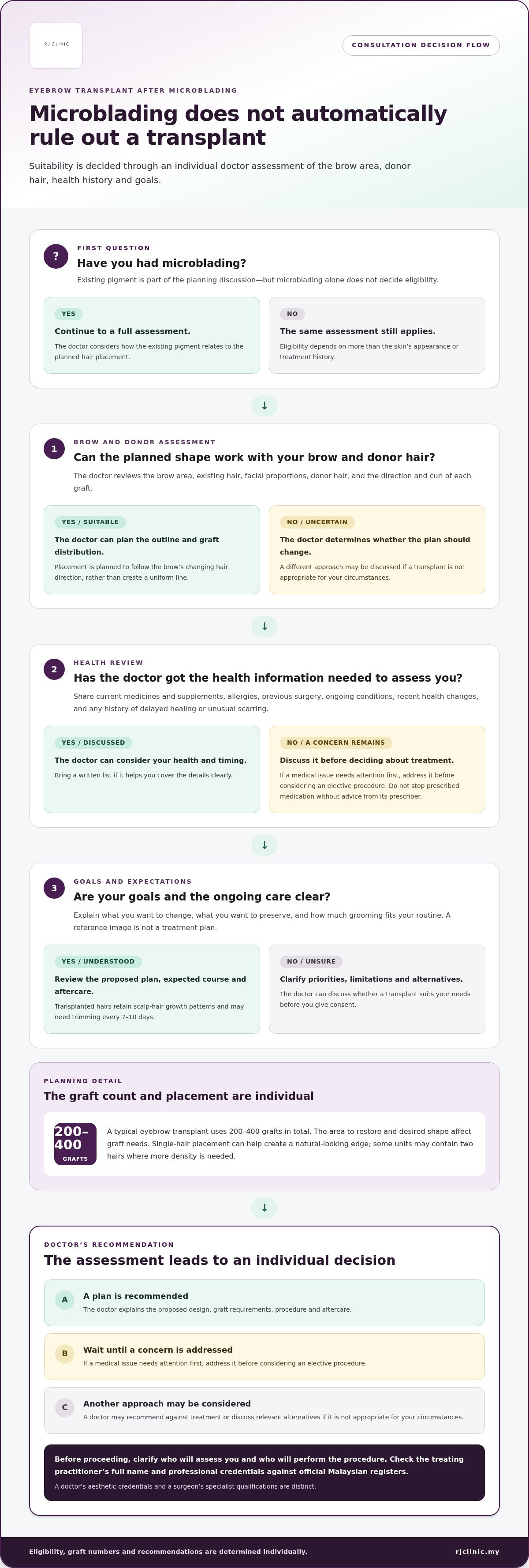
Microblading doesn’t automatically rule out an eyebrow transplant in Malaysia. The procedure moves your own hair follicles into the brow area; a typical transplant uses 200-400 grafts in total, with single-hair placement helping create a natural-looking shape. Whether it’s suitable depends on an individual assessment of your brows and the area to be restored.
It’s understandable to wonder whether old pigment will affect the result, but candidacy depends on more than the skin’s appearance. The existing brow shape, facial proportions, donor hair and the direction and curl of each graft all matter when planning a natural, balanced outcome.
This article explains what a doctor assesses after microblading, how graft numbers and placement are planned, and what the procedure and recovery involve. You’ll also learn how the details of your case shape a price discussion in Malaysia, so you can prepare for a consultation with a clearer idea of what to ask.
Table of Contents
Natural-looking single-hair graft placement
A natural-looking brow involves more than filling sparse areas. The doctor plans the outline, hair direction and graft distribution together.
Eyebrow Design and Hair Direction
Eyebrow design maps the intended shape and the direction each transplanted hair should follow. Brow hairs lie at shallow angles and change direction across the brow: hairs at the inner brow generally rise, while those toward the arch and tail angle outward. The doctor considers facial proportions, existing brow hair, curl and density before placing grafts. The aim is a shape that complements your features, not a uniform line.
Donor Hair and Single-Hair Graft Placement
Donor hair is taken from your own scalp, then prepared into follicular units for implantation. Single-hair grafts are useful along the brow’s visible edge, where one fine strand can create a softer outline. Some units may contain two hairs for areas needing more density. The placement plan matters because scalp hair continues growing like scalp hair. A description of the eyebrow transplant approach can help you understand how donor follicles are used.
Technique affects how follicles are harvested and placed, but careful angle control remains central. A micro-punch used for extraction is usually 0.7-0.9 mm. The procedure described uses local anaesthesia, and follicles are implanted individually to follow the planned brow pattern. DHI describes direct implantation using an implanter; the method selected depends on the treatment plan and the area being restored.
Unlike microblading or eyebrow tattoos, a transplant adds growing hair rather than pigment alone. It can provide hair texture and coverage, while pigment treatments create a drawn appearance and may need maintenance.
Possible side effects include temporary soreness, swelling and scabbing. Complications can include infection, bleeding, poor graft growth or hairs growing in an unwanted direction. Careful placement and aftercare help manage these risks but cannot eliminate them.
Mild soreness may last 1-2 days, social downtime is typically 5-7 days, and skin healing takes 10-14 days. Noticeable facial-hair growth may appear within one to three months, while final eyebrow results are expected at 10-12 months.
Transplanted hairs may need trimming every 7-10 days because they retain scalp-hair growth patterns. Once the follicles grow, shape maintenance becomes part of everyday brow care; trimming keeps longer hairs aligned with the design.
Consultation and treatment eligibility
Eligibility is a clinical decision, not simply a preference for a particular brow shape. The doctor assesses your medical history, current health, previous procedures and expectations before recommending a plan. The same cosmetic concern can arise in different circumstances: someone seeking a subtle correction may have different priorities from someone hoping for a more noticeable change. A doctor assessment is required before proceeding, and not every treatment is appropriate for every patient.
Prepare a concise health history for your appointment. Include current medicines and supplements, allergies, previous surgery, and any history of delayed wound healing or unusual scarring. Mention ongoing conditions and recent changes in your health. This information helps the doctor assess timing and identify anything that needs further discussion. Don’t stop prescribed medication without advice from its prescriber.
Make your goals specific and realistic. Describe what you want to change, what you’d prefer to preserve, and how much ongoing grooming fits your routine. If you’re unsure, explain the concern in practical terms, such as wanting to feel comfortable without daily brow makeup. The doctor can discuss whether a transplant suits your needs rather than treating a reference image as a treatment plan.
Ask what the assessment has established and what remains undecided. A useful consultation should explain why surgery is recommended, postponed or not advised, along with relevant alternatives and aftercare responsibilities. Understand the expected course and limitations of treatment before giving consent. If a medical issue needs attention first, address it before considering an elective procedure.
When assessing a clinic and practitioner in Malaysia, ask for the treating practitioner’s full name and professional credentials, then check them against official Malaysian registers. Clarify who will assess you and who will perform the procedure. A doctor’s aesthetic credentials and a surgeon’s specialist qualifications are distinct.
Use the consultation to raise any uncertainty about your health, goals or readiness. Bring a written list of questions if that helps you stay focused. After assessing you, the doctor determines your eligibility, graft numbers and procedural recommendations individually. A clear discussion helps you decide whether to proceed, wait or consider another approach for your circumstances.
Malaysia eyebrow transplant price ranges
When comparing eyebrow transplant costs in Malaysia, a headline figure can conceal important differences. Treatment plans vary according to the area needing coverage, the desired brow shape and the donor follicles available. After microblading, the doctor also considers how existing pigment relates to the planned hair placement. Because these details affect the treatment scope, consider any price alongside the plan it covers.
Your price depends on the case and is given after a quote request; cost factors include graft requirements, the extent of coverage, the procedure plan and any refinement work. A patient seeking a small correction to a sparse tail may need a different plan from someone restoring both brows. The difference is not simply about choosing a fuller design. It reflects how much area needs coverage and how the donor hair can be distributed.
Before comparing figures, ask what the price covers. Clarify whether it includes the planned procedure, follow-up care and any recommended review. Discuss whether the plan covers one or both brows, especially if their density or shape differs. These questions help you compare equivalent treatment scopes rather than prices attached to different plans.
Microblading can make cost discussions more nuanced. Pigment adds colour, while a transplant adds growing hairs. If pigment remains visible, the assessment needs to consider how it will appear alongside the planned hair coverage. Clarify whether the plan addresses sparse hair, brow shape or both. This helps explain why a transplant price reflects more than the follicle count alone.
Eyebrow transplantation is available in Malaysia, including at a clinic in Bandar Sri Damansara, near Kuala Lumpur. Location may affect practical considerations such as travel and follow-up arrangements, but it does not define the treatment plan. The relevant comparison is the proposed design, the doctor’s assessment and the care included in the quotation.
Before accepting a quote, note the proposed graft count and ask how it relates to your brow goals. A typical transplant uses 200-400 grafts in total, but that figure is not a price guide. The actual plan reflects the areas requiring coverage, the desired density and the characteristics of available donor hair. A clear explanation should connect each planned step to your individual brow design.
For an informed decision, compare the written treatment scope rather than choosing by a headline figure. Confirm which areas are included, how the plan accounts for existing microblading pigment, and what follow-up is planned. These details provide a more useful basis for assessing value than a price range without clinical context.
Procedure steps and graft counts
The procedure moves from final planning to follicle placement and aftercare. Understanding each stage helps you follow how your individual treatment plan is carried out.
Procedure Steps
Before treatment, the doctor confirms the planned brow outline and the areas to be addressed. The donor area is prepared, follicles are extracted, and the grafts are organised for placement. The procedure described takes 2-4 hours. Knowing the sequence can help you plan the day and understand why the treatment requires focused, careful work.
After implantation, follow the wound-care instructions provided for your procedure. For the first three days, gently spray the area with saline solution. After that, clean it gently with a clean cotton tip soaked in sterile water or saline. Avoid touching the brow area for one week after surgery, and attend the recommended review one week after surgery.
Graft Counts
A graft count records the follicular units planned for treatment, while a hair count describes the strands those units contain. The terms are not interchangeable. Your treatment plan should explain the proposed count and how it relates to the areas being treated, rather than presenting a total without context.
The doctor determines graft numbers individually after assessment. The planned count reflects the treatment area, intended coverage and follicles available for transplantation. A larger area and a small, localised correction require different treatment scopes. Ask how the count is allocated and what each part of the plan is intended to achieve.
Counting helps clarify the treatment plan before the procedure begins. It gives you a way to discuss whether the intended coverage matches your priorities and to understand what the procedure is designed to address. The count alone does not measure quality; the plan must suit your brow concerns and the doctor’s assessment.
For an overview of the eyebrow transplant procedure, consider how planning, placement and aftercare fit together. A clear explanation of those stages can help you prepare questions about your own treatment plan and understand what will happen on the day.
RJ Clinic: Face Slimming Treatments
RJ Clinic offers eyebrow hair transplantation for patients considering fuller brows after microblading. The next step is a medical assessment of your brow pattern, donor hair and preferred shape, so the treatment plan reflects your features and goals. Dr Renee and Dr Cheok are available LCP-certified doctors.
During this discussion, you can review how the proposed graft placement relates to existing pigment and what ongoing trimming may involve. If your concern is eyebrow coverage, an eyebrow transplant assessment is more relevant than face-slimming treatment. RJ Clinic also offers hair loss treatment and FUE hair transplantation, though these address different concerns.
Choose a Next Step That Fits Your Goals
A history of microblading can make a brow decision feel less straightforward, but it gives the consultation a clear starting point: your current shape, pigment and desired change. Discuss whether a hair transplant suits your priorities and grooming preferences. For an eyebrow transplant in Malaysia, a personalised plan should connect your aesthetic goal with a practical approach to restoring brow hair.
RJ Clinic also offers Face Slimming Treatments, Ultherapy Prime for skin tightening, and Eyebag Treatment using laser or surgery. These address different concerns, so they’re relevant if your aesthetic goals extend beyond your brows.
If you’re ready to discuss your options, get in touch with RJ Clinic and take the next step at your own pace. A considered conversation can help you decide what feels right for your features and goals.
Frequently Asked Questions
What Is an Eyebrow Transplant?
An eyebrow transplant restores brow hair by placing your own follicles in the brow area. Before deciding, identify the concern you want to address, such as a sparse section or an uneven appearance. Ask the doctor to explain the intended change in plain language and how it relates to your facial features. This keeps the decision focused on your goals rather than a reference image alone.
Are there any hidden costs I should watch out for?
Ask for a written breakdown of the proposed price and what could change it. Clarify whether revising the agreed treatment scope would affect the price and whether optional items are separate. Establish these details before committing rather than assuming there will be extra charges. Keeping the treatment plan and price details together makes it easier to understand what you’re agreeing to.
How many grafts will I need and how does it affect the price?
Ask the doctor to define the count in your estimate: does it refer to follicular units or individual hairs? The terms describe different things, so the distinction matters when comparing treatment plans. You can also ask how the estimate is divided between the brows and whether it reflects the agreed design. This makes the proposed count easier to interpret without judging a plan by its total alone.
What is Included in the Total Procedure Cost?
Inclusions can vary by treatment quote. Ask for the exact scope in writing, including which services and follow-up arrangements are covered and which items would be billed separately if needed. If any wording is unclear, ask for an explanation before deciding. A doctor assessment is required before proceeding, and not every treatment is appropriate for every patient.
Why is the DHI technique more expensive than standard FUE for eyebrows?
DHI does not automatically cost more in every case. A higher price can reflect the clinic’s pricing structure and treatment scope, not just the technique name. Ask what the difference represents and whether both estimates cover comparable care. Compare the clinical reasoning for each recommended approach and its fit with your case rather than assuming one technique always carries a fixed premium.
How much does an eyebrow transplant cost in Malaysia, in MYR?
RJ Clinic provides its price during consultation, so a specific figure cannot be quoted here. Ask for the proposed amount in RM and a written explanation of the treatment scope it covers. This helps you understand the estimate before deciding. A doctor assessment is required before proceeding, and not every treatment is appropriate for every patient.


Comments